No more finger pricks: a continuous glucose monitor benefits patients with diabetes in more ways than one
For adults with type 2 diabetes, pairing basal insulin with continuous glucose monitoring improved blood sugar and quality of life
1:47 PM
Author |
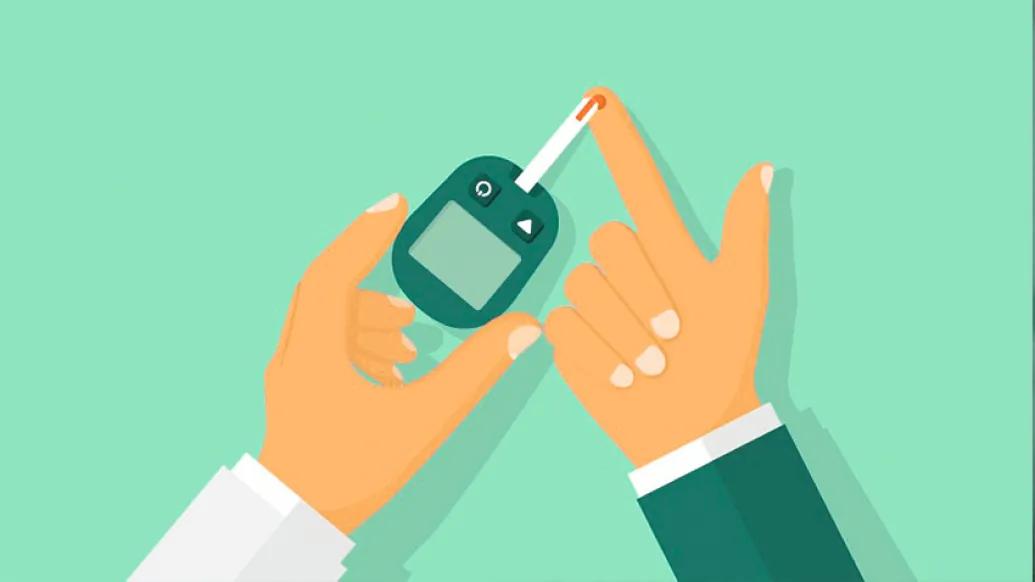
A 15-center study of 175 patients with poorly controlled type 2 diabetes in JAMA found that continuous glucose monitoring, compared to blood glucose meter monitoring, or finger pricking, significantly decreased their hemoglobin A1C over eight months (-1.1% versus -0.16%, respectively.)
Although the benefits of continuous glucose monitoring for patients with diabetes has been demonstrated before, the benefits have only been well studied in patients with type 1 diabetes or patients with type 2 treated with multiple daily insulin injections, referred to as prandial insulin.
Study author Rodica Busui, M.D., Ph.D., also the vice chair of clinical research in the Department of Internal Medicine at University of Michigan Health, says this work is one of the first to thoroughly understand the impact of having access to and using a continuous glucose monitor in adults with poorly controlled type 2 diabetes that are only treated with basal insulin, a long-acting insulin designed to be injected once or twice daily to provide an adequate level of insulin throughout the day and night
"Not only does this trial demonstrate the benefits of continuous glucose monitoring for these patients, a technology that hasn't been covered by many insurers for those with type 2 diabetes, but these benefits were seen across a broad spectrum of socio-economic status and racial backgrounds," said Busui.
She adds that approximately half of the study's participants were of a racial or ethnic minority.
The randomized clinic trial began enrolling patients in mid-2018 to late-2019, with follow up in mid-2020. The participants received one or two daily injections of long-acting basal insulin, with or without non-insulin medications to help lower blood sugar levels.
"This work wouldn't have been possible without the partnership between endocrinologists and primary care physicians, as all the patients were recruited and treated by our primary care teams," said Busui, who is also associate director for clinical research in the Elizabeth Weiser Caswell Diabetes Institute.
Aside from testing the efficacy of continuous glucose monitoring paired with basal insulin in the study participants, Busui and her team sought to better understand how the impact of this diabetes treatment approach affected patients' adherence to managing their disease as well as their overall life satisfaction.
To the researchers' delight, the 175 study participants exhibited better adherence to managing their diabetes, and their life satisfaction was higher.
This may open the door for broader coverage of this game-changing technology for all patients with diabetes.Rodica Busui, M.D., Ph.D.
"For me, what's most exciting is that this work demonstrates that using continuous glucose monitoring is effective in substantially improving blood sugars levels and decreasing the risks of hypoglycemia in those that were randomized to use a continuous glucose monitor compared with the usual finger-prick," said Busui.
"This may open the door for broader coverage of this game-changing technology for all patients with diabetes. More patients can manage their diabetes if they have access to this resource and their primary care physicians are educated on the benefits of their patients utilizing it."
This future of more affordable health care already looks a little bit brighter with Medicare recently announcing eliminating the requirement of the four-time-daily finger-prick to qualify for coverage of a continuous glucose monitor.
Work was contributed by several co-investigators at U-M, including Caroline Richardson, M.D., associate chair of research in the department of Family Medicine, Lynn Ang, M.D., and Kara Mizokami-Stout, M.D., assistant professors in the department of Metabolism, Endocrinology and Diabetes, as well as clinical trial coordinators Jake Reiss, B.S., Aaron Burant, B.S. and Ginny Leone, M.S.
This study was sponsored by DexCom, Inc. ClinicalTrials.gov Identifier: NCT03566693.
Paper Cited: "Effect of Continuous Glucose Monitoring on Glycemic Control in Patients With Type 2 Diabetes Treated With Basal Insulin," JAMA. DOI: 10.1001/jama.2021.7444
Like Podcasts? Add the Michigan Medicine News Break on iTunes, Google Podcasts or anywhere you listen to podcasts

Health Lab
Explore thousands of health news & research stories by visiting the Health Lab homepage for more.
Media Contact

Public Relations
Department of Communication at Michigan Medicine
Stay Informed
Want top health & research news weekly? Sign up for Health Lab’s newsletters today!
Featured News & Stories

Top 7 tips for choosing Medicare prescription drug coverage for 2027

The AI is listening: Implications of machine generated clinical notes on health care

Gene editing is coming for common diseases. Are we ready?

Comprehensive DNA sequencing reveals hidden drivers of cancer

Many older adults make Medicare decisions quickly and most don’t change plans, poll finds