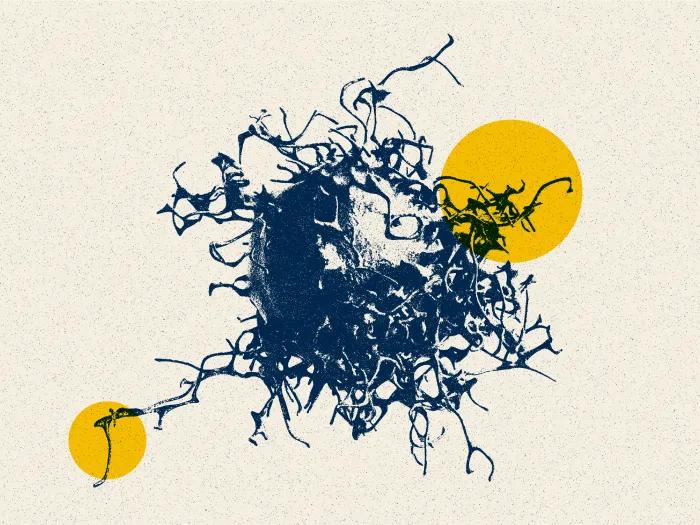
New technology called PathoPlex maps the location of proteins inside cells
Researchers identify kidney stress-related groups of proteins in individuals with type 2 diabetes
10:12 AM
Author |

Each organ in the human body contains different types of cells arranged in specific ways.
These arrangements aid protein interactions, which drive important functions such as nutrient and waste processing in the liver and kidneys or neuron function in the brain.
Abnormal changes in protein levels and patterns can result in diseases.
Understanding protein organization can improve treatments and minimize disease symptoms.
In a study published in Nature, a global team of researchers developed a new technology called pathology-oriented multiplexing, or PathoPlex, to map more than 140 different proteins across 40 tissue samples.
They used PathoPlex to analyze tissue samples from people with diabetic kidney disease and identified disease-specific protein patterns.
The location of proteins in tissues can be visualized using antibodies with fluorescent tags that bind to specific proteins and glow under a microscope.
However, the lack of high quality antibody panels has hindered research efforts on organ-level protein expression.
The team developed PathoPlex by combining images from multiple protein-bound antibodies and using a software program that could interpret patterns across several tissues.
The system was optimized to map more than 140 different proteins from at least 40 biopsy specimens.
“PathoPlex paves the way towards understanding and imaging complex tissues in human diseases like diabetes,” said Matthias Kretzler, professor of internal medicine and member of Caswell Diabetes Institute, who was a part of the team.
“We can finally develop atlases that describe changes in protein functions and how to improve them with new treatments.”
As proof of concept, PathoPlex was used to analyze biopsy samples from people with diabetic kidney disease.
The researchers were able to link protein expression to organ dysfunction and identify healthy protein patterns in groups of cells that work well and those that are associated with disease in damaged cells.
PathoPlex also revealed kidney stress-related cell changes in people with type 2 diabetes before their kidneys showed any signs of disease.
The readouts assessed how these tissues would respond to specific drug treatments, suggesting that the technology could eventually accelerate both diagnosis and treatment timelines for patients.
Additional authors: Malte Kuehl, Yusuke Okabayashi, Milagros N Wong, Lukas Gernhold, Gabriele Gut, Nico Kaiser, Maria Schwerk, Stefanie K Gräfe, Frank Y Ma, Jovan Tanevski, Philipp S L Schäfer, Sam Mezher, Jacobo Sarabia Del Castillo, Thiago Goldbeck-Strieder, Olga Zolotareva, Michael Hartung, Fernando M Delgado Chaves, Lukas Klinkert, Ann-Christin Gnirck, Marc Spehr, David Fleck, Mehdi Joodaki, Victor Parra, Mina Shaigan, Martin Diebold, Marco Prinz, Jennifer Kranz, Johan M Kux, Fabian Braun, Oliver Kretz, Hui Wu, Florian Grahammer, Sven Heins, Marina Zimmermann, Fabian Haas, Dominik Kylies, Nicola Wanner, Jan Czogalla, Bernhard Dumoulin, Nikolay Zolotarev, Maja Lindenmeyer, Pall Karlson, Jens R Nyengaard, Marcial Sebode, Sören Weidemann, Thorsten Wiech, Hermann-Josef Groene, Nicola M Tomas, Catherine Meyer-Schwesinger, Christoph Kuppe, Rafael Kramann, Alexandre Karras, Patrick Bruneval, Pierre-Louis Tharaux, Diego Pastene, Benito Yard, Jennifer A Schaub, Phillip J McCown, Laura Pyle, Ye Ji Choi, Takashi Yokoo, Jan Baumbach, Pablo J Sáez, Ivan Costa, Jan-Eric Turner, Jeffrey B Hodgin, Julio Saez-Rodriguez, Tobias B Huber, Petter Bjornstad, Olivia Lenoir, David J Nikolic-Paterson, Lucas Pelkmans, Stefan Bonn and Victor G Puelles.
Funding/disclosures: The work was funded by NovoNordisk Foundation: Young Investigator (NNF21OC0066381, NNF18OC0052301 and NNF21OC0070560); German Federal Ministry of Education and Research; STOP-FSGS (01GM2202A); PoSyMed (031L0310A); CLINSPECT-M (FKZ161L0214A); German Research Council Collaborative Research Center 1192 (SFB1192); Collaborative Research Center 1700 (SFB1700); Collaborative Research Center 1286 (SFB1286); Collaborative Research Center 13228 (SFB13228); Collaborative Research Center TRR 422 (PodoSigN); GR 3933/1-1; Emmy Noether Program (TO1013); GRK2416 (368482240); project grant (412888997); project grant (528262584); IMM-PACT-Program (413517907); CRU5011 (445703531); research grants (HU 1016/8-2, HU 1016/11-1 and HU 1016/12-1 and KR1984/4-1); Else-Kröner-Fresenius foundation; Uehara Memorial Foundation; Jikei University School of Medicine; National Health and Medical Research Council of Australia (APP1044289 and APP1058175); Advanced Clinician Scientist Program (01EO2106-iSTAR); European Union research fellowship (101057619); Microb-AI-ome (101079777); ERC starting grant (AUTO-TARGET) and ERC advanced grant (CureFSGS, 101141768); Swiss State Secretariat for Education, Research and Innovation (22.00115); Swiss National Science Foundation and InnoSuisse: BRIDGE program; Swiss National Science Foundation (199310); University of Zurich: BioEntrepreneur Fellowship; University Medical Center Hamburg-Eppendorf: Clinician/Scientist Program; Lundbeck Foundation (R359-2020-2620 and R480-2024-960); Human Frontier Science Program (RGP0032/2022); National Institute of Diabetes and Digestive and Kidney Disease (DK132399, DK129211, DK129720 and DK116720); National Heart, Lung, and Blood Institute (HL165433); Juvenile Diabetes Research Foundation (3-SRA-2022-1097-M-B, 3-SRA-2022-1230-M-B, 3-SRA-2022-1243-M-B and 3-SRA-2023- 1373-M-B); American Heart Association (20IPA35260142); American Diabetes Association (7-23-ICTST2DY-08 and 7-23-ICTST2DY-01); Boettcher Foundation; Ludeman Family Center for Women’s Health Research; National Institutes of Health (DK081943); University of Michigan (JDRF Center of Excellence and RPC2); L’Institut national de la santé et de la recherche médicale and European Foundation for the Study of Diabetes.
Tech transfer(s)/Conflict(s) of interest: Gut and Pelkmans are listed as inventors on patents related to the 4i and single-pixel clustering methods and Pelkmans holds ownership in Apricot Therapeutics, which offers commercial services related to multiplexed histopathology. Bruneval reports serving or having served as a consultant for AstraZeneca, Bayer, Bristol-Myers Squibb, Boehringer Ingelheim, Eli-Lilly, LG Chemistry, Sanofi, Novo Nordisk and Horizon Pharma. Bruneval also serves or has served on the advisory boards and/or steering committees of AstraZeneca, Bayer, Boehringer Ingelheim, Novo Nordisk, and XORTX. Kretzler reports partial funding for contributions here originated from the Renal Pre-Competitive Consortium, as funded by AstraZeneca, Eli Lilly, Janssen Pharmaceuticals, Novo Nordisk and Roche-Genentech. Saez-Rodriguez reports funding from GSK, Pfizer and Sanofi and fees/honoraria from Travere Therapeutics, Stadapharm, Astex, Pfizer, Grunenthal, Moderna and Tempus Labs. Kuehl is an employee of and holds an ownership interest in KH Biotechnology, which provides consulting services to Lamin Labs.
Paper cited: “Pathology-oriented multiplexing enables integrative disease mapping,” Nature. DOI: 10.1038/s41586-025-09225-2
Sign up for Health Lab newsletters today. Get medical tips from top experts and learn about new scientific discoveries every week
Sign up for the Health Lab Podcast. Add us wherever you listen to your favorite shows.

Health Lab
Explore thousands of health news & research stories by visiting the Health Lab homepage for more.
Media Contact

Public Relations
Department of Communication at Michigan Medicine
In This Story
Matthias Kretzler, MD
Professor
Related
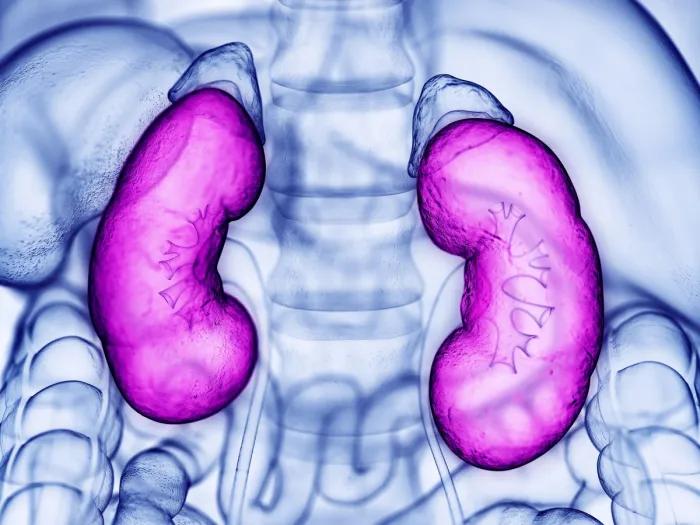
Precision medicine helps identify “at-risk rapid decliners” in early-stage kidney disease
Research analyzes kidney functions and predictors of disease
Stay Informed
Want top health & research news weekly? Sign up for Health Lab’s newsletters today!
Featured News & Stories
Discovering the Molecular Processes in Kidney Cells That Attract and Feed COVID-19
Family’s gift honors wife and mother, supports nephrology nurses
Gene editing is coming for common diseases. Are we ready?
Comprehensive DNA sequencing reveals hidden drivers of cancer

Many older adults make Medicare decisions quickly and most don’t change plans, poll finds