New strides in Ewing sarcoma research
Expert Q&A on challenges associated with treating the disease
2:16 PM
Author |
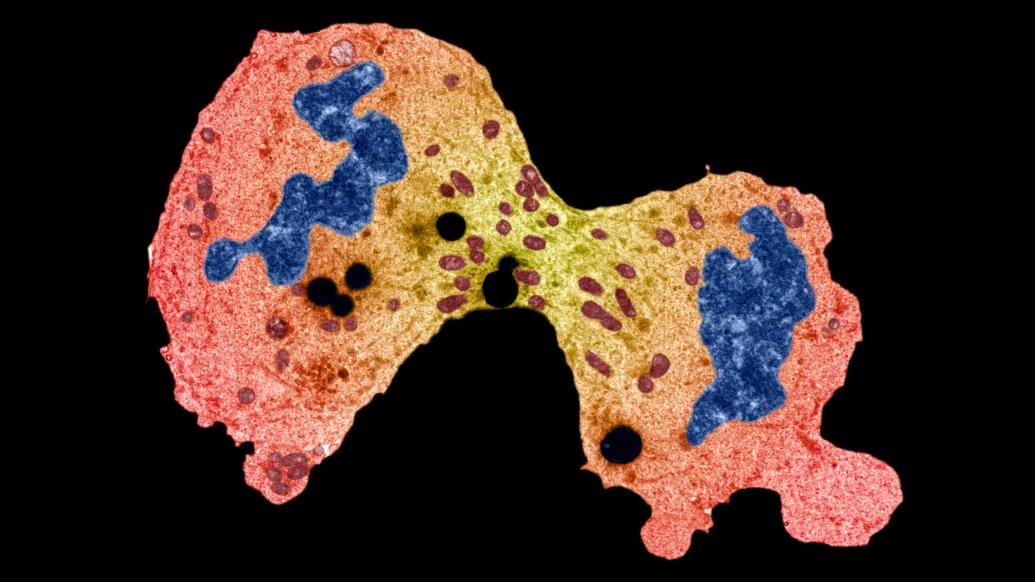
Ewing sarcoma is a malignant bone tumor that mainly affects children, although it can occur at any age.
It appears in bones and soft tissues and is the second most common tumor in children.
Each year it affects 200 children in the United States and a similar number of adults.
Although 85% of patients who have small, localized tumors are cured, 25% of patients who have recurrent or metastatic tumors have poor outcomes.
In July 2025, the Ewing Sarcoma Institute was launched to improve outcomes for patients worldwide.
Patrick Grohar, M.D., Ph.D., professor of pediatric hematology-oncology and the first director of the institute, answers questions about symptoms, treatments and research initiatives that are being undertaken.
What are the symptoms of Ewing sarcoma?
Grohar: It begins as a mass, most commonly in the pelvis, and can sometimes be painful.
Often, an adolescent might think that they’re having “growing pains”, and the mass becomes quite large before they seek medical attention.
We diagnose the tumor using X-rays or biopsies of the mass.
The condition is rare and as far as we know, there is no known genetic or environmental cause.
What are the treatment options for Ewing sarcoma?
Grohar: Therapy includes five chemotherapy agents given in an interval-compressed regimen.
This means that instead of receiving treatment every 21 days, like most cancers, patients need to come in every 14 days.
The drugs have a wide range of side effects, including hair loss, mild sores, loss of blood counts, nausea and vomiting.
Although the regimen can be hard to tolerate for most patients, clinical trials have shown that the compressed timeline improves outcomes.
Additionally, they also undergo surgery and/or radiation.
What are the current research initiatives?
Grohar: We can cure most of the patients who have small, localized tumors. However, only 25-30% of patients with metastatic disease survive.
Current research efforts are focused on addressing relapsed and metastatic disease.
So far, no clinical trial has made an impact on metastatic Ewing sarcoma.
For relapsed disease, there were 62 clinical trials between 2005 and 2018, and only 10% of the patients responded to the therapy and saw tumor shrinkage.
At the University of Michigan, we have been working on a protein called EWS-FLI1, which is a challenging drug target.
We have recently completed a four-year trial where we repurposed an existing cancer drug and showed that it caused tumors to shrink in 40% of patients who had failed four other regimens.
What does the Ewing Sarcoma Institute hope to accomplish?
Grohar: It’s a virtual institute that unites researchers from across the world.
Since these tumors are rare, pharmaceutical industries have little incentive to develop drugs.
One of our goals is to develop clinical approaches for Ewing sarcoma.
Our researchers are working to find new drug molecules and get them into clinical trials quickly.
We will also be consolidating existing genomic data to find new biomarkers for the disease.
Another focus is developing streamlined approaches that allow us to learn from every patient with the disease.
Our other goal is to unite the advocacy community, which includes foundations, patient advocates and patients themselves.
We want to provide patients with global peer resources so that they have a network of people who understand what they're going through.
The institute was founded by the community, for the community. We want everybody to contribute and think about how their efforts feed into our goals.
Sign up for Health Lab newsletters today. Get medical tips from top experts and learn about new scientific discoveries every week
Sign up for the Health Lab Podcast. Add us wherever you listen to your favorite shows

Health Lab
Explore a variety of health care news & stories by visiting the Health Lab home page for more articles.
Media Contact

Public Relations
Department of Communication at Michigan Medicine
Related
Turning to Physicians, Family and Faith to Take on Sarcoma
Bone Cancer Survivor Runs for Life, Health and Amputee Rights
Stay Informed
Want top health & research news weekly? Sign up for Health Lab’s newsletters today!
Featured News & Stories
How AI is helping emergency physicians learn from their patients
Research may help better predict outcomes in kids with congenital cytomegalovirus

Michigan’s aging brains need more protection, poll shows

Gifts advance colon cancer prevention and early detection
Study explains how colorectal cancer cells maintain high iron levels