New metric better predicts which drug-induced liver injury patients require transplant
Patients who took herbal or dietary supplements found to have lowest likelihood of survival
11:00 AM
Author |
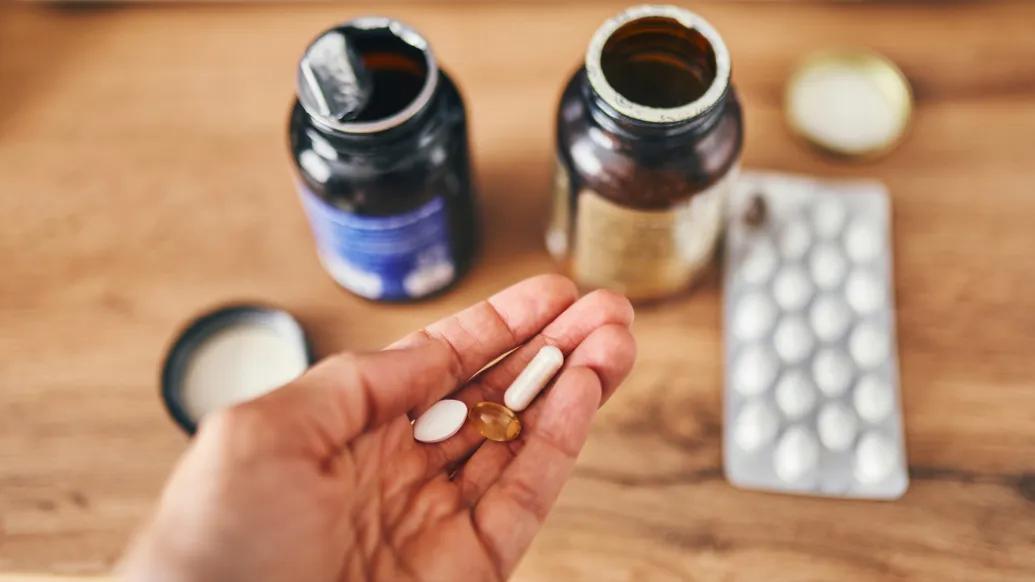
A newly developed tool, called the DILI-Inpt prognostic score, can predict patients with drug-induced liver injury who are unlikely to survive without a liver transplant.
In study results published in Clinical Gastroenterology and Hepatology, the DILI-Inpt prognostic score outperformed existing systems in identifying which hospitalized patients with severe idiosyncratic drug-induced liver injury were unlikely to recover on their own.
“We have struggled for many years to identify which patients with severe DILI may need to be evaluated for emergency liver transplantation, versus recovery with supportive care,” said Robert Fontana, M.D., Michigan Medicine hepatologist, professor of internal medicine and the study’s senior author.
“The stakes are high. And it is made even more a difficult due to the small number of prior cases we have seen. This study provides important data for all of us to use and help manage our patients.”
The acronym DILI refers to idiosyncratic drug-induced liver injury, an uncommon condition caused by a variety of drugs and herbal and dietary supplements.
While most patients who experience such liver injuries recover after discontinuation of the culprit drugs, some advance to acute liver failure and may require liver transplantation.
The DILI-Inpt prognostic score aims to better assess such patients so that they can be more quickly sent to a liver transplant center or placed on the waiting list.
This study used data from 305 adults from 1998 to 2019, enrolled in a national database of acute liver failure and acute liver injury patients.
The drugs that induced liver injuries in these patients varied and included antimicrobials (42.6%), herbal-dietary supplements (16%) and psychoactive drugs (9.8%).
After 21 days, 110 patients (36%) spontaneously survived—i.e., recovered on their own after discontinuing the drug—while 115 required liver transplant and 80 died.
For these 305 patients, a variety of tests results were analyzed, including total bilirubin, serum ALT and creatinine values.
Using multivariable logistic regression modeling, DILI-Inpt prognostic score was developed to predict which patients were mostly likely to require liver transplant and at highest risk of death.
The Area Under the Receiver Operating Characteristic Curve for DILI-Inpt prognostic score was 0.86 and significantly higher than that of MELD (0.79 AUROC score) and King’s College Criteria (0.63).
These results suggest that the DILI-Inpt prognostic score, which is composed of two readily available blood tests (total bilirubin and INR values) and two clinical parameters (encephalopathy grade and use of herbal products), better predicts which patients will not spontaneously survive than these existing scoring systems.
Of note, the diagnosis of drug-induced liver injury is frequently delayed or missed by the need to exclude more common causes of liver injury and its low incidence.
Since DILI patients have a low likelihood of recovery, there is an urgent need to quickly identify which patients might require liver transplant.
“Another important finding in our study was that patients with herbal and dietary supplement hepatotoxicity had the lowest likelihood of survival and that the proportion of herbal cases was increasing over time in the United States,” Fontana said.
“Our data indicates that further research as to why and how botanical products may lead to potentially severe liver injury in otherwise healthy people is needed.”
Additional authors: Alisa Likhitsup, M.D., M.P.H., Zemin Su, M.S., Jody A. Rule, Ph.D., Ahmad Anouti, M.D., Ashwin Rao, M.D., Hoss Rostami, M.S., Valerie Durkalski-Mauldin, Ph.D., William M. Lee, M.D.
Funding/disclosures: National Institute of Diabetes, Digestive, and Kidney Diseases NIDDK (U-01 DK 58369)
Tech transfer(s)/Conflict(s) of interest: Fontana has received research support from Kezar, Takeda, Fractyl, and MiroMatrix and provided consulting for Metsera and MasterSwitch. Lee consults for Genentech, SeaGen, GSK and Veristat and receives research support from Gilead, Alexion, Vivet, Camurus and Lipocine, none related to the current article.
Paper cited: “The DILI-Inpt prognostic score to Identify hospitalized Idiosyncratic DILI patients at risk for Adverse outcomes,” Clinical Gastroenterology and Hepatology.
Sign up for Health Lab newsletters today. Get medical tips from top experts and learn about new scientific discoveries every week.
Sign up for the Health Lab Podcast. Add us wherever you listen to your favorite shows.

Health Lab
Explore thousands of health news & research stories by visiting the Health Lab homepage for more.
Media Contact

Public Relations
Department of Communication at Michigan Medicine
In This Story
Robert John Fontana, MD
Professor
Stay Informed
Want top health & research news weekly? Sign up for Health Lab’s newsletters today!
Featured News & Stories
Rural-urban disparities in head and neck cancer

Digital alerts support timely treatment decisions of critically ill cardiac patients
Study outlines a new framework for direct cell reprogramming

New insight into how lipodystrophy can affect overall health
FDA-approved drug offers hope for patients with polycythemia vera, a rare bone marrow disorder