New hope for early diabetes detection
Researchers pioneer a game-changing approach for predicting type 1 diabetes
1:32 PM
Author |
This story was originally published by Biomedical Engineering at University of Michigan.
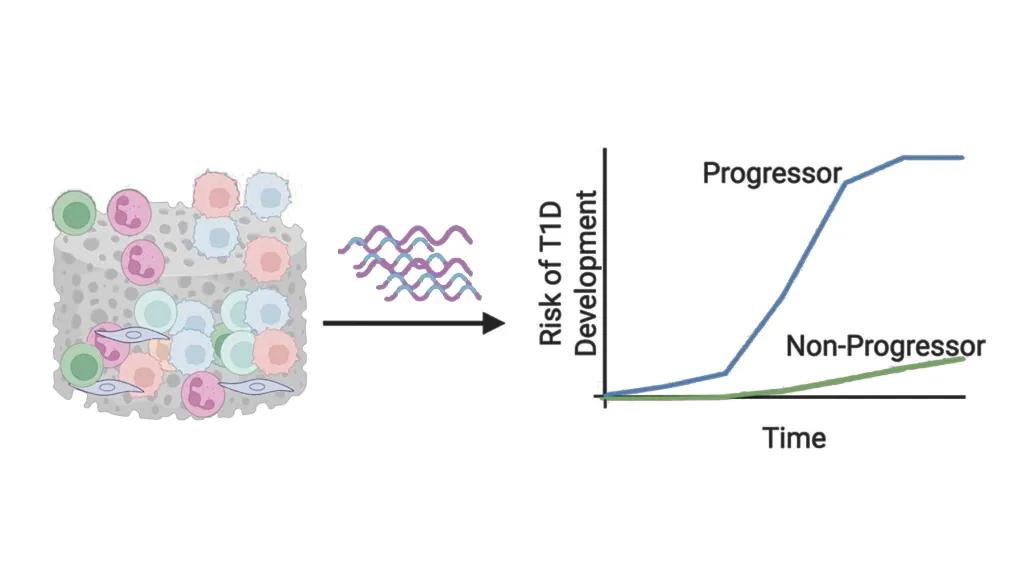
In a significant step toward the goal of preventing autoimmune type 1 diabetes, a team led by U-M’s Lonnie Shea, Steven A. Goldstein Collegiate Professor, Biomedical Engineering, has developed a new system that can identify—well before symptoms appear—whether an individual is on track to develop the disease.
The research, published in a recent Science Advances issue, offers an actionable monitoring method that may guide the administration of current and emerging therapeutics more effectively than the current diagnostics that only assess disease risk or detect disease after destruction of insulin producing cells.
The challenge of predicting T1D
“In many instances, such as individuals with a family history of diabetes, people know that they’re at risk for developing diabetes, but there aren’t any current, reliable tests that provide actionable information,” he said.
“One current test measures the presence of auto-antibodies to insulin or other islet cell components. If you test positive for one antibody, individuals develop diabetes at a rate of 14.5% in the next 10 years. For two antibodies, the rate is 65.1% and those with 3 antibodies the rate is 72.1%,” Shea explained.
The numbers show that risk increases, yet the broad time frame makes it difficult to determine when an individual should act or what they should do to halt disease onset.
“If someone tests positive for two antibodies,” Shea said, “a glucose tolerance test can be administered to identify ‘dysglycemia’—longer than normal to clear glucose—that means they’re losing function of their beta cells.”
At this point, the patient may receive a novel therapeutic called teplizumab that can be administered to delay the onset of diabetes. But, as Shea noted, “this drug is being delivered after you’ve already lost a significant function of your beta cells. We really wanted a system to identify the immune dysregulation that precedes beta cell destruction.”
A breakthrough system: the immunological niche
The team’s new approach centers on a special implant called a microporous scaffold.
Placed under the skin, it serves as an “immunological niche”—a safe, easily accessible site that mirrors the immune changes happening deep in the pancreas, where T1D takes hold.
“We have also shown that the IN captures tissue associated phenotypes distinct from those present in circulation,” said Jessica King, the lead author on the recent publication.
“This distinction is particularly useful in the case of T1D, as investigating tissue specific changes through a pancreas biopsy would destroy a piece of the tissue therapies like teplizumab aim to preserve, and blood based tests lack the time specificity we have found with the IN,” said King.
Instead of waiting for glucose problems or relying only on antibody levels, researchers can analyze the genetic activity (transcriptomics) in cells sampled from the IN, offering a much earlier window into disease progression.
In their study using the NOD mouse model—where about 75% of mice develop type 1 diabetes—Shea’s team was able to identify diabetes risk early and track the immune system over time.
“We sampled the implants at six weeks of age, and could distinguish those mice that were going to develop diabetes from those that were not."
This timing of analysis was “far before there are any symptoms of diabetes,” Shea noted.
"There’s no indication—no dysglycemia or poor health—but we could already tell who was going to develop diabetes and who’s not.”
Seeking actionable information for treatment
One of the most impressive aspects was the ability to monitor disease progression.
For the mice at risk, “we could monitor the implant over time and develop a score based on a gene signature. From six weeks of age to about five to seven weeks before disease onset, the score remained low. Then, at five to seven weeks before onset, there was a substantial jump in that score—indicating the immune system is activating. Diabetes is coming,” he said.
This insight could change how—and when—interventions are given. “This change in score could identify a time to administer a therapy such as teplizumab,” Shea said.
"You have an indication of an active immune response, but you have not lost beta cells yet.”
How does the immunological niche work?
According to the paper, the IN offers a minimally invasive way to monitor real-time changes in the immune system that reflect what’s happening in the pancreas.
“Sequencing analysis of the IN successfully delineates at-risk from non-risk groups, as well as disease progressors from non-progressors, at six weeks of age,” the researchers noted.
Among mice destined to develop diabetes, gene expression in cells taken from the IN can reveal immune activation far ahead of what current diagnostics allow.
The system does more than simply capture activity preceding diabetes onset; it helps identify which patients should be watched more closely, and who probably will not need frequent monitoring.
A platform for preventative care
The technology’s ability to track the immune system’s actions so early could transform monitoring for T1D, allowing doctors to pinpoint the best moment for intervention—possibly before irreversible damage occurs.
“The potential of this research is that we can identify, long before any signs or symptoms, which individuals are on course to develop type 1 diabetes. That information gives us a window to act – something we’ve never had before,” Shea concluded.

Health Lab
Explore thousands of health news & research stories by visiting the Health Lab homepage for more.
Media Contact

Public Relations
Department of Communication at Michigan Medicine
In This Story

Lonnie Shea
Professor

Jessie King
Clinical Assistant Professor
Stay Informed
Want top health & research news weekly? Sign up for Health Lab’s newsletters today!
Featured News & Stories

The AI is listening: Implications of machine generated clinical notes on health care
Gene editing is coming for common diseases. Are we ready?
Comprehensive DNA sequencing reveals hidden drivers of cancer

Many older adults make Medicare decisions quickly and most don’t change plans, poll finds
‘Molecular glue’ stabilizes protein that inhibits development of non-small cell lung cancer and uterine cancer