New guidelines issued for treating thyroid cancer
An expert answers questions about thyroid cancer prevalence, survivorship and treatment options
5:00 AM
Author |
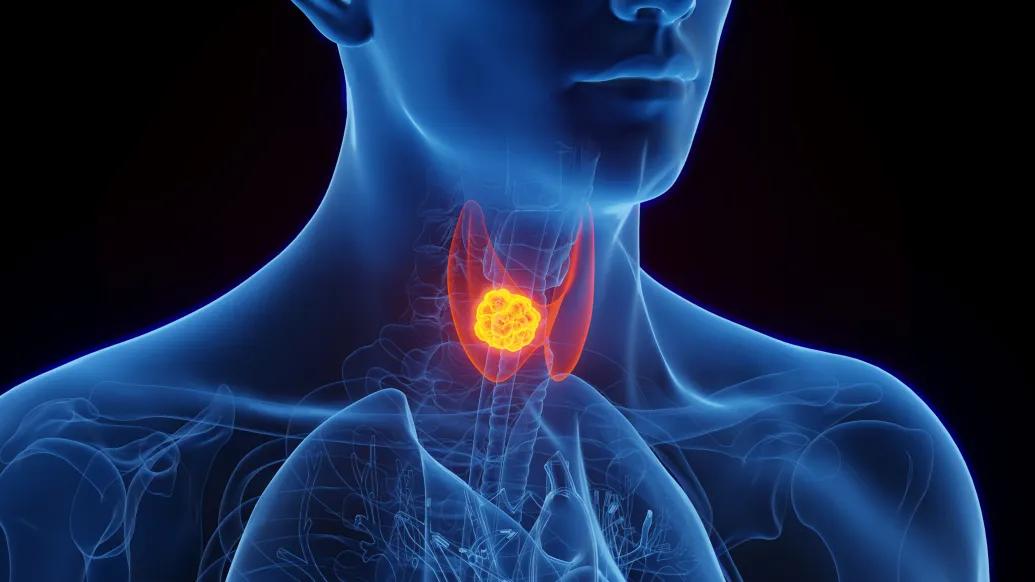
Thyroid cancer is the 12th most common cancer in the United States, affecting more than 44,000 patients in 2024.
Most patients are diagnosed with differentiated thyroid cancer, in which the cancer cells retain some features of normal thyroid cells.
The American Thyroid Association first published guidelines for managing differentiated thyroid cancer in 1996 and has revised them over the years to reflect advances in the field.
The current updates consider every aspect of the patient’s journey, including diagnosis, monitoring and treatment.
Megan Haymart, M.D., Nancy Wigginton Endocrinology Research Professor of Thyroid Cancer and a member of Rogel Cancer Center, answers questions about understanding the risk for thyroid cancer, active surveillance and current treatment options.
Who's at risk for thyroid cancer?
Haymart: Thyroid cancer largely affects young adults and women.
It's the most common type of cancer in adolescents and adults ages of 15 to 33. It is also the fifth most common cancer in women.
The average age of diagnosis is 51.
The only modifiable risk factor is radiation exposure, usually on the scale of a catastrophic event such as Chernobyl.
For differentiated thyroid cancer, only 5% of cases have a family history, but we still don’t understand why most patients get thyroid cancer.
What are the symptoms of thyroid cancer?
Haymart: Most thyroid cancers are asymptomatic.
If you feel a lump in your neck, that you haven't noticed before and it doesn’t go away in a few weeks, it is important to alert your doctor.
If your voice changes and becomes hoarse without improvement, in rare cases it can be related to thyroid cancer.
How is thyroid cancer diagnosed and treated?
Haymart: When patients come in with a prior diagnosis of a thyroid nodule or a lump in their thyroid, we often follow up with imaging.
Depending on the type of nodule, the next step is often a biopsy, where we look at tissue samples to assess whether it is cancer.
If cancer is diagnosed, most patients choose to have surgery to remove the tumor.
If the entire thyroid is removed, patients receive thyroid hormone replacement therapy after surgery.
Sometimes, for individuals with small, low-risk cancers, we consider active surveillance where we monitor the tumor and intervene only when needed.
Other options for small cancers include ethanol injections or radio-frequency ablation to shrink the tumors. Both are minimally invasive procedures and are used when surgery isn’t recommended.
Why were the guidelines updated?
Haymart: I was part of a team of endocrinologists, oncologists, nuclear medicine physicians, surgeons and patient representatives who wrote the new guidelines.
Our goal was to ensure that the advice for clinicians paralleled what recent research and data have shown.
One of the major changes includes more focus on de-escalating care. This means that after a patient is cancer free for a period of time, we can reduce the amount of monitoring they need.
There is also more emphasis on shared decision making.
Often, patients differ in terms of what treatment works for them, and having a conversation with the doctor is helpful.
The guidelines also emphasize survivorship and thinking about the long-term complications and side effects that cancer survivors might face, including psychological and financial impacts.
Paper cited: “2025 American Thyroid Association Management Guidelines for Adult Patients with Differentiated Thyroid Cancer,” Thyroid. DOI: 10.1177/10507256251363120
Sign up for Health Lab newsletters today. Get medical tips from top experts and learn about new scientific discoveries every week
Sign up for the Health Lab Podcast. Add us wherever you listen to your favorite shows

Health Lab
Explore thousands of health news & research stories by visiting the Health Lab homepage for more.
Media Contact

Public Relations
Department of Communication at Michigan Medicine
In This Story

Megan R Haymart, MD
Professor
Stay Informed
Want top health & research news weekly? Sign up for Health Lab’s newsletters today!
Featured News & Stories

New insight into how lipodystrophy can affect overall health
FDA-approved drug offers hope for patients with polycythemia vera, a rare bone marrow disorder

Pediatric patient treated for rare kidney cancer

Rare cancer diagnosis inspires community of support