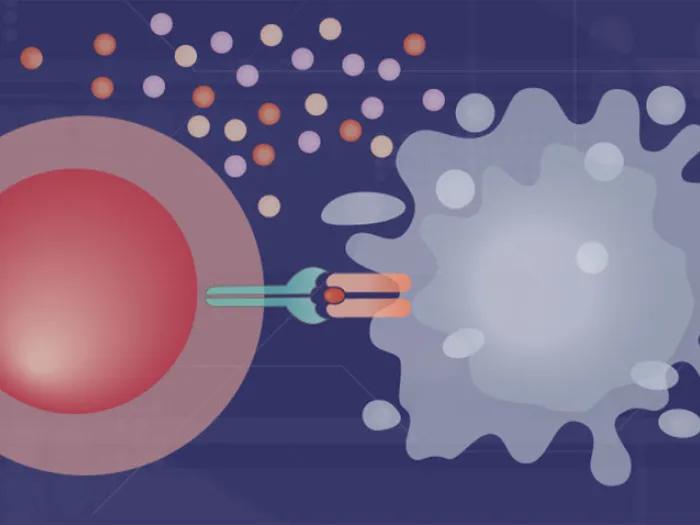
New Connections Reveal How Cancer Evades the Immune System
A new study shows tumor cells eat up a key amino acid, depriving immune cells of it, which prevents them from fighting off cancer.
11:00 AM
Author |

If cancer is a series of puzzles, a new study pieces together how several of those puzzles connect to form a bigger picture.
One major piece is the immune system and the question of why certain immune cells stop doing their job. Another piece involves how histones are altered within immune cells. A third piece is how a cell's metabolism processes amino acids.
"Nobody knew if those questions were all connected. We were able to place several of these puzzles together and see how it works," says Weiping Zou, M.D., Ph.D., Charles B. de Nancrede Professor of Surgery, Pathology, Immunology and Biology at the University of Michigan and director of the Center of Excellence for Immunology and Immunotherapy at the U-M Rogel Cancer Center.
Zou is senior author on a paper published in Nature that includes multiple labs from the Rogel Cancer Center and collaborators from Poland.
The study found a connection between these three separate puzzles that suggests targeting the amino acid methionine transporter in tumor cells could make immunotherapy effective against more cancers.
It starts with T cells, the soldiers of the immune system. Cancer can turn these cells abnormal, preventing T cells from mounting an attack against it. The question is: what causes this?
Researchers looked at the tumor microenvironment, specifically how tumors metabolize amino acids. They found an amino acid called methionine had the most impact on T cell survival and function. T cells with low levels of methionine became abnormal. Low methionine in the T cells also altered histone patterns that caused T cells to be impaired.
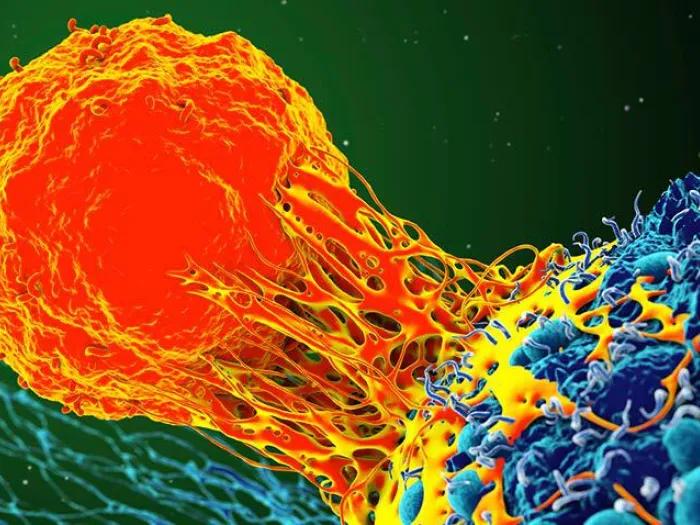
Introducing tumor cells to the picture creates a fight between the tumor cells and the T cells for methionine. Over and over, the tumor cells win, taking the methionine from the T cells and rendering them ineffective.
Previous research has considered a systemic approach to starve tumor cells of methionine, with the idea that the tumor cells are addicted to it. But, Zou says, this study shows why that approach may be a double-edged sword.
SEE ALSO: Researchers Find New Target to Improve Response to Cancer Immunotherapy
"You have competition between tumor cells and T cells for methionine. The T cells also need it. If you starve the tumor cells of methionine, the T cells don't get it either. You want to selectively delete the methionine for the tumor cells and not for the T cells," Zou says.
In fact, the study found that supplementing methionine actually restored T cell function. High enough levels of methionine meant there was enough for both tumor cells and T cells.
One key is that tumor cells have more of the transporters that deliver methionine. The researchers found that impairing those transporters resulted in healthier T cells as the T cells could compete for methionine.
Zou was awarded a $3.2 million grant from the National Cancer Institute to advance this work.
"There are still a lot of mechanistic details we have not worked out, particularly the detailed metabolic pathways of methionine metabolism. We also need to understand how metabolism pathways may be different from tumor cells and T cells. We hope to find a target that is relatively specific to tumor cells so that we do not harm the T cells but impact the tumor," Zou says. This work will be the focus of the new grant.
He is also working with drug discovery experts to try to identify a small molecule inhibitor that targets methionine in tumor cells.
Additional authors on the paper were Yingjie Bian, Wei Li, Daniel M. Kremer, Peter Sajjakulnukit, Shasha Li, Joel Crespo, Zeribe C. Nwosu, Li Zhang, Arkadiusz Czerwonka, Anna Pawlowska, Houjun Xia, Jing Li, Peng Liao, Jiali Yu, Linda Vatan, Wojciech Szeliga, Shuang Wei, Sara Grove, J. Rebecca Liu, Karen McLean, Marcin Cieslik, Arul Chinnaiyan, Witold Zgodzinski, Grzegorz Wallner, Iwona Wertel, Karolina Okla, Ilona Kryczek, Costas A. Lyssiotis.
Funding for this work was from National Cancer Institute grants CA217648, CA123088, CA099985, CA193136, CA152470, P30 CA046592; AACR NextGen Grant for Transformative Cancer Research; American Cancer Society Research Scholar Grant; National Institutes of Health grant DK097153, the Charles Woodson Research Fund, the U-M Pediatric Brain Tumor Initiative.
Paper cited: "Cancer SLC43A2 alters T cell methionine metabolism and histone methylation," Nature. DOI: 10.1038/s41586-020-2682-1

Health Lab
Explore thousands of health news & research stories by visiting the Health Lab homepage for more.
Media Contact

Public Relations
Department of Communication at Michigan Medicine
Stay Informed
Want top health & research news weekly? Sign up for Health Lab’s newsletters today!
Featured News & Stories
Certain gene signaling rewires tumors after immunotherapy
New clues toward treating pediatric brain tumors harboring epigenetic mutation
Common diabetes drug promising against rare childhood brain tumor in laboratory studies
Researchers uncover way to harness the power of immunotherapy for advanced prostate cancer
Researchers Discover First Immune Stimulating Long Noncoding RNA Involved in Body's Response to Cancer