New cellular therapy trials for brain tumors
Phase I trials target aggressive tumors in children
5:00 AM
Author |
The standard treatment for most cancers is chemotherapy and surgery. However, for tumors in the brain and spinal cord treatments can be challenging.
These tumors are often difficult to access through surgery due to their location and can be very aggressive. Unfortunately, there are limited therapy options for patients with inoperable tumors.
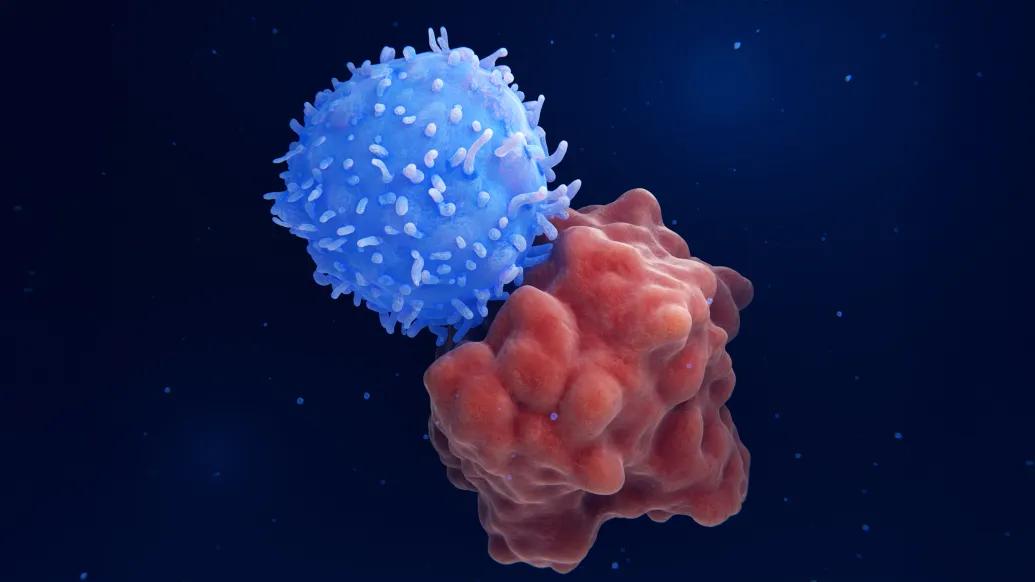
The development of chimeric antigen receptor T cells is a promising new type of cancer therapy. CAR T treatment helps the patient’s own body and immune system to target the tumor.
Jay Read, M.D., Ph.D., a clinical assistant professor of pediatrics and pediatric hematology-oncology at University of Michigan Health C.S. Mott Children’s Hospital and Gregory Yanik, M.D., a clinical professor of pediatrics and pediatric hematology-oncology at Mott, discuss CAR T therapy, its use in other clinical trials at U-M Health Rogel Cancer Center and the new Phase I trials that started in March 2025.
How does CAR T therapy work?
Read: CAR T essentially co-opts the immune system of the patient to attack cancer cells.
First, we take T cells, which are one of the frontline soldiers of the immune system, from the patient.
Next, we train these cells to recognize a molecule on the surface of cancer cells. We then inject the T cells back to the patient and they attack the tumor.
CAR T therapy has revolutionized cancer treatment and has been successful in treating leukemia and lymphoma. We are hoping to apply this technology to brain tumors.
Yanik: One of the amazing things about CAR T cells is their adaptability to other cancers.
CAR T therapy trials for other tumors, including pancreatic cancer, colon cancer, lung cancer and liver cancer are currently being developed by researchers around the country.
Has the University of Michigan conducted CAR T trials before?
Read: We have been one of the leaders of CAR T therapy. We participated in the multi-center trial that led to the FDA approval of the first CAR T product.
Our cancer center was one of the first sites nationally to offer both currently FDA-approved CAR T-cell therapies, Kymriah™ (Novartis) and Yescarta™ (Kite), for blood cancer treatment.
This is the first time we’re using CAR T to address brain tumors and it’s to help a population that has a lot of unmet clinical need. We’re hopeful that we can help improve both the life expectancy and the quality of life for our patients.
Can CAR T therapy be applied to other diseases?
Yanik: CAR T therapy has the potential to extend beyond cancer treatment.
CAR T trials for select autoimmune disorders are currently being run at the University of Michigan.
Additionally, CAR T trials for Crohn’s disease and multiple sclerosis are under review at our university, with hopes of being available in the upcoming year.
Why are you focusing on brain cancer?
Read: Brain tumors are one of the most common cancers in pediatric patients and often very difficult to treat.
Through the U-M Chad Carr Pediatric Brain Tumor Center, our scientists are trying to drive forward innovative research in the field of brain tumors.
We will be the first in the Midwest to have this type of trial and it is made possible by our multidisciplinary team, including cellular therapy experts, pediatric neuro-oncologists and pediatric neurosurgeons. We hope to advance the field in terms of treating patients with inoperable brain tumors and provide hope for families.
What do you want to accomplish with the new trials?
Read: We are conducting Phase I trials with the City of Hope. It is an extension of the adult trial that they had previously done.
The primary goal of these trials is to address safety. We know that patients with leukemia and lymphoma can tolerate CAR T therapy well. However, less is known about CAR T’s safety in patients with brain tumors.
We will be injecting CAR T cells directly into the fluid that surrounds the brain and the spine to test whether they have any toxic effects.
In the future stages of these trials, we hope to see a reduction in tumor size and symptoms.
Find out more about CAR T therapy or call the Cancer AnswerLine at 800-865-1125.
Sign up for Health Lab newsletters today. Get medical tips from top experts and learn about new scientific discoveries every week.
Sign up for the Health Lab Podcast. Add us wherever you listen to your favorite shows.

Health Lab
Explore thousands of health news & research stories by visiting the Health Lab homepage for more.
Media Contact

Public Relations
Department of Communication at Michigan Medicine
In This Story

Gregory Anthony Yanik, MD
Clinical Professor
Related
Using cellular therapy to treat cancer, and beyond
What You Need to Know About CAR T-Cell Therapy for Cancer
Stay Informed
Want top health & research news weekly? Sign up for Health Lab’s newsletters today!
Featured News & Stories
Pain, psychological factors and physical function closely linked in people with systemic sclerosis
Many hospitals still don’t do enough to prevent UTIs from catheters
Rural-urban disparities in head and neck cancer
Study outlines a new framework for direct cell reprogramming

New insight into how lipodystrophy can affect overall health