National research effort discovers relationship between inflammation, metabolism and scleroderma scarring
Study finds NAD+ break down leads to multi organ scarring, providing now a previously undiscovered pathogenic role of the enzyme CD38 in disease scarring
9:37 AM
Author |
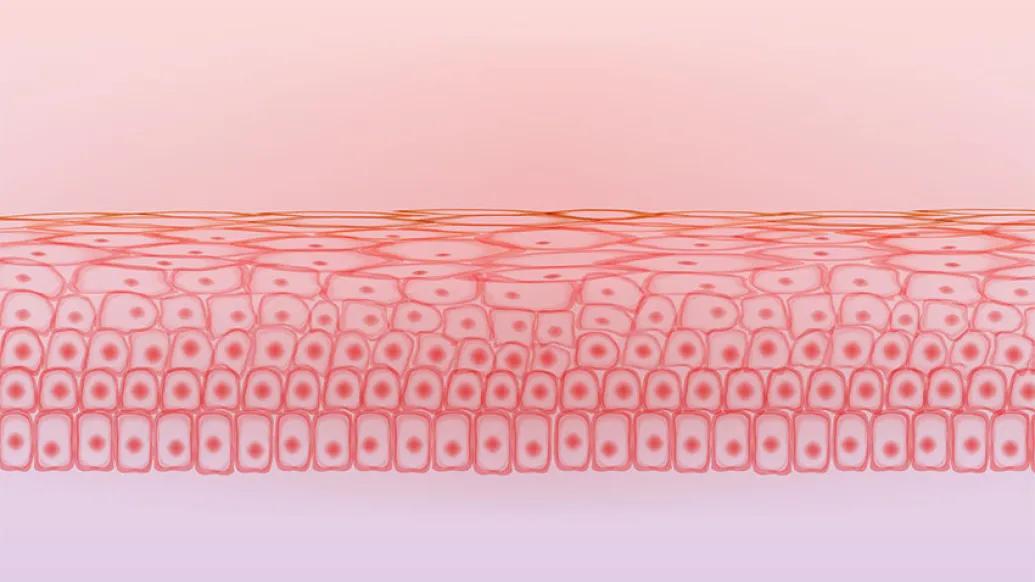
Scleroderma, a chronic and currently incurable orphan disease where tissue injury causes potentially lethal skin and lung scarring, remains poorly understood.
However, the defining characteristic of systemic sclerosis, the most serious form of scleroderma, is irreversible and progressive scarring that affects the skin and internal organs.
Published in iScience, Michigan Medicine's Scleroderma Program and the rheumatology and dermatology departments partnered with the Northwestern Scleroderma Program in Chicago and Mayo Clinic to investigate the causes of disabling scarring, using human patient samples, preclinical mouse models and explanted human skin.
"We found that scleroderma inflammation dramatically increases CD38, an enzyme that normally breaks down a metabolic nutrient, NAD+. When NAD+ levels decrease, tissue injury becomes chronic and progresses to scar formation rather than to healthy repair," says study author John Varga, M.D., division chief of rheumatology at Michigan Medicine.
According to the study, treatments that prevented NAD+ reduction in the mice, whether by boosting the levels of the nutrient genetically or pharmacologically, prevented scarring in the skin, lungs and abdominal wall.
"This is one of the first studies to find a relationship between CD38 and scleroderma, as well as the linking between inflammation and metabolism to skin and organ scarring," says study author Johann Gudjonsson, M.D. Ph.D., a dermatologist at Michigan Medicine.
These results provide a major advancement in unraveling the complexities of the disease, which is chronic, progressive and potentially deadly for many affected.John Varga, M.D.
Boosting NAD+ via the precursor nicotinamide riboside, a safe and inexpensive dietary supplement, prevented skin and other organ scarring, providing the researchers a previously undiscovered pathogenic role of CD38 in scleroderma scarring.
"These results open the door to entirely novel treatments for fibrosis and scleroderma. Using precision medicine, these treatments could be selectively targeted to block CD38 in scleroderma patients who have elevated CD38," says study author Bo Shi, Ph.D., a research assistant professor of dermatology at Northwestern Medicine.
The research findings also create possibilities for restoring levels of NAD+ using pre-existing drugs, or well tolerated dietary supplements. Both of these therapeutic approaches are entirely novel strategies to halt scleroderma's most debilitating side effect.
Now, Varga looks forward to learning more about these testable approaches to treating scleroderma using safe, inexpensive agents in the Michigan Medicine Scleroderma Program, one of the preeminent integrated clinical and research programs for the diagnosis, prevention and cure of systemic sclerosis in the nation.
"We've defined a pathway that for the first time mechanistically links inflammation and metabolism to scarring in system sclerosis. These results provide a major advancement in unraveling the complexities of the disease, which is chronic, progressive and potentially deadly for many affected," says Varga.
"Now, we will look at designing and executing an early-stage 'proof of principle' clinical trial to assess the safety, tolerability and efficacy of such innovative treatments in patients."
This work was supported in part by grants from the National Institutes of Health and National Institute on Aging grants 1R56AG054207 (J.V.), AR074523 (J.V. and E.N.C.), AG-26094 (E.N.C), AG58812 (E.N.C), AR070285 (B. K.), AR073371 (S.D.M. and J.V.), P30 AR073371 (J.G.), Scleroderma Foundation Research Grant (D.X.), and the Glenn Foundation for Medical Research via the Paul F. Glenn Laboratories for the Biology of Aging at the Mayo Clinic (E.N.C).
Paper Cited: "Targeting CD38-dependent NAD+ metabolism to mitigate multiple organ fibrosis," iScience. DOI: 10.1016/j.isci.2020.101902
Like Podcasts? Add the Michigan Medicine News Break on iTunes, Google Podcast or anywhere you listen to podcasts.

Health Lab
Explore thousands of health news & research stories by visiting the Health Lab homepage for more.
Media Contact

Public Relations
Department of Communication at Michigan Medicine
Stay Informed
Want top health & research news weekly? Sign up for Health Lab’s newsletters today!
Featured News & Stories

A metabolic “switch” that could help reset scar-producing cells in scleroderma

Emergency room intervention pairs smartphone, telehealth counseling to reduce risky firearm behavior

Better prenatal care data could help prevent maternal complications, experts say

Pain, psychological factors and physical function closely linked in people with systemic sclerosis
Many hospitals still don’t do enough to prevent UTIs from catheters