Motorcycle helmet repeal linked to 26% rise in crash-related hospital costs
Rising costs from motorcycle crashes could affect trauma center stability as public dollars cover millions in preventable spending, study suggests
5:00 AM
This is an adapted and edited version of a story originally published by the American College of Surgeons
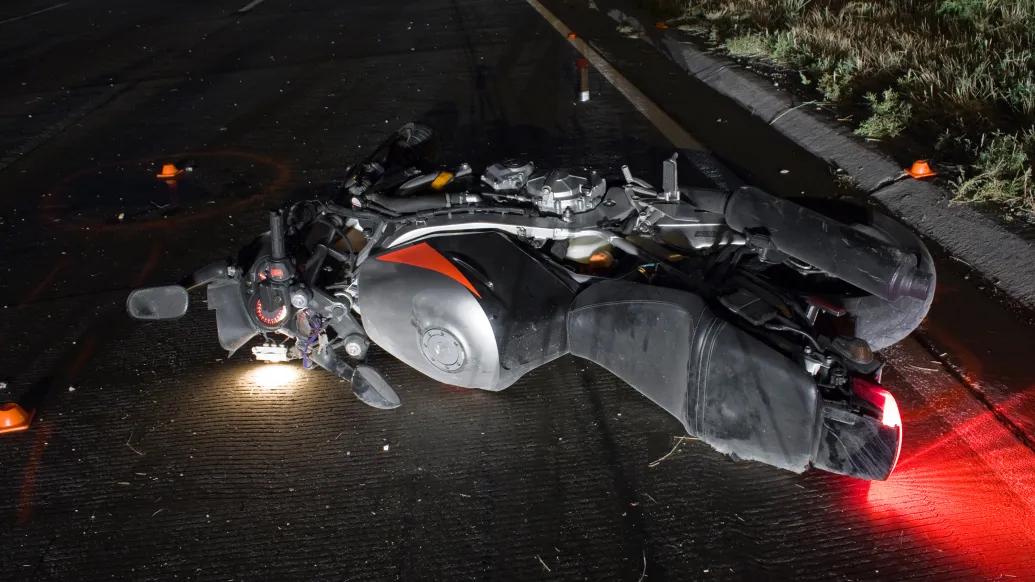
Repealing universal motorcycle helmet laws is associated with a significant increase in crash-related hospital costs, according to a study by a University of Michigan team published in the Journal of the American College of Surgeons.
Using Michigan's 2012 helmet law repeal as a natural experiment, researchers found that the policy change led to a 26% increase in average inpatient costs per motorcycle crash survivor treated in a Michigan hospital.
"When people argue that helmet choice is solely a personal freedom issue, they overlook who ultimately pays for the treatment," said Patrick L. Johnson, M.D., M.P.H., lead author of the study and a surgery resident at University of Michigan Health.
"A significant portion of these costs fall on public payers, taxpayers, and trauma systems — meaning we all share the financial burden."
Johnson is a fellow at the Center for Healthcare Outcomes and Policy, and worked with U-M Medical School Department of Surgery faculty who are members of the Institute for Healthcare Policy and Innovation.
Trauma surgeon and Clinical Assistant Professor of Surgery Raymond Jean, M.D., M.H.S., M.A., is the study’s senior author.
Study results
Researchers analyzed data from 19,685 motorcycle crash patients from five states using data from 2009 to 2015, using the Healthcare Cost and Utilization Project State Inpatient Databases made available through the federal Agency for Healthcare Research and Quality.
They compared Michigan — which repealed its universal helmet law in April 2012 — with four control states chosen for geographic and demographic similarity: Wisconsin, Minnesota, Kansas, and Colorado.
Key findings include:
Repeal was associated with a $5,785 rise in inflation-adjusted inpatient costs per crash patient in Michigan — a 26% increase.
Adjusted to 2025 dollars, repeal was associated with $6.4 million in excess annual inpatient spending in Michigan alone over the study period
The researchers note that inpatient costs represent only about two-thirds of acute medical expenses after a crash.
This means the true financial impact of crash injury recovery, which may include rehabilitation and long-term care, is likely substantially higher.
Broader implications for trauma centers and taxpayers
The study considers the potential impact on hospital trauma centers, which face ongoing financial challenges.
When crash patients are uninsured or underinsured, or become unable to work afterwards due to injuries, hospitals often must absorb some of the cost of their care — potentially affecting their financial stability and ability to care for communities.
Trauma centers have a duty to care for everyone who comes through their doors, regardless of ability to pay. When policy choices lead to more severe — and more expensive — injuries, that creates real downstream pressure on already strained trauma systems."
-Patrick L. Johnson, M.D., M.P.H.
"Trauma centers have a duty to care for everyone who comes through their doors, regardless of ability to pay," Johnson said.
"When policy choices lead to more severe — and more expensive — injuries, that creates real downstream pressure on already strained trauma systems."
The study found that about one-third of patients in the cohort did not have auto insurance as the primary payer for their health care costs, meaning costs frequently shifted to public insurance programs such as Medicaid and Medicare, or were absorbed by hospitals.
Building evidence on helmet laws
Including Michigan, 33 states have repealed universal helmet laws.
The findings suggest that revisiting those laws, and preserving existing universal helmet laws in other states, may have substantial financial benefits for public payers and trauma systems.
The research builds on a growing body of evidence demonstrating the lifesaving impact of universal helmet laws.
"As more states revisit helmet legislation, policymakers need to understand the full picture, which includes financial consequences for both healthcare systems and taxpayers," Johnson said.
"This isn't about limiting freedom. It's about understanding that individual choices can carry shared costs."
Additional authors: In addition to Johnson and Jean, the study’s authors are are Jamila K. Picart, M.D., M.S.; Alex K. Hallway, M.S.; Cody L. Mullens, M.D., M.P.H.; Scott C. Levy, M.D.; and Mark R. Hemmila, M.D. Johnson recently won first prize in the ACS Advocacy and Health Policy Abstract Competition with the research.
Hemmila was a co-author on a 2017 paper by a U-M team showing a rise in head injuries and neurosurgery in Michigan in the first year after the helmet law repeal, along with a reduction in helmet use in data collected at crash scenes and trauma centers.
Funding/disclosures: The study was funded by the Blue Cross Blue Shield of Michigan Foundation and the Frederick A. Coller Surgical Society at the University of Michigan.
Citation: Downstream Medical Costs of Repealing Universal Motorcycle Helmet Laws. Journal of the American College of Surgeons, 2026. DOI: 10.1097/XCS.0000000000001870

Health Lab
Explore thousands of health news & research stories by visiting the Health Lab homepage for more.
Media Contact

Public Relations
Department of Communication at Michigan Medicine
In This Story

Raymond Alexander Jean, MD, MA, MHS, FACS
Clinical Assistant Professor
Mark R Hemmila
Professor
Related

Most older drivers don't think about the road ahead, poll suggests

Study: Double-Digit Rise in Head Injuries After Michigan Helmet Law Repeal
Stay Informed
Want top health & research news weekly? Sign up for Health Lab’s newsletters today!
Featured News & Stories

E-Bikes are everywhere, but most parents say they don’t know enough about them
Waiting for a bed, but not for care: ED boarding study finds wide variation in handoffs
E-bikes are faster than ever. Are families prepared for the risks?
How AI is helping emergency physicians learn from their patients
Emergency EEG study suggests need for faster seizure diagnosis and care options