Most older drivers don't think about the road ahead, poll suggests
More than 80% of people over 65 drive weekly, but less than half have a plan for a time when they can’t or shouldn’t drive
8:00 AM
Author |
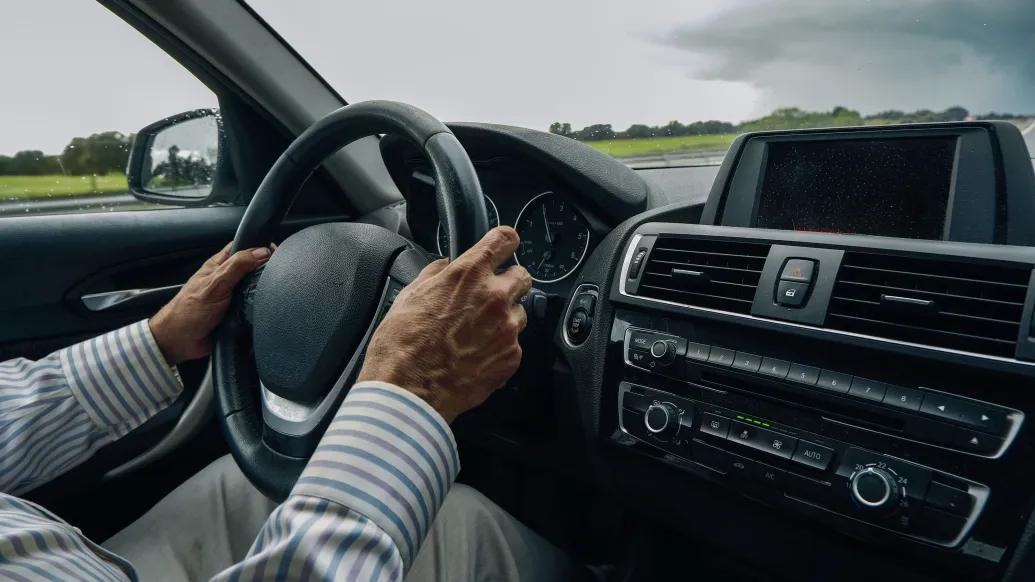
When today’s older adults learned to drive, they might have heard the Beatles’ “Drive My Car” or Bruce Springsteen’s “Born to Run” on their car radio’s Top 40 station.
Now, 84% of people age 65 and older drive at least once a week, and 62% drive most days, according to a new University of Michigan national poll.
But less than half of these older drivers have made a plan for a time down the road, when changes in their health might make it less safe for them to drive.
Even fewer know they could create a formal plan for stepping away from the driver’s seat when the time comes.
And very few have talked with a health care provider about driving as it relates to their health.
The new report from the U-M National Poll on Healthy Aging involved experts at the U-M Transportation Research Institute, one of the nation’s top centers for mobility studies.
The poll is based at the U-M Institute for Healthcare Policy and Innovation and funded by Michigan Medicine, U-M’s academic medical center.
Only 10% of the adults age 65 and older who answered the poll said they haven’t driven in the past six months.
Among those who had driven at least once in that time, 81% say they are very confident they can drive safely now, though 18% said they are only somewhat confident and 1% were not very confident.
Looking ahead, 51% were only somewhat confident in their ability to drive in the next five years, while 43% were very confident.
Another 5% were not confident in their ability to drive in the next five years.
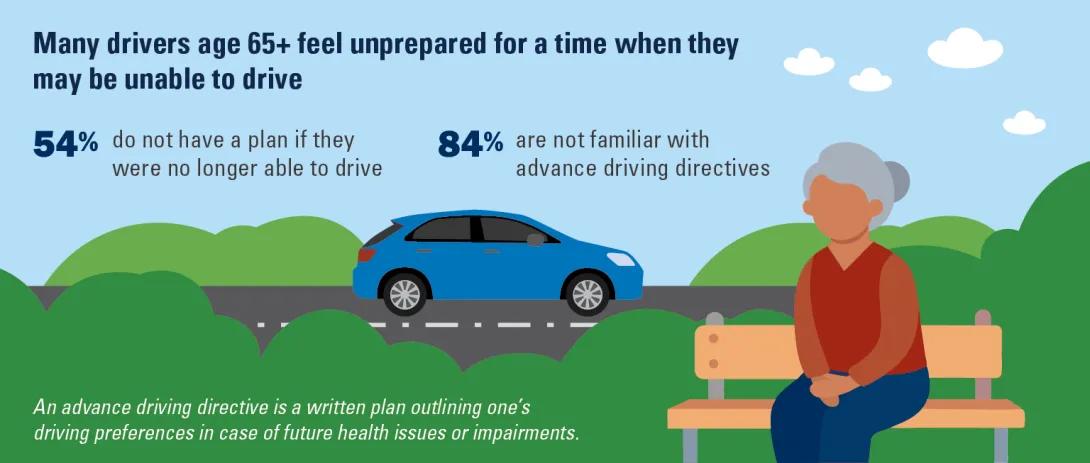
Even with this sense that their driving ability might change as they grow older, about half (54%) of drivers age 65 and over don’t have a plan for when they are no longer able to drive. Women and those over age 75 were more likely to have a plan than men and those age 65 to 74.
"The freedom to drive where you want, when you want, is a critical part of independent living for older adults, and when it’s diminished for any reason it can have profound effects,” said UMTRI researcher Renée St. Louis, Ph.D., who worked with the poll team and her colleague David W. Eby, Ph.D., to develop the poll and its report.
“With most of the Baby Boom generation now in their mid-60s and above, we have millions of older drivers who will need guidance and alternatives as their health begins to affect their ability to drive safely."
That includes informal support from family and friends, and formal support from public transportation and community-based services, said Eby.
Already, in the past six months, whether they currently drive or not, 44% of older adults have received rides from friends or family, and 21% have used rideshare services including taxis and private vehicles hailed by apps such as Uber and Lyft.
Just 14% used public transportation.
But 5% said ridesharing is not available where they live, and 9% said public transportation isn’t available.
In addition to the national findings, the poll team conducted a Michigan-specific analysis using data from the Michigan Poll on Healthy Aging, with support from the Michigan Health Endowment Fund. A description of the findings is available here and an interactive data tool is available here.
Intersections with health, today and tomorrow
Among those who have been behind the wheel in the last six months, a sizable majority -- 68% -- say they avoid driving under some conditions.
This included 53% who said they avoid driving in bad weather and 48% who avoid driving at night.
St. Louis notes that this may be unrelated to age or health and may just be personal preference.
But 14% of drivers age 65 and older said that vision issues affect their ability to drive.
Smaller percentages cited temporary or permanent health or mobility issues as having an impact on their driving ability.
Only 6% of older drivers said they had ever talked with a health care provider about their driving.
"This demonstrates a major opportunity for primary care providers, vision care professionals, occupational therapists, pharmacists, and others to discuss the potential impacts of specific conditions or medications on driving ability,” said poll director Jeffrey Kullgren, M.D., M.P.H., M.S., a primary care physician at the VA Ann Arbor Healthcare System and an associate professor of internal medicine at the U-M Medical School.
“If an older adult is in the care of a specialist for a chronic condition such as arthritis, diabetes or a neurological condition, or is having an operation, their specialists and surgical teams could also address potential driving impacts proactively."
Among poll respondents who hadn’t driven in the last six months, the most common reason was that it was no longer safe for them to drive (34%), followed by health issues (29%); respondents could choose more than one answer.
Only 16% of older drivers were familiar with the idea of an advance driving directive, a document that helps a person indicate their driving preferences in case of future health issues, and identify a person to help with decisions about stopping driving.
This demonstrates a major opportunity for primary care providers, vision care professionals, occupational therapists, pharmacists, and others to discuss the potential impacts of specific conditions or medications on driving ability."
-Jeffrey Kullgren, M.D., M.P.H., M.S.
But once they were given this definition, 70% said it was very or somewhat important to have an ADD.
St. Louis and Eby note that the poll findings have implications for organizations that provide services to older adults, and for local, state and federal policymakers around the country.
The findings also have implications for family members and health care providers who could have conversations with older adults about their driving.
Making community transportation services for older adults more available or accessible, and spreading awareness of services that already exist, could help more older adults maintain independence while choosing to leave the driving to someone else, they note.
Driving resources for older adults
The U-M transportation experts also note that vehicle manufacturers have added many features to automobiles in recent years that can increase safety for all drivers.
Older drivers who wish to keep driving as long as possible may want to explore trading in older vehicles for newer ones that have adaptive headlights, backup cameras, crash-avoidance sensors, and adaptive cruise control to help maintain safe following distances automatically.
Certain safety features can sometimes be added to older vehicles too.
They also point to driving resources for older adults and those who interact with them.
UMTRI has teamed with the state of Michigan to create an entire site for older drivers, their families and the professionals who provide health care and other services to them.
The site provides resources to support older driver safety and mobility, as well as guidance for families and professionals on transitioning away from driving.
Called Safe Drivers, Smart Options, it’s available at www.michigan.gov/agingdriver and includes a downloadable guide for aging drivers and their families in English, Spanish and Arabic.
The UMTRI team also recommends the MyMobility Plan website and tool offered by the national Centers for Disease Control and Prevention, which is designed to help older adults and people with disabilities plan for their future mobility and avoid motor vehicle crashes and other types of injury-causing situations.
AARP, AAA and other organizations offer driving classes designed for people over 55; the Safe Drivers, Smart Options website links to many of these. AAA also has a Driver Planning agreement to help families plan together for continued, safe mobility.
Public service organizations called Area Agencies on Aging may offer free or low-cost transportation options; find the agency serving any area of the United States here.
Local cities, towns and counties as well as regional transportation agencies may offer special transportation services or discounted public transit passes for older adults.
About the poll
The poll findings come from a nationally representative survey conducted by NORC at the University of Chicago for IHPI and administered online and via phone in February 2025 to 2,883 respondents age 50 to 97 from the AmeriSpeak panel. The Michigan-focused analysis includes 1,353 Michigan adults age 50 to 95, including a non-probability oversample. Results are weighted to reflect each respective population. Read past National Poll on Healthy Aging reports and Michigan findings, and learn about the poll methodology.
Sign up for Health Lab newsletters today. Get medical tips from top experts and learn about new scientific discoveries every week.
Sign up for the Health Lab Podcast. Add us wherever you listen to your favorite shows.

Health Lab
Explore thousands of health news & research stories by visiting the Health Lab homepage for more.
Media Contact

Public Relations
Department of Communication at Michigan Medicine
In This Story

Jeffrey Todd Kullgren, MD, MS, MPH
Professor
Related
1 in 4 seniors quit driving due to sight issues

Majority of older adults with cognitive impairment still drive
Stay Informed
Want top health & research news weekly? Sign up for Health Lab’s newsletters today!
Featured News & Stories

Top 7 tips for choosing Medicare prescription drug coverage for 2027

The AI is listening: Implications of machine generated clinical notes on health care

Comprehensive DNA sequencing reveals hidden drivers of cancer

Many older adults make Medicare decisions quickly and most don’t change plans, poll finds

‘Molecular glue’ stabilizes protein that inhibits development of non-small cell lung cancer and uterine cancer