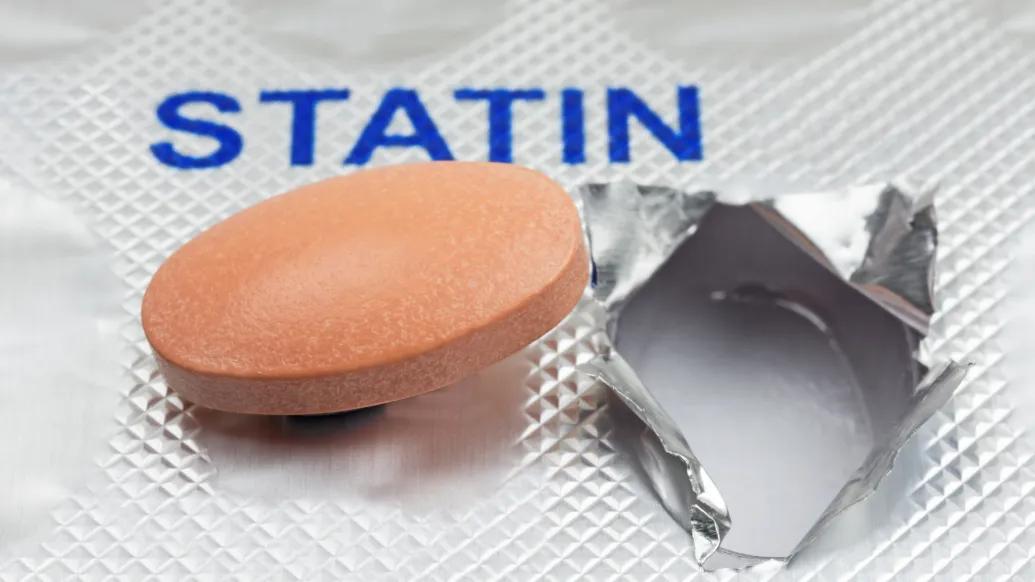
More than half of U.S. adults now qualify for statins under new guidelines
Updated recommendations for cholesterol-lowering therapy mean 21.5 million more people are eligible based on long term risk for heart attack and stroke
11:44 AM
Authors |
Adapted from a University of Pittsburgh Health Sciences news release
More than half of adults between the ages of 30 and 79 — about 87.5 million people — in the United States now meet criteria to take cholesterol-lowering drugs called statins to prevent future heart attacks, strokes and other issues, a new study projects.
The study assesses the impact of updated clinical guidelines, issued in March, that broadened statin eligibility by recommending doctors assess a patient’s cardiovascular risk over future decades and introduce statins at younger ages in people with higher risks.
The result?
An additional 21.5 million Americans are now recommended for statins, bringing the total to just under 57% of adults ages 30 to 79, according to the new paper by a team from the University of Pittsburgh and the University of Michigan.
The team published their findings in JAMA, which simultaneously published two other studies on the topic and a summary of the guidelines aimed at all health care providers who could play a role in increasing appropriate statin prescribing.
An editorial in the journal points out that even under older more conservative guidelines, about half of American adults who could have gotten preventive benefit from statins weren’t receiving them.
The Pitt and U-M researchers performed their study using a national database of health data after the March 2026 release of the updated guidelines by the American Heart Association, the American College of Cardiology and other organizations.
The guidelines incorporated an updated risk calculator released in 2023 and broadened statin eligibility by expanding the age range from 40–75 to 30–79 and extending the risk horizon from 10 years to 30 years.
“The shift to a longer view of cardiovascular disease risk is a sea change for doctors in counseling patients,” said Timothy S. Anderson, M.D., M.A.S., a primary care physician, health quality researcher and assistant professor of medicine at Pitt.
“We wanted to better understand the potential population-health effect of this shift.”
He added, “Before the new guidelines, people who were flagged with high cholesterol in their 30s and 40s tended to be recommended to focus on diet and exercise and were not recommended medication, unless the patient already had heart disease or other factors that made them particularly high risk, like diabetes.”
Jeremy Sussman, M.D., M.Sc., the study’s senior author and a primary care physician at the VA Ann Arbor Healthcare System who is an associate professor in internal medicine at the U-M Medical School, notes that risks, and therefore statin eligibility under any guideline, rise with age.
“Under the new guidelines, about 10% of Americans in their 30s and 40% in their 40s are recommended statins. By the time people are in their 50s, however, that number goes up to around 80%, and for people in their 60s, it's 85%. And over 90% of all people in their 70s are recommended statins under today’s guidelines.”
Sussman, who chairs the AHA’s Primary Care Science Committee, notes that it’s important for patients to talk with their physician or other prescriber about their eligibility for statins and any concerns they might have.
“Statins have been in use for well over 40 years in America, many are very inexpensive, and they have been proven generally very safe and very effective,” he said.
“There are some side effects possible, but they're not that severe and not as common as we expect them to be.”
The expansion of people newly recommended for treatment is heavily driven by patients who are generally at low risk in the shorter term, meaning they are under 3% risk of having a heart attack or stroke within 10 years, but modest risk — over 10% — within 30 years.
The team analyzed data from 4,366 participants in the National Health and Nutrition Examination Survey, representing about 154.5 million U.S. adults who don’t have existing cardiovascular disease, from 2017 to 2023.
The analysis focused specifically on primary prevention — reducing risk before a heart attack or stroke occurs — and didn't include pregnant individuals in the study sample.
Anderson, who was a member of the committee that wrote the new guidelines, acknowledges that they represent a major conceptual shift for patients, too, as they face the question of whether to start a daily medication now to prevent something from happening more than 10 years down the road.
“Many of my younger patients wonder why they can’t put off starting treatment — which is understandable, given they might have low risk of a cardiovascular event 10 years out — and some likely can with a strong focus on healthy diet, exercise and weight. But for patients seeking to fully minimize risks of heart attacks and strokes, early statin therapy may be a good choice.”
Anderson adds that the biology of cardiovascular disease is an evolving story.
“Observational evidence suggests the longer people are exposed to high levels of inflammatory cholesterol molecules, the greater their downstream risks of heart attacks and strokes are. Unfortunately, we do not have randomized clinical trials for low-risk people 30 years out that would directly support this new understanding of how risk builds more gradually over the years — because such trials are expensive, and we need to wait decades for the answer,” he said.
“Ultimately, in this grey zone, patients should talk to doctors. This is a preference-based decision that should take into account the potential for modest cardiovascular risk reduction alongside the potential for adverse drug events, costs and patient preferences.”
Importantly, Anderson stresses, medication is not the only tool in the toolkit for cardiovascular disease prevention.
“It's certainly very reasonable that many people will talk about this with their doctor and say, ‘Okay, what can I do that does not involve medication?’ Physicians have long recommended lifestyle changes like healthy diet, exercise and smoking cessation to all their patients, regardless of whether they have high cholesterol — and will continue to do so.”
But given the underuse of statins for primary prevention even under the old guidelines, Sussman notes that there are some groups of people for whom the recommendations have not changed.
“The most important people to be taking statins are anyone with a history of cardiovascular disease, including heart attack, stroke, or any other major heart disease. Other people who are always going to be recommended statins are everyone with diabetes, everyone with HIV, and everyone with chronic kidney disease,” Sussman said.
Statins and lifestyle changes aren’t the only tools for reducing the heart attacks and strokes that are still the first and fifth leading causes of death among Americans, Sussman adds.
Medications to reduce blood pressure and blood sugar, and aid weight management, in appropriate patients are also important options.
He recommends the AHA’s “Life’s Essential Eight” toolkit for patients as a way of understanding the major factors, and interventions, that can influence long term cardiovascular risk.
Sussman is a member of the VA Center for Clinical Management Research and the U-M Institute for Healthcare Policy and Innovation.
Linnea M. Wilson, M.P.H., of Beth Israel Deaconess Medical Center and the University of Colorado, is also an author of the paper.
Funding/disclosures: This research was supported by the National Institute on Aging (K76AG074878).
Paper cited: “Implications of the 2026 Dyslipidemia Guideline for Primary Prevention Statin Therapy,” JAMA. DOI: JAMA.doi:10.1001/jama.2026.11246
Sign up for Health Lab newsletters today. Get medical tips from top experts and learn about new scientific discoveries every week.
Sign up for the Health Lab Podcast. Add us wherever you listen to your favorite shows.

Health Lab
Explore thousands of health news & research stories by visiting the Health Lab homepage for more.
Media Contact

Public Relations
Department of Communication at Michigan Medicine
In This Story

Jeremy B Sussman, MD, MSc
Associate Professor
Related

Want to cut U.S. heart risks? Get more people into primary care, study suggests

Advice from a doctor with heart disease
Stay Informed
Want top health & research news weekly? Sign up for Health Lab’s newsletters today!
Featured News & Stories

Better prenatal care data could help prevent maternal complications, experts say

Many hospitals still don’t do enough to prevent UTIs from catheters

Digital alerts support timely treatment decisions of critically ill cardiac patients

Is the United States Lagging Behind Europe in Memory Improvement?
AI, Well-Being and the Human Connection