More babies with hypoplastic left heart syndrome surviving critical period between surgeries
Multicenter study highlights the impact of coordinated efforts to improve care for infants with complex congenital heart condition
12:00 PM
Author |
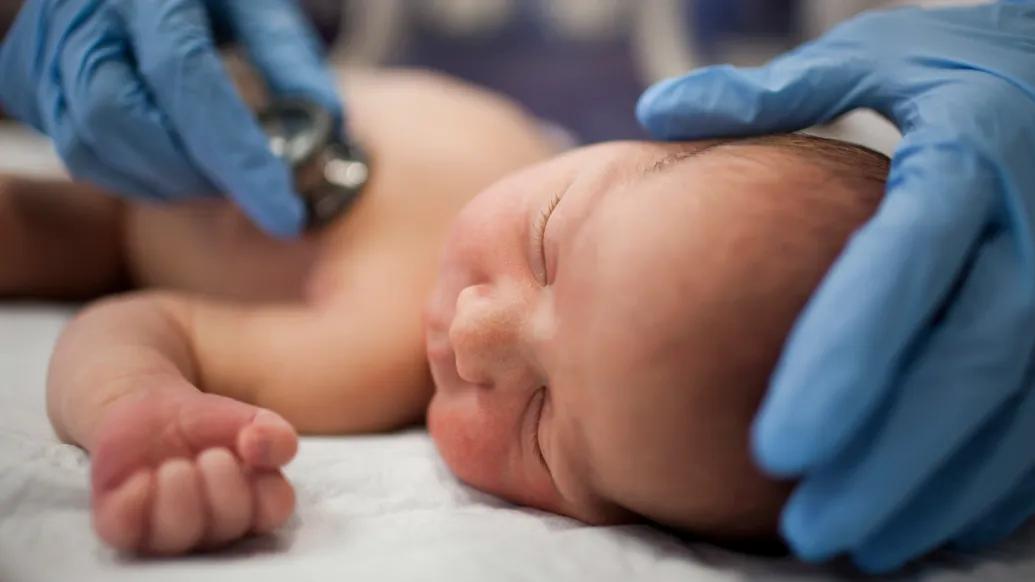
A collaborative effort among 77 hospitals has helped sustain improvements in survival for babies born with hypoplastic left heart syndrome (HLHS), a serious congenital heart condition that requires multiple surgeries.
New research involving more than 5,400 infants shows that survival during a particularly vulnerable period between the first and second heart surgeries remained at close to 95% over more than a decade.
The findings were shared at the American Heart Association Scientific Sessions in Chicago alongside a publication in AHA’s journal Circulation:Population Health and Outcomes.
The study is based on data from the National Pediatric Cardiology Quality Improvement Collaborative (NPC-QIC), a learning health network that brings together patients, families, clinicians, researchers and quality improvement scientists across multiple hospitals. This network facilitates the sharing of real time clinical data, pooling of resources, and testing of evidence based practice changes to improve outcomes for young patients with single ventricle heart disease.
“These findings show that lasting improvements in outcomes are possible when hospitals embrace common goals, share best practices, and then use quality improvement methods to change care processes,” said senior author Katherine Bates, M.D., pediatric cardiologist and researcher at the Congenital Heart Center at University of Michigan Health C.S. Mott Children’s Hospital.
“Sustained improvements in survival, alongside continued progress in other areas of care, show how NPC-QIC has changed the outlook for these high risk babies. Improving outcomes is important, but making those improvements last is the real measure of success.”
Understanding risks
Hypoplastic left heart syndrome (HLHS) is a complex condition in which the left side of a baby's heart is severely underdeveloped. Babies born with HLHS typically undergo a series of surgeries to redirect blood flow and allow the right side of the heart to support circulation.
One of the most challenging periods occurs after the first surgery, when babies leave the hospital and return home while awaiting their second operation. This period carries significant risks, including serious complications, poor growth and death.
Sustained improvements in survival ... show how NPC-QIC has changed the outlook for these high risk babies. Improving outcomes is important, but making those improvements last is the real measure of success.”
– Katherine Bates, M.D.
Recognizing these challenges, the NPC-QIC brought hospitals together to identify opportunities to improve outcomes and make effective care practices more consistent.
The network previously reported an increase in survival during this phase between surgeries from 90.5% to 94.8%. Researchers wanted to determine whether those gains could be maintained over time.
The team analyzed 5,495 infants across centers from 2008 to 2025, finding that the 94.8% survival rate achieved through the network’s initial improvement efforts was sustained over the next nine years.
Infant growth also remained clinically stable, with most babies maintaining adequate growth during the period between surgeries.
Power of hospitals learning together
Rather than relying on individual hospitals to address challenges on their own, the NPC-QIC gives medical teams opportunities to share experiences, evaluate results and learn from one another.
In a learning health network, as clinicians care for patients, they generate data that are analyzed to identify opportunities for improvement. Changes are then implemented to improve patient care, and the cycle continues.
“A defining feature of NPC-QIC is the involvement of families,” Bates said. “Parents of babies with hypoplastic left heart syndrome work alongside researchers and clinicians to shape plans and guide the network’s work. That partnership is a key part of its success.”
Several care practices became more widely used during the study period, including digoxin, a medication that helps support heart function, and the NEONATE score, a tool that helps healthcare teams assess an infant's risk before hospital discharge.
Home monitoring programs and dedicated care teams also help families and clinicians recognize potential warning signs and respond to concerns before they become more serious.
“Lasting progress does not happen through a single intervention or breakthrough,” Bates said. “It comes from ongoing collaboration, shared learning and a commitment to making better care the standard for every child.”
Additional authors include: Andrew H. Van Bergen, M.D.; Pierce Kuhnell, M.S.; David W. Brown, M.D.; Carole M. Lannon, M.D., M.P.H.; Nancy A. Rudd, M.S.; Jeffrey B. Anderson, M.D., M.P.H.

Health Lab
Explore thousands of health news & research stories by visiting the Health Lab homepage for more.
Media Contact

Public Relations
Department of Communication at Michigan Medicine
In This Story

Katherine Bates, MD
Clinical Associate Professor
Related

Comparing outcomes between therapies for babies with hypoplastic left heart syndrome

A reflection on congenital heart disease care, and where it’s headed
Stay Informed
Want top health & research news weekly? Sign up for Health Lab’s newsletters today!
Featured News & Stories
Comparing life threatening illness risk between two surgeries for infants with congenital heart disease

Galens Tag Days celebrates 100 years of helping kids
Timing is of the essence for RNA during stress

From 20 seizures a day to more time for play: How personalized epilepsy care helped young patient

New anti-cancer strategy shows promise in preclinical studies