“Miracle Maddy” pursues high school diploma after complex brain surgery for extremely rare epilepsy
A high school senior, who faced 20 seizures a day and brain deterioration from Rasmussen’s encephalitis, succeeds in school and pursues dreams
5:00 AM
Author |
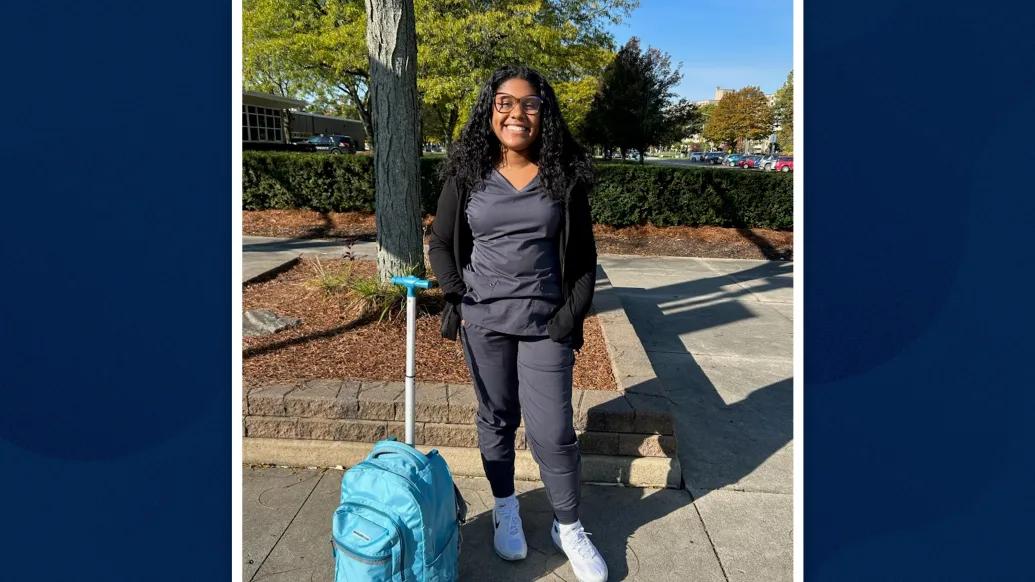
At age nine, Madison Moner faced up to 20 seizures a day, requiring homeschool and constant supervision.
By age 11, she was diagnosed with a rare neurological disease that required brain surgery and had to relearn basic functions like eating, talking and walking.
Now, six years after surgery and treatment at University of Michigan Health C.S. Mott Children’s Hospital, the high school senior is seizure free and planning to pursue a profession that has had a big mark on her own life: nursing.
“I want to give other people hope they can overcome something they didn’t think they could overcome,” Madison said. “Every situation helps mold you into the person you want to be, and every down has an up.”
The 17-year-old has even earned a favorite nickname among family and friends: “Miracle Maddy.”
“Madison was told by many what she could not do, or what she would not be able to do, but she's bypassed it all,” her mom, Karen Moner, said.
“She doesn’t want her disability to define her.”
Seeking help for frequent seizures and declining brain function
Madison was in fourth grade the first time her epilepsy symptoms showed up.
“The way she looked and was acting was concerning to me, almost like she was having a bad dream but her eyes were open,” Karen Moner remembered. “Until then, she’d always been healthy.”
A medical evaluation showed that these increasingly frequent episodes were actually seizures, sometimes including tonic-clonic seizures that cause a loss of consciousness and violent muscle contractions.
Medications didn’t help. And over time, Madison lost control over the left side of her body, constantly shaking.
SEE ALSO: The dangerous intestinal disease fatal to premature babies and vulnerable infants
She also started to experience significant cognitive decline.
“It just seemed to continue to get worse even with medication. It was very stressful to see her go through that,” Karen Moner said.
The family had turned to the Comprehensive Pediatric Epilepsy program at Mott for answers. Further testing revealed a new diagnosis: an extremely rare form of epilepsy called Rasmussen’s encephalitis.
The inflammatory neurological disease causes frequent and severe seizures, loss of motor skills and speech and can escalate into dementia.
“I was told that the left side of my brain was deteriorating at a rapid pace and I’d need to get surgery asap,” Madison said. “It was kind of a bombshell. I was still a kid trying to enjoy my childhood.”
Finding the answer in a highly specialized brain surgery
There was only one solution to stopping the progressive disease in its tracks, a complex, highly specialized surgery known as a hemispherectomy, which involves disconnecting the right side from the left half of the brain.
“Madison had one of the most severe and rarest forms of epilepsy and it really took a comprehensive team approach to diagnosis and treat her,” said Nancy McNamara, M.D., a pediatric neurologist at Mott.
“We were able to get her with the right surgeon with the right expertise to perform this high risk surgery safely for her.”
Led by Mott pediatric neurosurgeon Hugh Garton, M.D., the surgery involved cutting the nerve fibers that connected the two halves of the brain, disconnecting the hemisphere where the seizures originated from.
“I want to give other people hope they can overcome something they didn’t think they could overcome."
-Madison Moner
The surgery was successful and without complications, but there was still a long road ahead with limited mobility and vision on Madison’s left side.
She went through extensive rehabilitation therapy and her family credits Mott occupational therapist, Anne Chadwick, and pediatric physical therapist, Kendra Vanwasshenova, for working consistently with her since her surgery.
With their help, Madison re-learned how to walk, go up and down steps, dress herself and prep basic meals.
And while she was told there may be a chance she wouldn’t be able to ride a bike, dance, swim, or even drive, her mom says she continues to beat the odds.
“The first time she went to a pool after her surgery, she went right into the water, doing backstrokes across the pool like always – but just using one arm,” Karen Moner said.
“I dropped to my knees and cried when I saw that. I still watch those videos.”
Madison also received a special custom-made bike sponsored by Emagine Theaters that she enjoys riding.
“Although Madison has come a long way, I hope her story can encourage and inspire those who are considering this surgery that it can be ok. There's life, a successful life after a hemispherectomy,” Karen Moner said.
“Madison is living proof.”
On the road to high school graduation, chasing dreams
Madison had initially been told she may need to stay in a physical or health impaired program and earn a certificate of high school completion, she says, but she worked hard and her cognitive decline reversed course.
She was recently able to achieve her goal of returning to general education classes so she could work towards earning a high school diploma.
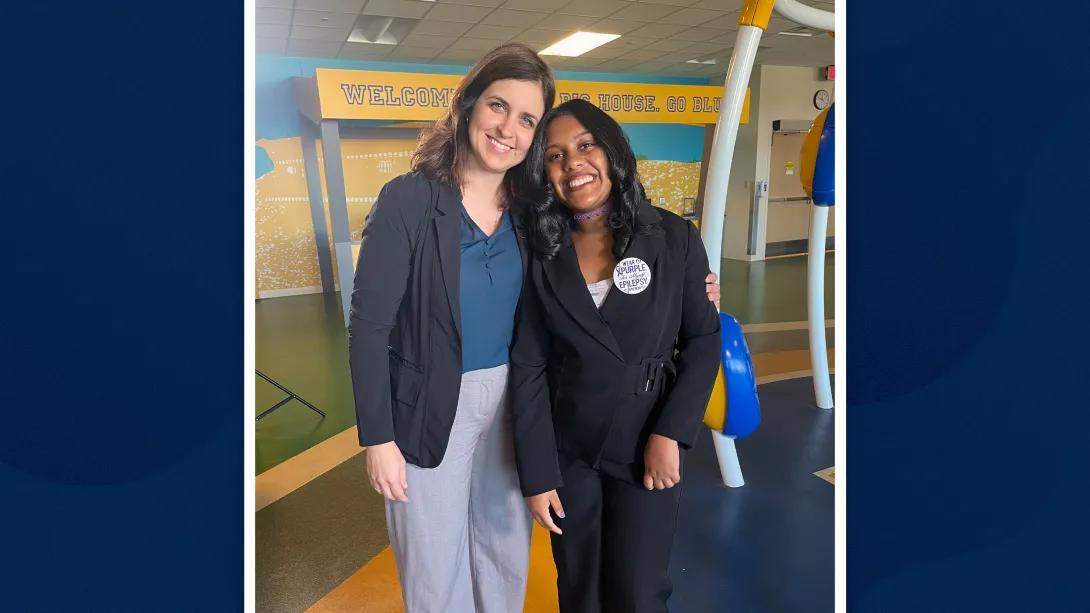
She’s an all A and B student loved by her teachers, her mom says.
“The striking outcome is that she started to lose cognition before surgery but because she got diagnosed and treated early and appropriately, she regained those skills. That is really unique for her condition,” McNamara said.
“She’s so resilient and has done remarkably well.”
Today, Madison says she’s learned to slow down and take days for herself when some things seem too overwhelming.
Taking ownership of her mental health, a key piece of recovery and successful outcomes for people with epilepsy, is something she’s learned through support from a psychiatrist who was part of her Mott care team and therapy.
She says her family and friends, including her father, grandparents, aunts, uncles, cousins, and siblings, have also been critical to recovery, rallying around her – especially her older sister, Marie.
“From giving medications, to supporting us in everything we've gone through, they encouraged her to press forward and not give up,” Karen Moner said.
“I believe this is where her motivation and strength came from.”
Madison says she hopes to someday write a book about her journey.
“I'm so excited to see what's next for her,” Karen Moner said. “Madison used to ask, ‘why me?’ but I told her to ask the question, ‘why not me?’ because she will be telling her life's story for a long time.”
Sign up for Health Lab newsletters today. Get medical tips from top experts and learn about new scientific discoveries every week.
Sign up for the Health Lab Podcast. Add us wherever you listen to your favorite shows.

Health Lab
Explore thousands of health news & research stories by visiting the Health Lab homepage for more.
Media Contact

Public Relations
Department of Communication at Michigan Medicine
In This Story

Hugh JL Garton, MD, MHSc
Professor
Stay Informed
Want top health & research news weekly? Sign up for Health Lab’s newsletters today!
Featured News & Stories
Teen’s journey with severe epilepsy inspires family’s mission for awareness
U-M alumni return from Central Asia to seek treatment for their child at Mott
C.S. Mott Children’s Hospital first in country to implant expandable heart valve during FDA review phase
How to improve mental health safety on social media – not just for young people

5 things to know about ALS