Michigan’s aging brains need more protection, poll shows
Michiganders over age 50 want to prevent dementia, but many don’t know everyday actions are very important for preserving brain health
8:30 AM
Author |
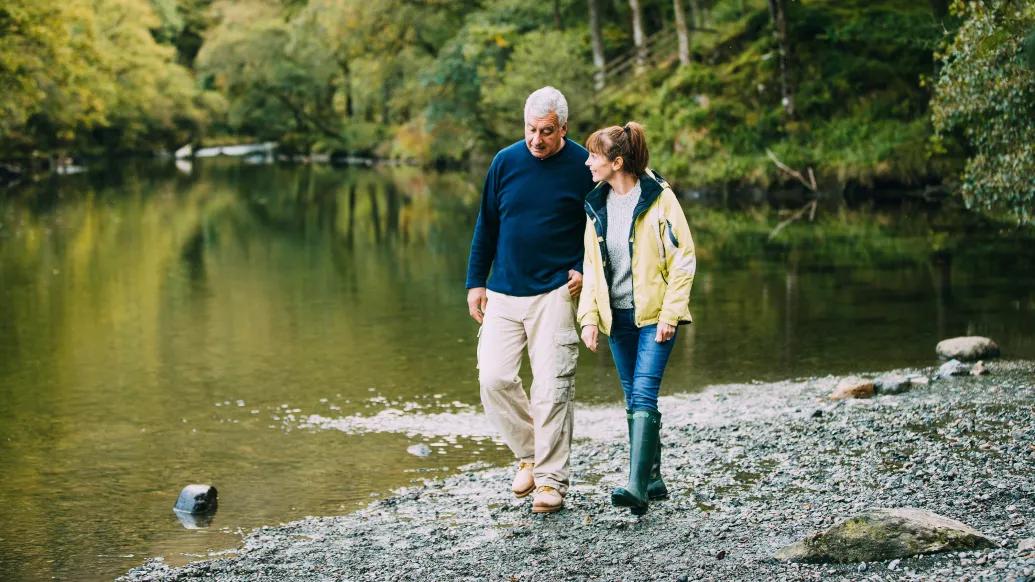
Nearly all Michiganders age 50 and over say it’s very important to keep their brains healthy as they grow older, a new poll finds.
But less than half (47%) of middle-aged and older Michiganders know that everyday actions can be very important for reducing their future risk of dementia.
And half or less practice at least one of four key habits daily or most days that can protect their brain health as they age.
The poll comes at a time when research clearly shows connections between dementia risk and lifestyle factors such as what people eat and drink; how much sleep, social interaction, and mental and physical activity they get; and how well they manage their cholesterol, weight and hearing loss.
The findings come from the Michigan Poll on Healthy Aging, based at the University of Michigan Institute for Healthcare Policy and Innovation.
A full poll report and interactive data dashboard are available.
Michigan adults aged 50 and over were less likely than their national counterparts to believe that lifestyle factors are very important in maintaining brain health.
In all, 70% of them said so, compared with 76% of people in the same age range in other states.
The poll also finds regional differences within Michigan.
People aged 50 and over in the Upper Peninsula and northern Lower Peninsula were less likely to believe that healthy lifestyle behaviors are very important for reducing dementia risk.
“Greater public education regarding brain health, building on efforts like the Alzheimer’s Association’s 10 Healthy Habits for Your Brain initiative, could go a long way in encouraging middle-to-older age adults in Michigan to develop healthy habits that reduce their risk of cognitive decline,” said Scott Roberts, Ph.D., Associate Director of the National Poll on Healthy Aging and a Professor at the University of Michigan School of Public Health.
Greater public education regarding brain health could go a long way in encouraging middle-to-older age adults in Michigan to develop healthy habits that reduce their risk of cognitive decline."
-Scott Roberts, Ph.D.
“At the same time, it’s also important to educate older adults to be wary of ‘too good to be true’ products such as nutritional supplements now being marketed to preserve brain health,” he said.
Roberts and the rest of the poll team worked with the Alzheimer’s Association to collect and analyze data for the organization’s recent national report on brain health in America.
That national survey, which assessed knowledge of brain-protecting activities among people age 40 and up, informed the annual update of the organization’s influential Alzheimer’s Disease Facts and Figures report.
The Michigan-specific poll surveyed people age 50 and up, the focus population for the ongoing Michigan Poll on Healthy Aging funded by the Michigan Health Endowment Fund and Michigan Medicine, U-M’s academic medical center.
Roberts will discuss the findings at a June 30 webinar presented by the Michigan Alzheimer’s Disease Center. Participation is free but registration is required.
Key lifestyle factors for brain health
The survey listed 15 health and lifestyle factors commonly associated with lower dementia risk, and asked respondents to rate how important each is in maintaining brain health.
The percentage of older adults rating each one as very important to brain health varied widely:
80% for preventing head injury
71% for managing stress, not smoking and treating depression
70% for controlling blood pressure
58% for limiting alcohol
57% for maintaining a healthy weight
54% for managing cholesterol
53% for addressing hearing loss
The survey also asked Michiganders 50 and over how often they do activities known to help preserve brain function. The percentage who reported they do these activities daily or on most days of the week:
Get seven or more hours of sleep: 54%
Do mentally stimulating activities: 48%
Eat a healthy balanced diet: 40%
Get some form of daily physical activity, including walking or stretching: 36%
Each of these factors were rated as very important to brain health by 61% to 68% of all respondents.
Roberts recently presented the findings at a summit of the Michigan Dementia Coalition, a statewide organization that brings together academic, government, nonprofit, caregiver and patient representatives.
Roberts is the Outreach, Recruitment & Engagement Core Lead at the Michigan Alzheimer's Disease Center.
According to the Alzheimer’s Association’s Michigan chapter, 11% of people over 65 in Michigan have Alzheimer’s disease or another form of dementia.
Their family and friends provide more than 680 million hours of unpaid care for them every year.
The role of health care professionals
Preventing dementia, or delaying it as long as possible, through lifestyle changes in midlife and earlier, is crucial, says poll director Jeffrey Kullgren, M.D., M.S., M.P.H., Associate Professor of Internal Medicine at the U-M Medical School and a primary care physician at the VA Ann Arbor Healthcare System.
“Health care providers across our state, and our nation, could do much more to help our patients understand the link between the lifestyle choices they make today and their future brain health,” he said.
“Our state’s adult population has high rates of risk factors for dementia, and we need to work together to address them at every age.”
Most older Michiganders said they would want to learn more about brain health from their health care provider.
But these conversations aren’t common: just 23% had discussed the topic with their provider.
Among Michiganders age 65 and over, 30% have had a cognitive screening test in the past year, which can help identify early stages of dementia.
While universal cognitive screening for all people over age 65 has not been recommended by all national organizations, simple cognitive testing can be done as part of a regular checkup, especially if someone is concerned about their memory or thinking ability, or a loved one has expressed concern.
New prescription medications designed to slow decline in the early stages of cognitive impairment have been approved by the United States Food and Drug Administration in recent years.
So have blood tests for biomarkers of Alzheimer’s disease (e.g., amyloid, tau) that can help aid in diagnosis and early detection.
However, there is no cure for dementia at any stage, making prevention crucial.
The Michigan Poll on Healthy Aging includes data from 1,293 Michigan adults age 50 to 93 from the NORC AmeriSpeak panel and supplemental non-probability panel participants, who were compared to 2,808 non-Michigan adults age 50 to 98. The survey was administered online and via phone in January 2026.
Sign up for Health Lab newsletters today. Get medical tips from top experts and learn about new scientific discoveries every week.
Sign up for the Health Lab Podcast. Add us wherever you listen to your favorite shows.

Health Lab
Explore thousands of health news & research stories by visiting the Health Lab homepage for more.
Media Contact

Public Relations
Department of Communication at Michigan Medicine
In This Story

Jeffrey Todd Kullgren, MD, MS, MPH
Professor
Related
11 ways to reduce your risk of dementia

Dementia’s financial and family impact
Stay Informed
Want top health & research news weekly? Sign up for Health Lab’s newsletters today!
Featured News & Stories

Comprehensive DNA sequencing reveals hidden drivers of cancer

Many older adults make Medicare decisions quickly and most don’t change plans, poll finds

What’s the latest on 7-OH and kratom availability and addiction care?

A metabolic “switch” that could help reset scar-producing cells in scleroderma

Depression in OBGYN residents needs more attention, study suggests