Medical students develop novel technological solutions for unmet patient needs
Students were given hands-on training in innovation and entrepreneurship through the Healthcare Innovation Path of Excellence program
5:00 AM
Authors |
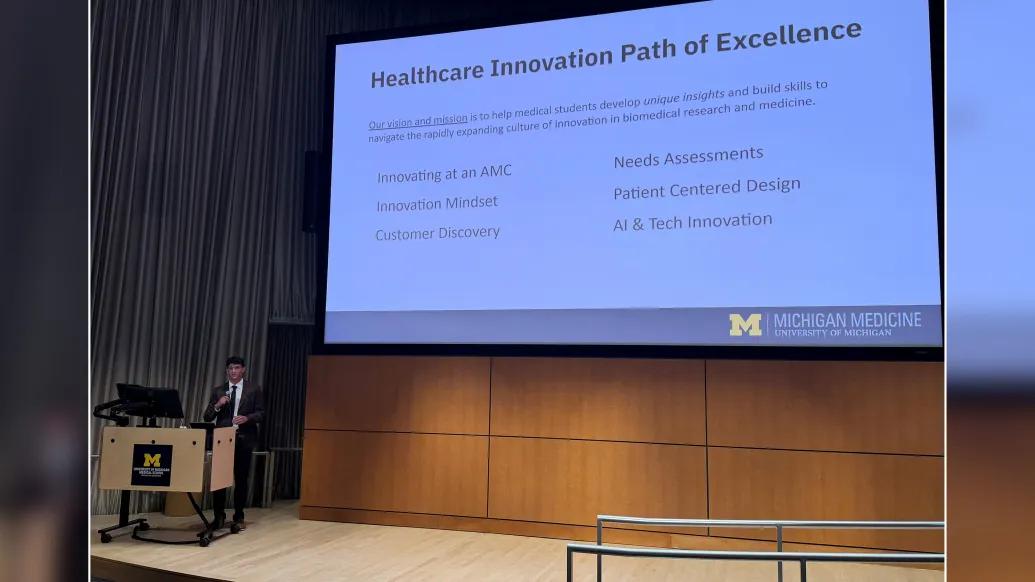
The Healthcare Innovation Path of Excellence at the University of Michigan Medical School gives medical students insight into the culture of innovation in biomedical research and medicine.
It's one of the seven co-curricular Path of Excellence that M1 students can select during their first year, under the direction of Catherine Kim, M.D., Associate Professor of Internal Medicine.
As part of the sessions for Paths, the students engage in patient interviews and develop innovative projects that can improve patient lives.
For the first time, M1 students presented their projects during the Healthcare Innovation Symposium, which is organized by M4 students as a conclusion to the Path program.
The three team projects focused on harnessing AI and technology to address challenges patients face during their healthcare journey.
They were mentored by the co-directors of Healthcare Innovation which include Sonal Owens, M.D., Clinical Professor of Pediatric Cardiology; Amy Zhang, M.D., Clinical Associate Professor of Ophthalmology and Visual Sciences and Candice Stegink, M.S., Associate Director of Innovation.
“All the faculty members were impressed by the scope of these projects,” Zhang said.
“Their skillful use of AI and coding techniques was inspiring.”
The first project focused on using ChatGPT to develop support services and resources for patients who have received a melanoma diagnosis.
The team included Ananyaa Asthana, Brian Lee, Mia Diaz, Evan Monge and Izzy Chiu.
The students interviewed a young mother who mentioned that she would’ve liked to be given resources at a pace that was comfortable for her. Instead, she was overwhelmed by all the information.
The team developed a ChatGPT workflow where patients could decide what type of information they were looking for, such as background about their diagnosis, finding financial support or reaching out to the care team.
“Although there would be several regulatory hurdles if we tried to use this system, we loved the creativity of a patient-centered design,” Zhang said.
In the second project, the students Marlene Rahman, Omar Fehmi, Zane Kashlan, Jack Xin and Zoe Chen were inspired by a patient who underwent transplant surgery.
All the faculty members were impressed by the scope of these projects. Their skillful use of AI and coding techniques was inspiring.”
-Amy Zhang, M.D., Clinical Associate Professor of Ophthalmology and Visual Sciences
Although the patient had sufficient resources and support, the team realized that not all patients recovered as easily.
“There are a lot of factors that doctors may not think to explicitly warn the patient about, including rugs and tall furniture that could pose a threat to mobility,” Zhang said.
The team focused on helping patients evaluate their home environment for safety hazards, infection risks and barriers before surgery.
SEE ALSO: Finding Your Inner Innovator in the Paths of Excellence
Inspired by mobile applications that focus on interior design, they developed an app that combines artificial intelligence with a smartphone camera to guide transplant candidates through a room-by-room assessment of their home.
The app can generate personalized, evidence-based modification recommendations before patients undergo surgery.
In the final project, Connor Bovia, Annie Beckman, Matt Harrigan, Jen Ayres, David Diebold and Victor Di Rita created a digital application for finding primary care physicians who were available and were a good fit for the patient.
They were inspired by the interview of a patient with a complicated medical history who found it challenging to find a primary care physician who could help coordinate various specialty care needs.
Patients often do not have information about upcoming availabilities or they may have to wait months for an appointment only to end up with someone they are not completely comfortable with.
The team developed a workflow where patients filter for both availability as well as traits that they were looking for in a primary care physician.
“Medical school can be isolating, so it is important to work together as a team with different experts,” Zhang said.
“We talk about discovery and innovation, and these projects are proof that our students are actively working towards those ideals.”
Sign up for Health Lab newsletters today. Get medical tips from top experts and learn about new scientific discoveries every week.
Sign up for the Health Lab Podcast. Add us wherever you listen to your favorite shows.

Health Lab
Explore thousands of health news & research stories by visiting the Health Lab homepage for more.
Media Contact

Public Relations
Department of Communication at Michigan Medicine
In This Story
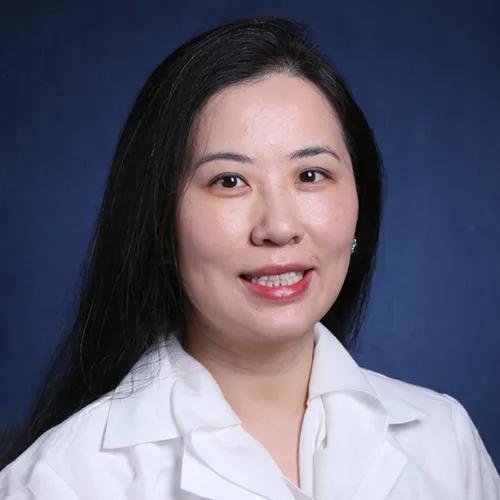
Amy D Zhang , MD
Clinical Associate Professor
Stay Informed
Want top health & research news weekly? Sign up for Health Lab’s newsletters today!
Featured News & Stories

Many parents face challenges getting kids to eat a healthy breakfast before school
A first-of-its-kind treatment for mastocytosis
Rogel Cancer Center names Kaffenberger to deputy director role
New drug combination may help treat advanced prostate cancer
First person-centered measure of dementia caregiving styles improves partner, patient outcomes