Medicaid telehealth study shows positive impacts
Virtual appointments improve access to care for adults with low incomes, including those living in rural areas
11:28 AM
Author |
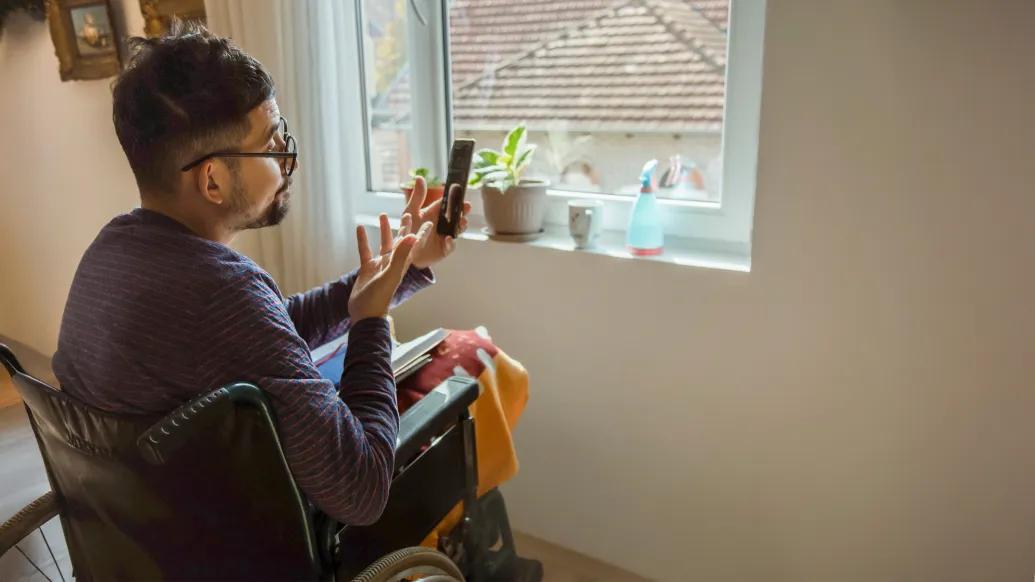
The ability to have an appointment with a doctor or other health care provider by video visit or telephone call has improved access to care for people with low incomes in Michigan’s Medicaid expansion program, a University of Michigan study finds.
Nearly two-thirds (63%) of those who had a telehealth appointment in the past year said they received care that they could not or would not have gotten otherwise, according to the findings published in Health Affairs Scholar by members of the U-M Institute for Healthcare Policy and Innovation.
Those who said they have a regular primary care provider but also face barriers to getting care were much more likely to say they had a telehealth visit in the last year, with 43% saying so, compared with 33% of those who have a primary care provider but no barriers to care.
Barriers could include any difficulty getting care, as well as difficulty getting an appointment or a timely answer from the provider’s office.
Telehealth was even used by 25% of Medicaid expansion enrollees who said they’re uncomfortable using the internet for health care, and 21% of those who said they don’t have a patient portal account with a health system or clinic, though use was much higher among those with greater comfort and with patient portal accounts.
Of those who used telehealth in the past year, 12% said they don't have reliable internet access.
The study uses data from the official evaluation of the Healthy Michigan Plan that IHPI conducted through a partnership with the Michigan Department of Health and Human Services.
The evaluation was required under the state’s waiver with the Centers for Medicare and Medicaid Services that spanned the period 2019-2023.
The Healthy Michigan Plan covers more than 725,000 Michiganders between the ages of 18 and 64 who have incomes up to 133% of the poverty level.
That income level corresponds to about $20,000 a year for an individual or about $10 an hour if they are working full time.
The U-M team, led by Terrence Liu, M.D., M.S., analyzed survey data from 4,082 Healthy Michigan Plan enrollees who answered telephone surveys in 2021 and 2022.
Overall, 30% said they had had a telehealth appointment by video or telephone in the past year, though the percentage was much higher for those in urban areas than those in suburban or rural areas.
Two-thirds of them said the appointment had been by video visit, while the rest were by telephone.
Medicaid enrollees who used telehealth were highly satisfied with the experience, with 92% saying that their provider adequately addressed their health concerns during the virtual visit.
“Telehealth has become much more common in American health care, but data has been scarce on its use by Medicaid enrollees, who have low incomes and many potential barriers to care such as transportation, getting time off work and caregiving responsibilities,” said Liu, a clinical instructor at the U-M Medical School in the Department of Internal Medicine’s Division of General Internal Medicine.
“This fall, Congress has a deadline to determine the future of coverage of telehealth under Medicare and Medicaid, and we hope our findings from telephone surveys with Medicaid enrollees will inform this discussion,” he added.
Additional findings
White, non-Hispanic Medicaid expansion enrollees were much more likely to have had a telehealth visit in the past year, at 67% compared with 16% of Black, 6% of Hispanic and 4% of Arab, Chaldean or Middle Eastern respondents.
People with Medicaid living in rural areas who had had a telehealth visit were more likely than those living in urban or suburban areas to have had a video visit, with 75% saying they had seen their provider via video compared with 65% and 69%, respectively.
The study’s senior author is Susan D. Goold, M.D., MHSA, M.A., a leader of the IHPI Healthy Michigan Plan evaluation team who is a professor of internal medicine at U-M.
Other authors are statisticians Nicholas Box, MPA and Matthias Kirch, M.S., IHPI director John Z. Ayanian, M.D., M.P.P, who leads the HMP evaluation and is a professor in the U-M Medical School, School of Public Health and Ford School of Public Policy; SPH faculty members Denise Anthony, Ph.D., and Minal Patel, Ph.D., and Sarah Clark, MPH, a member of IHPI based in the Medical School’s Department of Pediatrics. All the authors except Liu and Anthony are members of the HMP evaluation team.
Learn more about IHPI’s evaluation of the Healthy Michigan Plan including reports, briefs and news articles. IHPI has been involved in evaluating the Healthy Michigan Plan since the plan launched in 2014.
Paper cited: “Utilization and Patient Experiences of Telehealth Among Medicaid Expansion Enrollees”, Health Affairs Scholar. DOI:10.1093/haschl/qxaf060
Sign up for Health Lab newsletters today. Get medical tips from top experts and learn about new scientific discoveries every week.
Sign up for the Health Lab Podcast. Add us wherever you listen to your favorite shows.

Health Lab
Explore thousands of health news & research stories by visiting the Health Lab homepage for more.
Media Contact

Public Relations
Department of Communication at Michigan Medicine
In This Story
Susan Dorr Goold, MD, MHSA, MA, FACP
Professor Emeritus/a

Terrence Liu, MD
Center Member
Related
Telehealth didn’t increase Medicare visits, but drove down post-visit costs

Medicaid eligibility during pandemic led to increased postpartum coverage, study suggests
Stay Informed
Want top health & research news weekly? Sign up for Health Lab’s newsletters today!
Featured News & Stories

Rx Kids linked to reductions in preterm births and low birthweights, fewer NICU admissions

Depression in OBGYN residents needs more attention, study suggests

A metabolic “switch” that could help reset scar-producing cells in scleroderma

Emergency room intervention pairs smartphone, telehealth counseling to reduce risky firearm behavior
Better prenatal care data could help prevent maternal complications, experts say