Many young people recognize negative impact of social media and have considered deleting accounts
Youth ages 14-24 often use strategies to regulate social media use, from time limits to changing settings
9:11 AM
Author |
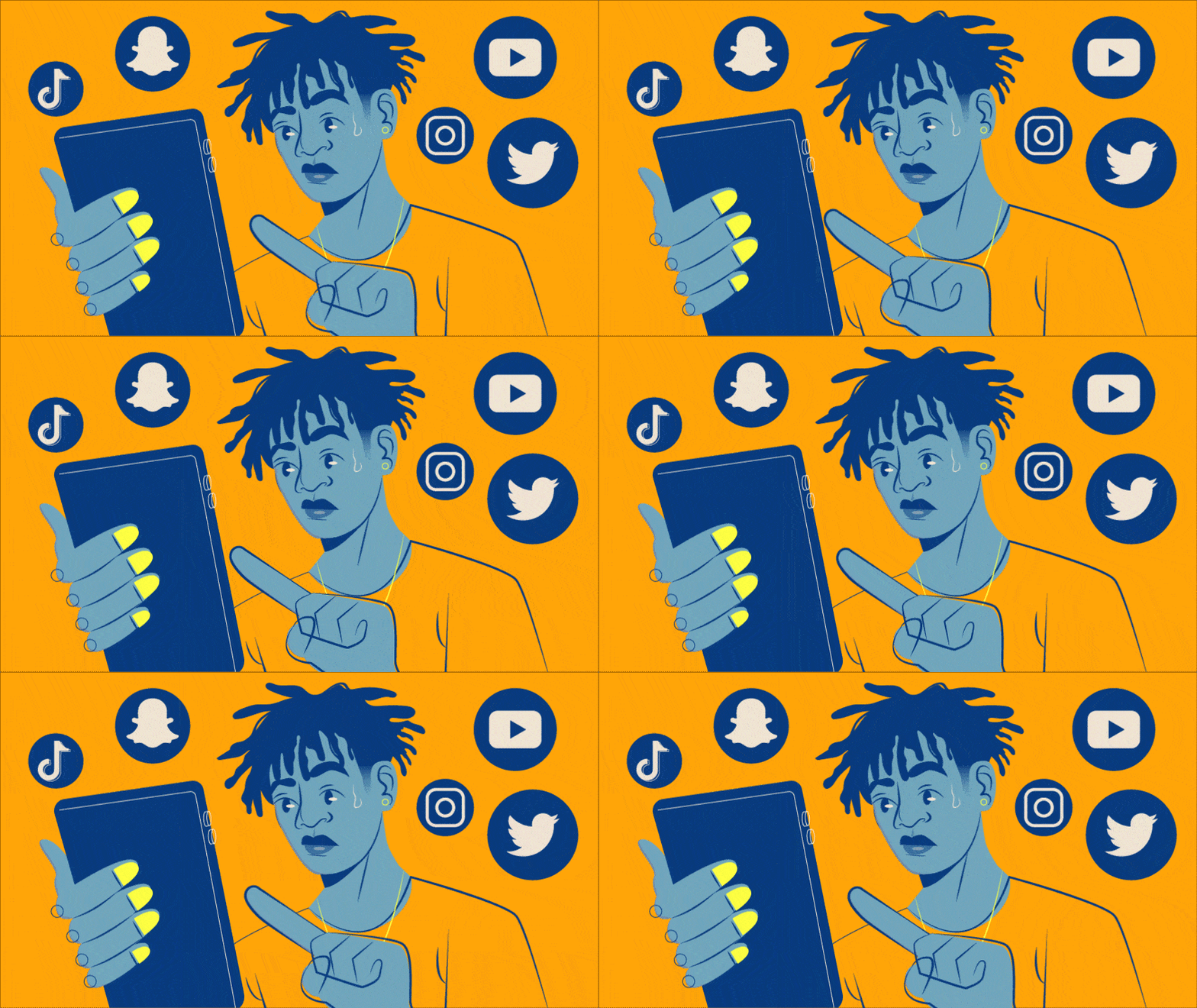
Bullying, misinformation, safety risks, "fakeness" and distressing content are just some of the reasons young people say they're putting boundaries on social media.
More than half of respondents ages 14-24 in a recent survey said they've deleted or thought about deleting their social media account or app. Many others said they've set stricter time limits, changed settings to control content they see or taken other steps to protect their mental wellbeing and safety.
"Many young people are keenly aware of ways social media may negatively impact them and have strategies to self-regulate use to promote their mental health," said lead author Jane Harness, D.O., a child and adolescent psychiatrist at University of Michigan Health C.S. Mott Children's Hospital.
Researchers analyzed responses from 871 teens and youth who responded to questions about social media through MyVoice, a University of Michigan-led national text message poll of young people. The results appear in the Journal of Adolescent Health.
Harness said she was surprised to see that one of young people's top concerns related to social media use was safety, with many users advising against sharing personal information, interacting with strangers and warning against opening location-tracking links.
SEE ALSO: Control settings you may not know about on Instagram, TikTok and YouTube
Many were also apt to caution others that everything posted on the internet is permanent, even if it is later deleted, sharing stories of how something they or someone else had shared had come back to haunt them.
"Youth provided thoughtful advice about how much to share on social media and how to safely interact on these platforms," Harness said.
As one participant said: "I believe it is imperative that people who are new to social media start with their accounts private, particularly younger teens. I believe it is necessary that parents monitor their children's social media at least until high school."
Others recognized an association between social media and their mood, from unhealthy scrolling habits to feeling depressed, and self-conscious– prompting some to take occasional breaks and reduce time spent on platforms.
"I've spent 20 hours a day in social media and was constantly comparing myself to others," one person wrote.
Young people polled also acknowledged that what they saw on social media wasn't always true, from people using editing features to curate "picture perfect" photos that didn't reflect reality to perpetuating misinformation.
Many young people are keenly aware of ways social media may negatively impact them and have strategies to self-regulate use to promote their mental health.Jane Harness, D.O.
While social media is "a fantastic tool to keep in touch with people" and participate in communities you're interested in, a participant said, "make sure it's not a substitute for being with people, or actually participating in your interests."
"On the one hand, we see that young people are motivated to continue using social media for positive content and to connect with others," Harness said. "But they're also wary of undesirable content, wasting time and a negative impact on their emotional health."
"Social media may impact every person differently depending on their level of awareness and how they use it and feel about it," she added. "Some people may need to be more intentional about boundaries than others."
Harness said the survey revealed insightful recommendations that health providers and caregivers could use to help youth who want to change their social media use.
"We found that youth are actively seeking out creative ways to alter their social media use, often fueled by their insight and own emotional experiences using these platforms," she said. "The next step will be for health providers and families to harness these interventions in an individualized way."
The MyVoice effort is led by Tammy Chang, M.D., M.P.H., M.S., an assistant professor in the department of family medicine at Michigan Medicine, U-M's academic medical center.
Additional authors include Kate Fitzgerald, M.D., M.S. of Columbia University, Humayra Sullivan, M.D., of Brown University; and Ellen Selkie, M.D., M.P.H., of University of Wisconsin.
Study cited: "Youth Insight About Social Media Effects on Well/Ill-Being and Self-Modulating Efforts," DOI:10.1016/j.jadohealth.2022.04.011

Health Lab
Explore thousands of health news & research stories by visiting the Health Lab homepage for more.
Media Contact

Public Relations
Department of Communication at Michigan Medicine
Stay Informed
Want top health & research news weekly? Sign up for Health Lab’s newsletters today!
Featured News & Stories

U-M-led consortium to receive up to $52 million in NIH funding to study why viral respiratory infections affect children differently
The AI is listening: Implications of machine generated clinical notes on health care

Comprehensive DNA sequencing reveals hidden drivers of cancer
‘Molecular glue’ stabilizes protein that inhibits development of non-small cell lung cancer and uterine cancer

Many older adults make Medicare decisions quickly and most don’t change plans, poll finds