Many parents want help preventing their child from developing hereditary health conditions
One in five parents say their child has been diagnosed with a hereditary condition and nearly half worry their kids might be at risk, poll suggests
6:00 AM
Author |
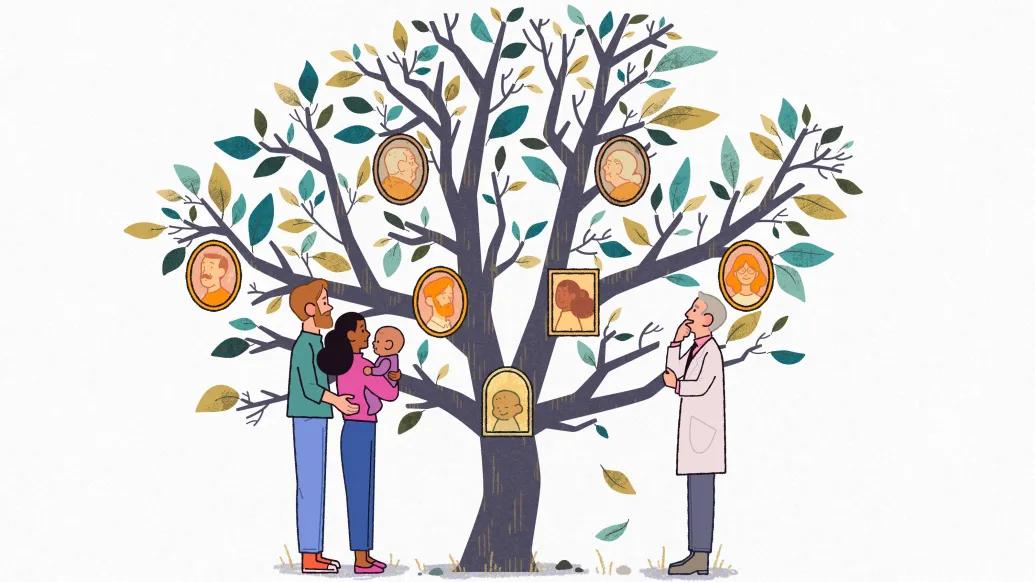
Among things many families don’t wish to pass down to their children and grandchildren: medical issues.
One in five parents say their child has been diagnosed with a hereditary condition, and nearly half expressed concerns about their child potentially developing such a condition, a new national poll suggests.
And two thirds of parents want their healthcare provider to suggest ways to prevent their child from developing a health problem that runs in the family, according to the University of Michigan Health C.S. Mott Children’s Hospital National Poll on Children’s Health.
“This report reflects the need for parents to be equipped with accurate information about their family health history,” said Mott Poll co-director Sarah Clark, M.P.H.
“Parents play a key role in understanding and addressing their child’s health concerns, including those related to hereditary conditions.”
The nationally representative report is based on 2,057 responses of parents of children ages one to 18 years surveyed in February 2024.
Health history knowledge may reduce risk
Parents think family history puts their child at a higher risk for having common medical disorders, such as heart disease, high blood pressure, stroke, certain cancers, obesity, and type 2 diabetes as well as allergies, mental health conditions, attention deficit/hyperactivity disorder, alcoholism and other chronic conditions.
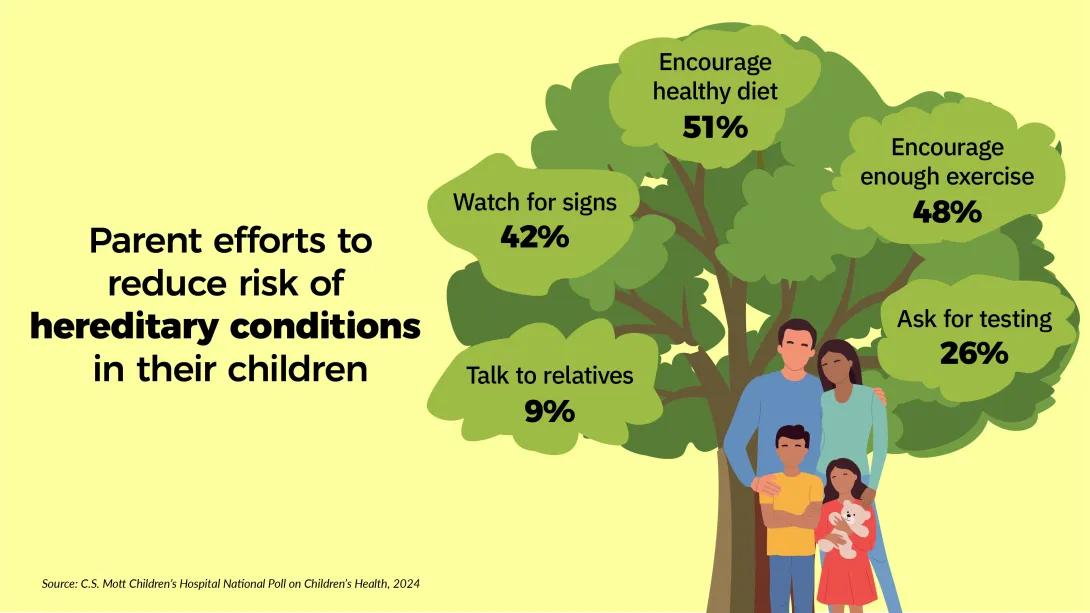
But a quarter of parents think they can prevent their child from developing a condition that runs in the family.
These are complex disorders influenced by a combination of genetic factors, environmental conditions, and lifestyle choices, Clark says.
When parents have knowledge of their child’s family health history, she says, they can take steps to reduce their child’s risk, such as early screenings, genetic counseling, encouraging healthy eating and exercise habits, and being aware of possible signs and symptoms.
“Having a hereditary predisposition to an illness may prompt parents to be more careful with certain choices,” Clark said.
“A child’s pediatrician can be a resource to help optimize their health and avoid some of the illnesses experienced by their family members.”
This report reflects the need for parents to be equipped with accurate information about their family health history.”
- Mott Poll co-director Sarah Clark, M.P.H.
Less confidence about mental health history
Although many mental health conditions have a genetic component, parents polled feel slightly more knowledgeable about their child’s family health history for medical illnesses than mental health conditions.
Additionally, parents of older children report talking about family medical history more often than family mental health history with their child.
“Reluctance to openly discuss a family’s mental health history may reflect the stigma represented across generations and cultures,” Clark said.
“Parents can normalize discussions about mental health by integrating them into everyday conversations and encourage open and honest communication within the family about mental health.”
Empowering young people
Many parents polled believe their child ages 12-18 could fill out a form about their family health history with their help.
As children near adulthood and get ready to move out on their own, Clark notes, it becomes more important for them to be knowledgeable about their family health history.
“Family history may be crucial for healthcare providers to make informed decisions about treatment options,” Clark said. “Encouraging adolescents to learn about their family health history early on can also empower them to take control of their health and make informed decisions throughout their lives.”
Sign up for Health Lab newsletters today. Get medical tips from top experts and learn about new scientific discoveries every week by subscribing to Health Lab’s two newsletters, Health & Wellness and Research & Innovation.
Sign up for the Health Lab Podcast: Add us on Spotify, Apple Podcasts or wherever you get you listen to your favorite shows.

Health Lab
Explore thousands of health news & research stories by visiting the Health Lab homepage for more.
Media Contact

Public Relations
Department of Communication at Michigan Medicine
Related
Prostate cancer and hereditary risk: A doctor explains the connection
Stay Informed
Want top health & research news weekly? Sign up for Health Lab’s newsletters today!
Featured News & Stories

Rabies is on the rise: Experts offer advice

E-Bikes are everywhere, but most parents say they don’t know enough about them

Mediterranean diet can slow progression of age-related macular degeneration

Who’s at risk for painful periods?
C.S. Mott Children’s Hospital named No.1 children’s hospital in Michigan by U.S. News & World Report