Majority of parents believe children’s physical and mental health is getting worse
Social media, screen time, nutrition and mental health top parental concerns as kids head back to school
11:20 AM
Author |
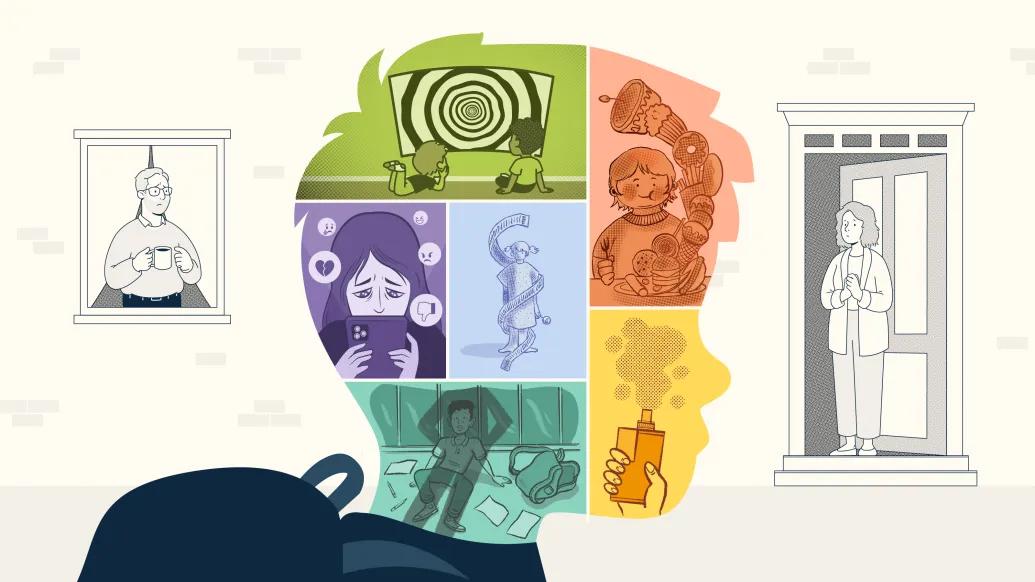
Most parents think that the health of United States children is going in the wrong direction, a national poll suggests.
Two-thirds of parents believe children’s physical health is declining while four in five say mental health is getting worse, according to the University of Michigan Health C.S. Mott Children’s Hospital National Poll on Children’s Health.
Leading the list of child health concerns were social media, too much screen time, and internet safety.
“These concerns from parents reflect a growing awareness that today’s children are facing increasing challenges impacting both their physical and mental health,” said Mott Poll co-director and Mott Children’s pediatrician Susan Woolford, M.D.
“Parents continue to express concern about the pervasive role of technology in their children’s lives,” she added. “Excessive screen time and social media exposure are linked to poor sleep, less physical activity, and negative mental health outcomes, including anxiety, low self-esteem, and unhealthy social comparisons.”
Parents' views about technology likely differ depending on their children’s age, Woolford notes.
“Those with younger kids often focus on screen time and its potential impact on attention and learning,” she said.
“Meanwhile, parents of teens are more likely to worry about how social media affects self-image, peer pressure, and worldview.”
Growing awareness of mental health struggles
The rising number of children and teens facing mental health challenges may be heightening parents’ awareness.
Parent concerns about children’s mental health could also reflect the increases in child depression and anxiety seen before and during the Covid-19 pandemic, Woolford says.
These concerns from parents reflect a growing awareness that today’s children are facing increasing challenges impacting both their physical and mental health.”
-Susan Woolford, M.D.
Mothers were more likely than fathers to rate mental health as a major issue, according to the nationally representative report that’s based on 2,021 responses from parents of children ages one to 18 surveyed in February.
“Mothers often take on the role of emotional caretakers in the family, which may make them more attuned to shifts in their children’s moods or behavior,” Woolford said. “They may also be more likely to talk to their children about their feelings.”
Nutrition and exercise also high on parents’ radar
Other related issues near the top of parents’ concerns included an unhealthy diet (No.4), obesity (No.7), and lack of physical activity (No.11).
Overall, parents polled appear to have the most questions about their child’s nutrition and level of exercise.
"Parents recognize that healthy eating and regular physical activity are foundational to their child’s overall well-being but may feel unsure about the best way to help their children make healthy choices," Woolford said.
“Concerns about nutrition likely reflect the challenges of finding healthy food options that are accessible, affordable and acceptable to kids. Parents may face similar issues with helping their children to be physically active,” she added.
A broad range of worries
Nearly every parent polled said at least one topic was a major concern for children and teens today—and nearly two-thirds rated 10 or more topics as a big problem.
“These views may stem from parents’ experiences with their children and other children in their community, or what they have read about or heard from the media or other secondhand sources,” Woolford said.
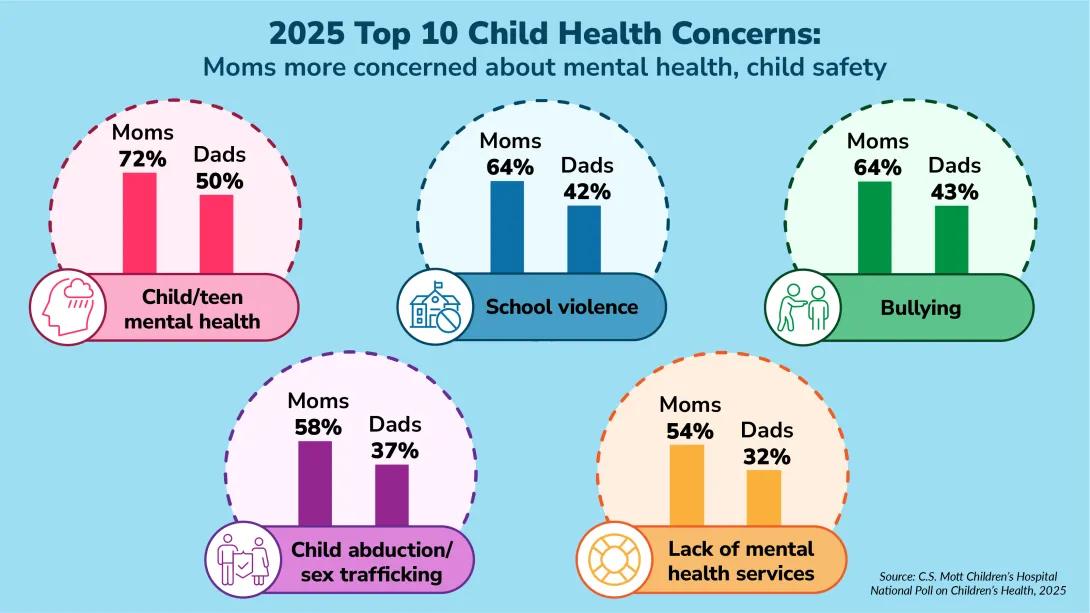
Parents identified a range of other major concerns affecting children’s health and safety.
More than half pointed to guns and gun-related injuries as a top issue, followed closely by fears of child abduction or sex trafficking and substance use, including alcohol and drugs.
Roughly two in five also cited systemic or environmental challenges, including a lack of mental health services, poverty and child abuse or neglect.
Other areas of health described as a big problem included parental stress and the spread of inaccurate or misleading health information, teen pregnancy or sexual activity, discrimination based on race or gender and worsening air and water quality and safety of the food supply.
Mothers were more likely than fathers to rate many of these as big problems, especially bullying, school violence, and child exploitation.
More than a third of parents were also worried about unequal access to healthcare and close to three fifths of parents rated the cost of healthcare and health insurance for children as a big problem.
“As policy changes go into effect, particularly those related to Medicaid, this may become a bigger issue for U.S. families,” Woolford said.
“Consistent access to healthcare is critical, especially when providers can help families manage the physical, mental, and social issues kids are facing today.”
Sign up for Health Lab newsletters today. Get medical tips from top experts and learn about new scientific discoveries every week.
Sign up for the Health Lab Podcast. Add us wherever you listen to your favorite shows.

Health Lab
Explore thousands of health news & research stories by visiting the Health Lab homepage for more.
Media Contact

Public Relations
Department of Communication at Michigan Medicine
In This Story

Susan J Woolford, MD, MPH
Associate Professor
Related
The dangerous intestinal disease fatal to premature babies and vulnerable infants
Stay Informed
Want top health & research news weekly? Sign up for Health Lab’s newsletters today!
Featured News & Stories
4 ways to teach your teen safe driving habits

U-M-led consortium to receive up to $52 million in NIH funding to study why viral respiratory infections affect children differently
Comprehensive DNA sequencing reveals hidden drivers of cancer
4 in 5 parents say having a baby is too expensive
‘Molecular glue’ stabilizes protein that inhibits development of non-small cell lung cancer and uterine cancer