Low FODMAP diet improves leaky gut in study
Researchers examine how food affects intestinal permeability
11:00 AM
Author |
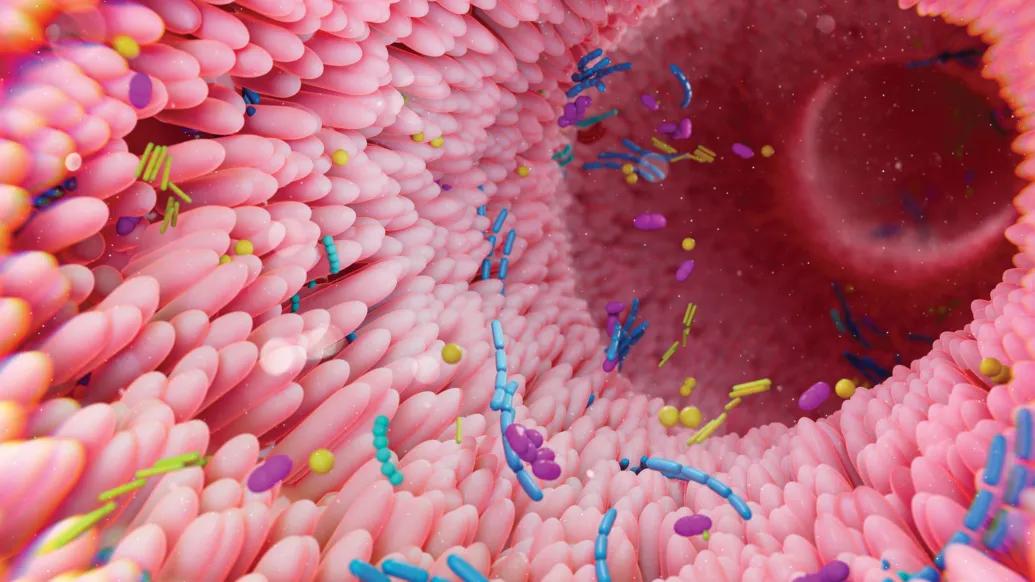
In a study, patients with irritable bowel syndrome with diarrhea, or IBS-D, who went on a low FODMAP diet saw an improvement of colonic barrier dysfunction, commonly known as “leaky gut.”
The results, published in Gastroenterology, represent the first evidence of low FODMAP’s potential ability to improve intestinal permeability and mast cell activation in patients with IBS.
“Diet and microbiome have been believed to be related to leaky gut, but the reasons why were not well understood,” said Prashant Singh, MBBS, Michigan Medicine gastroenterologist and senior author on the paper.
“This research illuminates the mechanism of how food can interact with gut microbiome and gut immune system to influence colonic barrier dysfunction—and validates the low FODMAP diet as a treatment option that not only improves symptoms but underlying dysfunction in IBS.”
The low FODMAP diet is a proven intervention for patients with IBS.
Most IBS sufferers report food-triggered symptoms and prefer dietary inventions to pharmacotherapy.
Leaky gut refers to symptoms caused by increased permeability of the intestinal lining.
This permeability is thought to have a variety of negative consequences, including the dissemination of bacterial toxins and products as well as sensitization of local nerves which can cause pain in IBS.
Researchers studied human patients to test the potential of low FODMAP to address leaky gut, while mice treated with stool from these patients were used to investigate the mechanisms of how diet potentially improves the colonic barrier.
Forty-eight patients with IBS-D (irritable bowel syndrome with diarrhea) were put on a four-week low FODMAP diet (restriction phase) and provided with the low FODMAP meals for the study duration.
Of the 42 participants to complete the study, 34 responded to the low FODMAP diet, all of whom experienced lessened diarrhea and abdominal pain.
Prior studies have shown that patients with IBS-D have increased number of mast cell (type of inflammatory cell in colon lining), and leaky gut.
Studies have shown that mast cells are also more likely to be activated in IBS-D.
In this study, barrier function, and mast cell activation was assessed in a variety of ways before and after the four-week period.
Researchers found that in addition to improvement in leaky gut, low FODMAP also reduced the number and activation of mast cells in the colon lining in these patients.
Researchers also worked toward an explanation of how low FODMAP improves leaky gut (and how a diet high in FODMAP foods can contribute to barrier dysfunction.)
Lipopolysaccharides are molecules derived from gut microbiome that can cause immune-system responses when they escape the gut.
In this latest study, an analysis using mice, researchers showed that high FODMAP diet in IBS-D patients increases fecal LPS levels to activate mast cells which in turn make the barrier leakier.
Given these results, researchers recommend that providers consider mast cell stabilizers in addition to a low FODMAP diet—or as an alternative to the low FODMAP diet when it is contraindicated.
“Our study shows diet is not a quick fix—it’s a real solution for some patients with IBS,” Singh said.
The authors hope future studies will include a larger sample size, specifically of patients who do not respond to low FODMAP diet, and a variety of IBS types besides IBS-D.
Additional authors: Jun Gao, Allen A. Lee, Shabnam Abtahi, Jerrold R. Turner, Madhusudan Grover, Alexander Schmidt, Thomas M. Schmidt, Judy W. Nee, Johanna Iturrino, Anthony Lembo, William D. Chey, John W. Wiley
Funding/disclosures: NIDDK K23DK129327
Paper cited: “Low FODMAP diet improves colonic barrier function and mast cell activation in patients with IBS-D: A mechanistic trial,” Gastroenterology. 10.1053/j.gastro.2025.07.016
Sign up for Health Lab newsletters today. Get medical tips from top experts and learn about new scientific discoveries every week.
Sign up for the Health Lab Podcast. Add us wherever you listen to your favorite shows.

Health Lab
Explore thousands of health news & research stories by visiting the Health Lab homepage for more.
Media Contact

Public Relations
Department of Communication at Michigan Medicine
In This Story

Prashant Singh, MBBS
Clinical Assistant Professor
Related

The Low FODMAP Diet: A 'Liberating' Route to IBS Relief

5 Easy, Low FODMAP Diet Recipes for Every Meal
Stay Informed
Want top health & research news weekly? Sign up for Health Lab’s newsletters today!
Featured News & Stories
Many hospitals still don’t do enough to prevent UTIs from catheters

Rural-urban disparities in head and neck cancer
Study outlines a new framework for direct cell reprogramming

New insight into how lipodystrophy can affect overall health
FDA-approved drug offers hope for patients with polycythemia vera, a rare bone marrow disorder