LGBTQ+ people over 50 face more aging-related challenges
Poll also shows most non-LGBTQ+ people over 50 have LGBTQ+ friends, family, coworkers or neighbors
12:47 PM
Author |
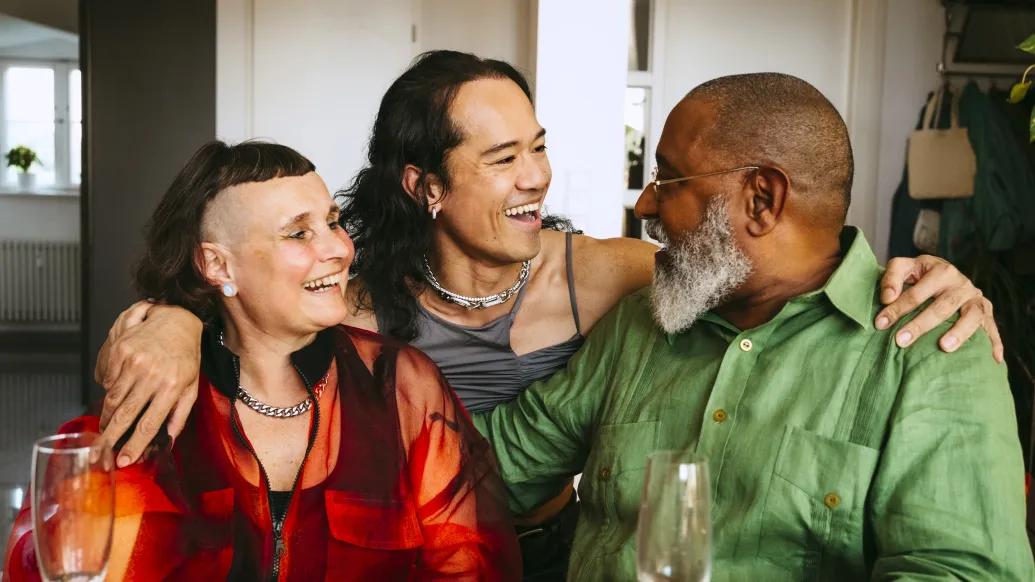
People over 50 are growing older in a very different environment for LGBTQ+ people than the one they grew up in.
Now, a new University of Michigan poll looks at what that means for both people over 50 who are LGBTQ+, and those who are not.
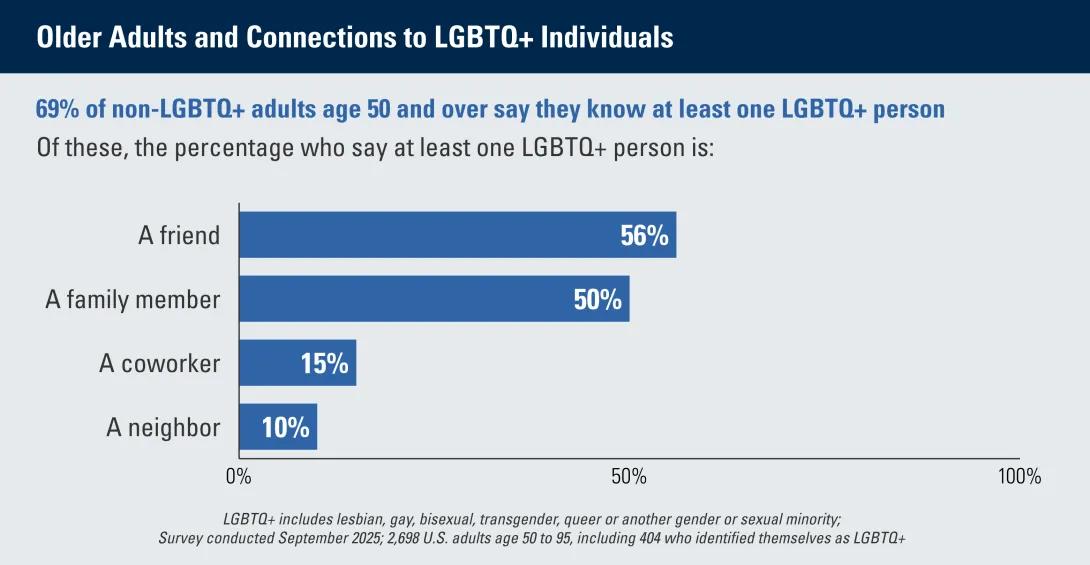
It finds that 69% of non-LGBTQ+ people over 50 have at least one personal connection to a person of any age who is LGBTQ+, which is short for lesbian, gay, bisexual, transgender, queer or other gender or sexual minority.
Among non-LGBTQ+ people over 50 who know an LGBTQ+ person, the majority (56%) say that they count an LGBTQ+ person as a friend, while 50% say they have a relative who is LGBTQ+.
In addition, 15% say they have a coworker, and 10% have a neighbor, who is open about being LGBTQ+.
But the same poll finds that LGBTQ+ people over 50 face different rates of age-related challenges than people over 50 who are not LGBTQ+.
In general, LGBTQ+ people over 50 are more likely to report fair or poor mental health, activity-limiting disabilities, isolation and lack of companionship than people over 50 who do not identify as LGBTQ+, according to the new findings from U-M’s National Poll on Healthy Aging.
SEE ALSO: Pride in Practice: Enhancing LGBTQIA+ Health Education at Michigan Medical School
People over 50 who identify as LGBTQ+ are also less likely than others their age to feel confident they will receive support from multiple sources as they age, and more likely to report experiencing discrimination in health care settings.
The poll, based at the U-M Institute for Healthcare Policy and Innovation, is supported by Michigan Medicine, U-M’s academic medical center.
The findings have implications not only for members of the LGBTQ+ community, but also for health care and social service providers, and for policymakers.
Social supports for aging LGBTQ+ community members
“LGBTQ+ adults are part of the families and friendships of most older Americans,” said Kristi Gamarel, Ph.D., an Associate Professor at the U-M School of Public Health and IHPI member who worked on the poll.
“LGBTQ+ older adults nevertheless continue to face significant disparities, especially in health care, at a moment when supports built for them are being scaled back. Continued national data on this generation is essential,” Gamarel said.
LGBTQ+ adults over 50 were more likely than non-LGBTQ+ adults to view local health care and social services as welcoming to older LGBTQ+ adults.
In all, 71% of LGBTQ+ adults over 50 said their local health care services are welcoming to older LGBTQ+ adults, and 58% said their local social services are welcoming.
By comparison, when non-LGBTQ+ adults over 50 were asked if such services in their area are welcoming to older LGBTQ+ adults, only about 40% said yes.
However, LGBTQ+ adults age 50 and older were less likely than non-LGBTQ+ adults to feel confident in the support they will receive as they age.
Specifically, LGBTQ+ adults over 50 were less likely than non-LGBTQ+ adults to feel confident that as they grow older they will receive social support from organizations or resources in their community (63% vs. 77%), needed health care services (81% vs. 86%), and support from family and friends (77% vs. 90%).
Gamarel and U-M Population Studies Center postdoctoral fellow Wesley Correll-King, Ph.D., worked with the NPHA poll team to develop the questions and analyze the findings.
“Older LGBTQ+ adults have lived through decades of social and political change impacting their communities. Current policy changes and those on the horizon could impact their confidence in accessing health care or community resources as they age,” said Correll-King, who will soon become an Assistant Professor at the Sandra Rosenbaum School of Social Work at the University of Wisconsin Madison.
Health, health care and social measures
The poll also showed significant differences in self-rated health and social measures. Nineteen percent of LGBTQ+ adults over 50 rated their mental health as fair or poor, compared with 11% of non-LGBTQ+ adults.
More than half (56%) of LGBTQ+ adults over 50 reported having a disability that limits their daily activities, compared with 41% of non-LGBTQ+ adults over 50, despite the fact that the LGBTQ+ group was younger on average.
Experiencing discrimination in health care settings was much more common among LGBTQ+ adults, with 12% saying they had been treated unfairly or been discriminated against while receiving care in the last year, compared with 5% of non-LGBTQ+ adults.
Staying connected, and encouraging more activities to foster social connections, can in turn bolster mental health and overall well-being, At the same time, I also encourage providers to work to make their clinics welcoming and inclusive for all."
-Jeffrey Kullgren, M.D., M.S., M.P.H.
The poll also found notable group differences in social connections. While 8% of non-LGBTQ+ adults over 50 said they often felt a lack of companionship in the last year, the rate was more than twice as high (20%) among LGBTQ+ adults over 50. The rate of often feeling isolated from others was three times higher among LGBTQ+ adults, at 18% versus 6% among non-LGBTQ+ adults.
Poll statistician Matthias Kirch, M.S., also notes that the LGBTQ+ adults in the poll sample were more likely than non-LGBTQ+ adults to report barriers to preventive care, dental care and mental health care.
There were also similar differences in these measures between the non-LGBTQ+ adults in the 50-64 age group and those over 65. While the LGBTQ+ adults were much more likely to fall into the 50-64 age group, their barriers to care were higher across age groups, indicating that both age and LGBTQ+ identity influence access to care, Kirch says.
Poll director Jeffrey Kullgren, M.D., M.P.H., M.S., said these findings suggest a need for health care providers to ask about their LGBTQ+ patients’ social support networks, and for health care organizations to reduce barriers to needed care.
“Staying connected, and encouraging more activities to foster social connections, can in turn bolster mental health and overall well-being,” he said.
“At the same time, I also encourage providers to work to make their clinics welcoming and inclusive for all.”
Kullgren is an Associate Professor of Internal Medicine at Michigan Medicine, the only health system in Michigan that earned Leader status from the Healthcare Equality Index in 2024 for LGBTQ+ inclusive policies and practices.
Michigan findings
The poll team also gathered data from Michigan adults over age 50 through support from the Michigan Health Endowment Fund, as part of the Michigan Poll on Healthy Aging.
Although the sample size of LGBTQ+ adults over 50 in Michigan was too small to show statistically significant differences in comparisons with the national sample, the team did observe differences between the broader Michigan sample and their peers in the rest of the nation.
Specifically, Michiganders over 50 who are not LGBTQ+ were less likely to say they know an LGBTQ+ person than people over 50 in the rest of the U.S. (64% vs. 69%).
Of the Michiganders over 50 who said they know at least one LGBTQ+ person, 57% said that person is a friend, and 52% said they have a relative who is LGBTQ+. In addition, 13% said they have a coworker who is LGBTQ+, and 6% said they have a neighbor who is.
There was no difference between the Michigan sample and the rest of the nation in the percentage of people agreeing that health services or social services in their area are welcoming to LGBTQ+ people over 50.
About the poll
The National Poll on Healthy Aging is a nationally representative survey conducted by NORC at the University of Chicago for the U-M Institute for Healthcare Policy and Innovation. The survey was administered online and via phone in September 2025 to 2,698 U.S. adults age 50 to 95 from the AmeriSpeak panel, including 404 LGBTQ+ adults. The Michigan Poll on Healthy Aging includes data from 1,270 Michigan adults age 50 to 93 from the AmeriSpeak panel and supplemental non-probability panel participants, including 51 LGBTQ+ adults, which were compared to 2,334 non-Michigan adults age 50 to 95.
The poll asked respondents for their sex assigned at birth, sexual orientation and gender identification. While the poll included options for respondents to select answers including transgender, nonbinary, bisexual, or to indicate they use other terms for their sexual orientation or gender identification, the percentage selecting these options was not large enough to be analyzed separately. Non-LGBTQ+ adults are those who are heterosexual and cisgender, meaning they identify with the sex they were assigned at birth and are attracted to the opposite sex. All poll data are weighted to reflect the 50+ populations nationally and in Michigan.
Read past National Poll on Healthy Aging reports and Michigan Poll on Healthy Aging reports, and learn about the poll methodology.
Sign up for Health Lab newsletters today. Get medical tips from top experts and learn about new scientific discoveries every week
Sign up for the Health Lab Podcast. Add us wherever you listen to your favorite shows

Health Lab
Explore thousands of health news & research stories by visiting the Health Lab homepage for more.
Media Contact

Public Relations
Department of Communication at Michigan Medicine
In This Story
Jeffrey Todd Kullgren, MD, MS, MPH
Professor
Related
Couple Fulfills Dream to Become Dads Through Surrogacy
Stay Informed
Want top health & research news weekly? Sign up for Health Lab’s newsletters today!
Featured News & Stories

Reducing infections after heart surgery could save Medicare $441 million per year

Study reveals the work and health insurance roller coaster millions of Americans ride

Caregiver Resources: Reduce the Risk of Burnout

A tragedy and a trial shine a spotlight on new moms’ mental health
How to improve mental health safety on social media – not just for young people