A Letter to My Baby, Missing You Always
A mother’s letter to her daughter, who was diagnosed before birth with a fatal birth defect and died shortly after entering the world.
7:00 AM
Author |
Editor's note: This essay has been adapted with permission, in honor of National Pregnancy and Infant Loss Awareness Month.
If you would have told me a year ago that I would soon be a mother, I would have told you that you were crazy. I did not have baby fever. Babies? No thanks, no way.
SEE ALSO: Healing After Miscarriage and Infant Loss: A Social Worker's Tips
And then one day I did. All I could think about were babies. Babies in my belly, babies in my home, babies in my husband's arms. I started counting down the days to when we were ready to start a family.
And then I got pregnant and it was the weirdest, most abstract feeling I'd ever experienced. I had seen you on ultrasound, but to think that there was a small soul weaving together inside of me was baffling. I didn't really bond with you at first. I was too busy puking up every other thing I ate and battling migraines to bond.
On Jan. 23, I felt you move for the first time. A tiny thump from deep within, reminding me that being pregnant was more than nausea and exhaustion.
At 19 weeks pregnant, I fell more deeply in love with you. I had to learn quickly what motherhood was all about. Sacrifice, tears, worry; a fierce devotion to making sure that you had every chance at life I could give you.
I was bewildered as the weeks flew by, filled with test results and ultrasounds, that a human yet to walk this earth could impact my life in such profound and heart-wrenching ways.
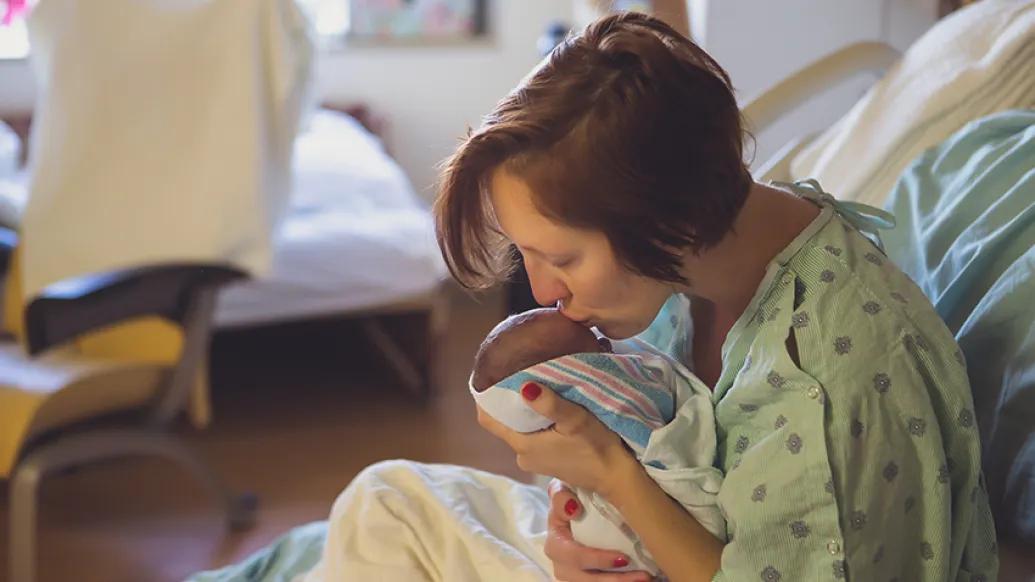
On April 26, at 5:16 p.m., you arrived earthside. We held you close, whispering nothing but love into your little ears. We promised to keep your name alive for the rest of our days. A few minutes after your arrival, you peacefully slipped away.
In your most imperfect state, I loved you with such ease that it made me feel guilty for ever thinking I couldn't handle a child with special needs. How I wish that was the worst of it; that I would only ever have to struggle with wheelchairs or helmets or therapy instead of learning to wade through parenthood with empty arms and an Elliott-shaped hole in our lives and hearts.
I wish more than life itself that you could be in my arms or still in my belly, but I know that you're everywhere around me as it is. You're not here, but in so many ways you are. The butterfly that hovered while I planted flowers. The gentle breeze and the sun on my cheeks. The imaginary kicks I still feel from inside my belly. You're here, and you're mine forever.
My sweet Ellie, I don't know for sure what I believe about the afterlife. But I do choose to hope that this universe that separated us too soon will allow us to be reunited in some form again one day. Until then, I will wake up every morning and make the choice to honor your short but magnificent life by putting one foot in front of the other instead of throwing in the towel. I will say your name out loud and close my eyes and remember how soft your cheeks were and how the weight of your body felt on my chest. I will make sure that your name is spoken every day and that your impact on this world is felt and known.
MORE FROM MICHIGAN: Sign up for our weekly newsletter
To do anything else would be a disgrace to your name and the way I'd want you to live your life, should you have grown up to navigate adulthood on your own. You will always be my first thought in the morning and my last thought before sleep.
When I smile and laugh and go about my days, it doesn't mean that I've "moved on," because that is an impossible feat for a bereaved mother. My heart will always ache for you. It just means that my love for you is strong enough to move me forward and trumps the dark desire to waste life away in sadness. That is what I would want for you, so I must choose it for myself.
Thank you, my sweet wildflower, for choosing me to become your mama.
Photo courtesy of Yamile Branch Photography

Health Lab
Explore thousands of health news & research stories by visiting the Health Lab homepage for more.
Media Contact

Public Relations
Department of Communication at Michigan Medicine
Stay Informed
Want top health & research news weekly? Sign up for Health Lab’s newsletters today!
Featured News & Stories
Healing After Miscarriage and Infant Loss: A Social Worker’s Tips
PCOS has a new name
Who’s at risk for painful periods?
A tragedy and a trial shine a spotlight on new moms’ mental health
Egg freezing: What women should know about fertility preservation