Less than half of parents say swearing is never OK for kids
Friends and classmates, not parents, cited as the top source of swear words, poll finds
5:00 AM
Author |
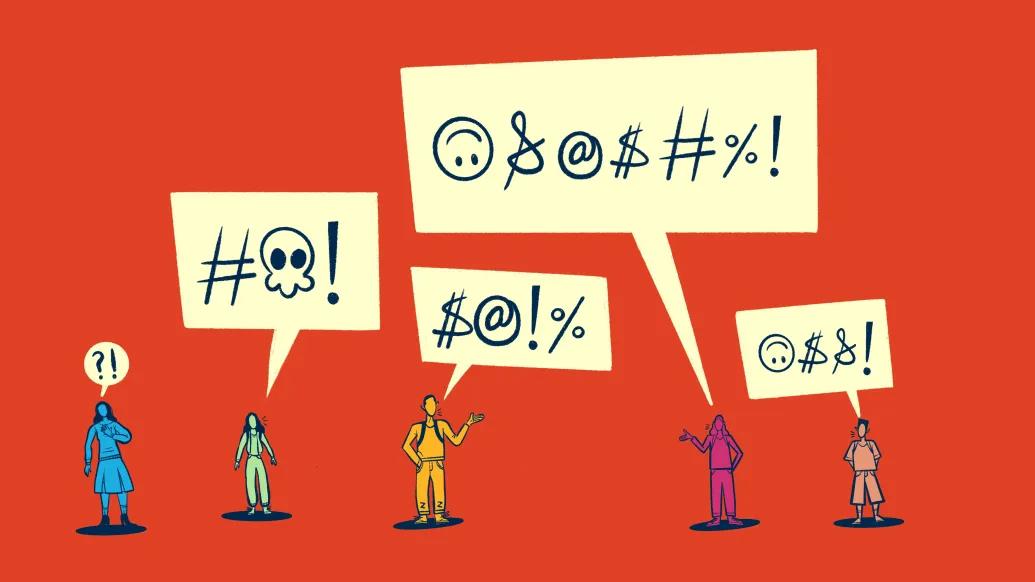
Today’s parents may be growing more relaxed about their children using curse words, according to a national poll.
Only about half of parents say children should never swear, even as many acknowledge that their own kids sometimes do, according to the University of Michigan Health C.S. Mott Children’s Hospital National Poll on Children’s Health.
Meanwhile, more than a third of parents say whether it’s acceptable depends on the situation, while fewer say it depends on the specific word being used or that swearing isn't a big deal.
At the same time, one in four parents say their child uses curse words at least occasionally, including nearly four in 10 parents of teens.
“Parents are navigating a gray area when it comes to language,” said Mott Poll Co-Director Sarah Clark, M.D.H.
“Many don’t love hearing these words, but they also recognize that context, age and intent matter.”
The nationally representative report is based on responses from 1,678 parents with at least one child ages 6–17, surveyed in August 2025.
Peers play a major role
When asked where children learn profanity, two in three parents pointed to friends or classmates, making peers the most commonly cited source.
Popular media followed closely, while many parents also acknowledged that children hear adult language at home, including from parents themselves.
About one in three parents believe their child swears to fit in, highlighting the role of social pressure, particularly during adolescence.
Parents are navigating a gray area when it comes to language. Many don’t love hearing these words, but they also recognize that context, age and intent matter.”
-Sarah Clark, M.D.H.
Parents of teens were more likely to say the behavior is about fitting in, while parents of younger children more often attributed it to trying to be funny or to get attention.
Some children may also use strong language to express negative emotions, Clark says, which may signal a need for help naming and managing anger or frustration in more appropriate ways.
“Swearing can be a form of social currency for kids,” Clark said.
“For some, it’s about belonging. For others, it’s about getting a reaction. Understanding the ‘why’ can help parents respond more effectively.”
Parents set rules but enforcement varies
Parents who object to children using curse words likely have a variety of reasons, Clark notes.
Some view it through a religious lens, believing certain words conflict with their beliefs.
Others see it as a matter of manners, she says, worrying that harsh language is rude or disrespectful.
For these parents, context matters: such language might be off-limits at school or in public, for example, but less of a concern when kids are with friends.
Most parents say they feel responsible for their child’s word choices, yet responses vary widely.
When their child swears, parents most often say they tell them to stop or explain why they dislike it.
Fewer say they ignore it, and only a small number rely on punishment.
Parents of teens are more likely than parents of younger children to ignore it altogether.
“It can be challenging for parents to maintain a consistent approach to swearing,” Clark said.
“Parents should sort through their own attitudes to determine which words and situations will merit a response. Young children may not realize certain terms are inappropriate, so parents may need to explain meaning, context or social impact to build understanding and empathy.”
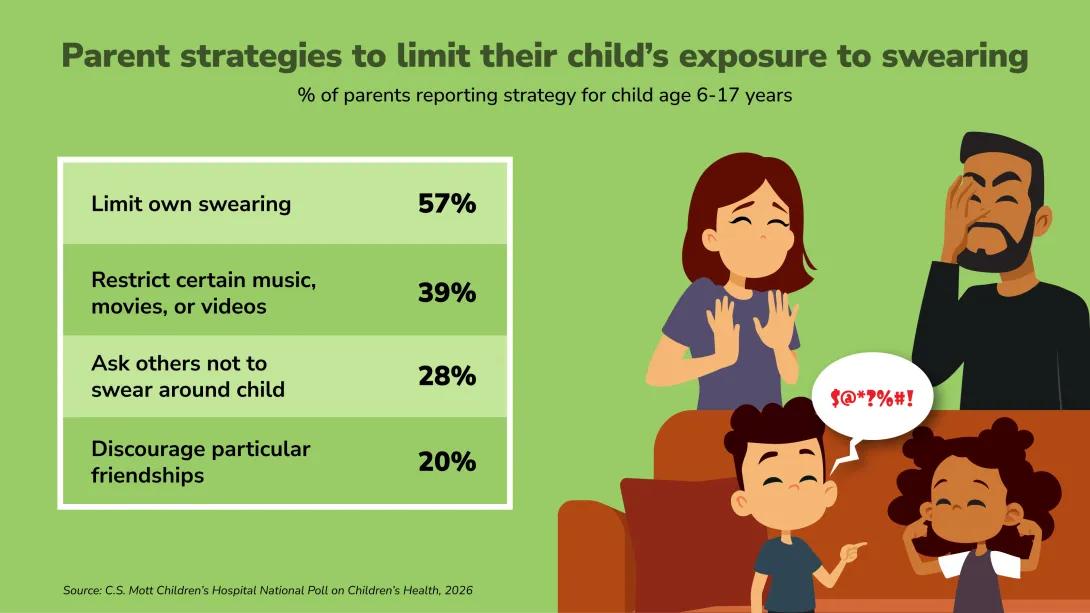
To limit exposure, parents report watching their own language, restricting certain media and asking others to respect household rules.
About one in five parents also discourage friendships with children who frequently swear, suggesting concerns that go beyond language alone.
“These findings show that swearing isn’t just a discipline issue,” Clark said.
“It’s tied to peer relationships, family norms and how parents want to guide behavior without overreacting.”
Sign up for Health Lab newsletters today. Get medical tips from top experts and learn about new scientific discoveries every week.
Sign up for the Health Lab Podcast. Add us wherever you listen to your favorite shows.

Health Lab
Explore thousands of health news & research stories by visiting the Health Lab homepage for more.
Media Contact

Public Relations
Department of Communication at Michigan Medicine
In This Story

Sarah J Clark
Research Scientist
Stay Informed
Want top health & research news weekly? Sign up for Health Lab’s newsletters today!
Featured News & Stories

U-M-led consortium to receive up to $52 million in NIH funding to study why viral respiratory infections affect children differently

Comprehensive DNA sequencing reveals hidden drivers of cancer
4 in 5 parents say having a baby is too expensive

Many older adults make Medicare decisions quickly and most don’t change plans, poll finds

‘Molecular glue’ stabilizes protein that inhibits development of non-small cell lung cancer and uterine cancer