Knowing When It’s Time for Cataract Surgery
Every patient is different, but a few basic benchmarks can help you determine if seeking surgical aid for cataracts is appropriate.
1:00 PM
Author |

There are many health care bullets you can dodge if you exercise, eat right and otherwise take good care of yourself, but cataracts aren't one of them.
SEE ALSO: 5 Behaviors to Help Prevent Cancer
"Everybody will develop cataracts in their eyes if they're lucky enough to live long enough," says Michael Smith-Wheelock, M.D., associate chair of clinical operations at the University of Michigan's Kellogg Eye Center.
It's not a matter of if, but when. Then when to have cataract surgery isn't always obvious.
Cataract basics
A cataract is a clouding of your eye's lens that over time causes vision to deteriorate. Cataracts can develop at any age, but the overwhelming majority of cataract patients are elderly.
Cataract symptoms include:
-
Decrease in vision clarity not correctable with glasses
-
Colors that appear faded or washed out
-
Glare and halos around lights
-
Frequent changes to eyeglasses prescriptions
-
Need for brighter light to read
In rare instances, surgery may be needed to preserve eye health in the absence of vision problems. But more often, cataracts don't affect eye health, and surgery is done merely to improve eyesight.
When you're struggling to see what you need to see, and it's keeping you from moving forward, then it's time to have cataract surgery.Michael Smith-Wheelock, M.D.
When to treat cataracts
The timing for corrective surgery varies because people have different tolerance levels for visual impairment, Smith-Wheelock says.
"We have patients reading well on the eye chart, but they're bitterly upset and want surgery right away, and others come in who are legally blind from their cataracts and they're not complaining," he says.
The bottom line is function, Smith-Wheelock says. If you feel like you can see everything you need to see in your daily routine, there's plenty of time. If, however, you're experiencing symptoms that impair your ability to perform activities that are important to you, such as driving, reading, watching TV or playing sports, you may want to address cataracts sooner.
"When you're struggling to see what you need to see, and it's keeping you from moving forward, then it's time to have cataract surgery," Smith-Wheelock says.
Unfortunately, there are no medications that effectively treat cataracts. Once they become sufficiently bothersome, the standard treatment is surgically removing the cloudy lens and replacing it with an artificial one.
Cataract surgery: The basics
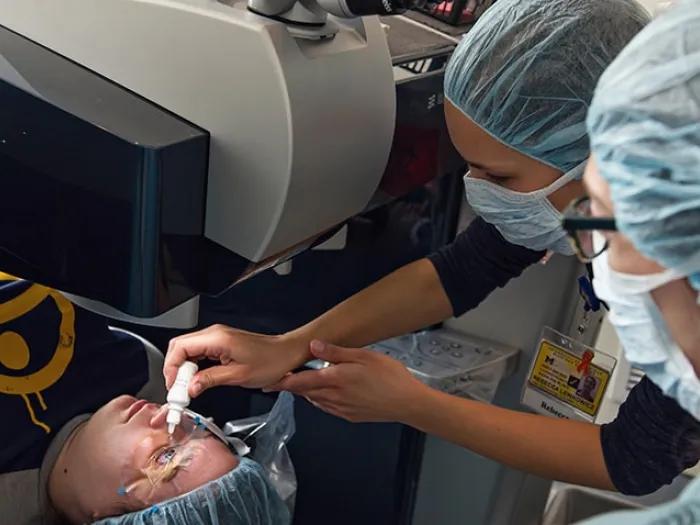
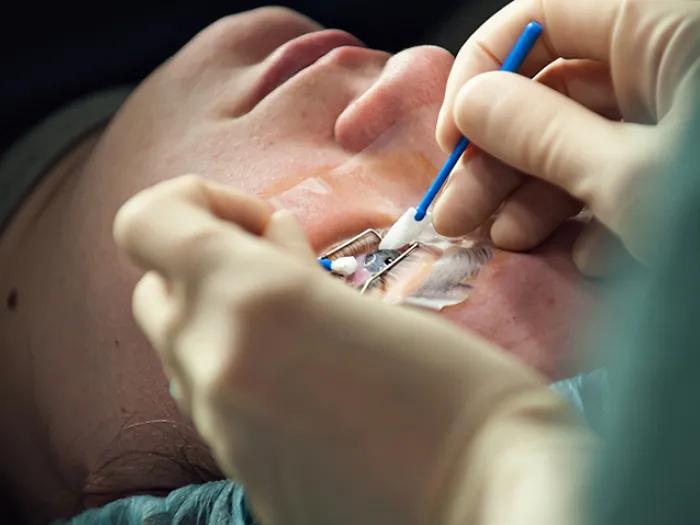
Surgery is typically performed on an outpatient basis under a topical, local anesthesia. Often, in addition to numbing the eye's surface, doctors provide patients with intravenous sedation or oral anti-anxiety medication. The vast majority of patients are awake during the procedure.
SEE ALSO: Aging and Digestive Health: 6 Factors to Watch For
"That sounds frightening for something as sensitive as your eyes, I know," Smith-Wheelock says.
"But amazingly enough, all the comforting measures we take are effective. Patients report seeing rainbows or prisms during the procedure, but these images are not frightening. Normally there's no pain during or after. At most, there might be a scratchy feeling afterward that you can manage with Tylenol."
The surgery takes only about 15 minutes, causes no blood loss and has a quick recovery period, Smith-Wheelock adds. Most people are back to their daily routines in a day or two.
Artificial lenses replace the focusing power that natural lenses lose with age. They are stationary in the eye, so they're good for life.
Different types of replacement lenses are available for implantation, so it's important to talk to your surgeon about options and which one is right for you.
Some lenses are better for focusing close up, which is helpful for heavy readers. Others are better for focusing far away. There's also one that is a hybrid of the two — sort of like bifocal eyeglasses for your eye — but there's a trade-off with that.
"Image quality tends to be inferior," Smith-Wheelock says. "If you have a product dedicated to doing one thing, it's going to do that one thing really well — better than a product trying to do several things at once."
Some people can be eyeglasses-free after cataract surgery, but most will need glasses for some activities to see their best.
Cataract surgery is extremely effective overall, though, and normally carries little risk, Smith-Wheelock says.
"The success rate is greater than 99 percent."

Health Lab
Explore thousands of health news & research stories by visiting the Health Lab homepage for more.
Media Contact

Public Relations
Department of Communication at Michigan Medicine
Stay Informed
Want top health & research news weekly? Sign up for Health Lab’s newsletters today!
Featured News & Stories

How LASIK surgery can help athletes perform at their best
LASIK vs. PRK: Which vision correction surgery is right for you?
Pros and cons of LASIK: Are the risks worth the cost?

How to protect your eyes during the total solar eclipse
7-Year-Old Receives New FDA-Approved Retina Gene Therapy