Kidney stones becoming more prevalent in children: What parents should know
Pediatric urologist explains factors that contribute to kidney stones and how parents can help their children avoid them
11:57 AM
Author |
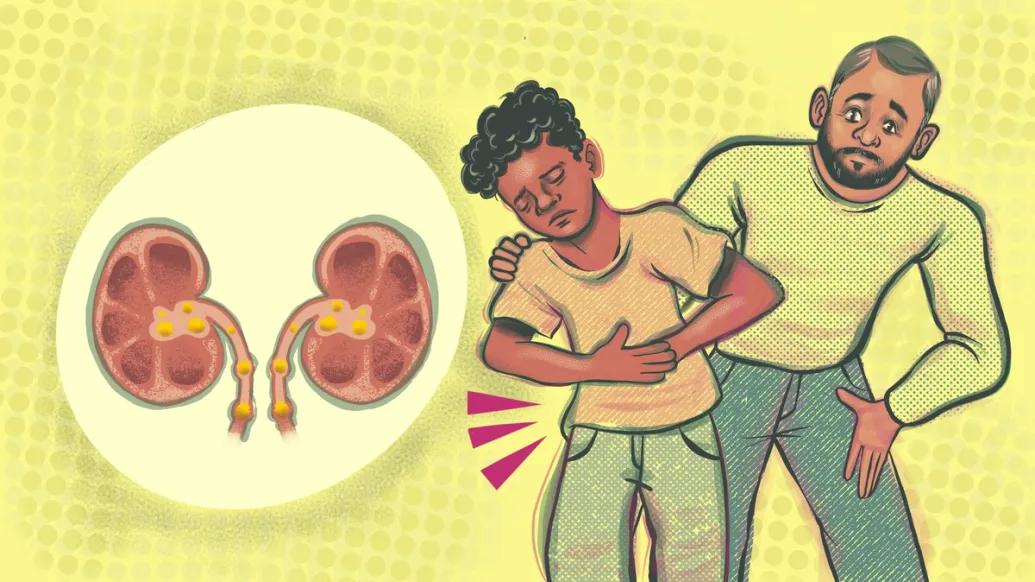
Healthcare professionals across the country are seeing an uptick in cases of kidney stones in children.
Kidney stones have several causes, but two of the most common ones for children are not drinking enough water and having a diet with too much salt and ultra processed foods, says Kate Kraft, M.D. M.H.P.E., a pediatric urologist at University of Michigan Health C.S. Mott Children’s Hospital.
“We are seeing an increase in kidney stones in children,” said Kraft, who is the chief of the division of pediatric urology at Mott. “There’s been a 10% increase every year over the last decade or so. That certainly indicates an epidemiologic rise.”
Kraft added that the number of surgical cases related to kidney stones at Mott has also increased.
How do kidney stones form?
Kidney stones are deposits of different minerals that can accumulate in the urinary tract. They can travel from the kidney, down the urinary tract, to the bladder and eventually be urinated out. Some cases require surgical intervention.
“They start up in the level of the kidney in what we call the collecting system, and then they can move down the urinary tract through tighter spaces all the way down to the bladder,” said Kraft.
We are seeing an increase in kidney stones in children. There’s been a 10% increase every year over the last decade or so. That certainly indicates an epidemiologic rise.” Kate Kraft, M.D.
Kidney stones can be urinated out as well, so patients might seem them as they’re urinating, she added.
The primary cause of kidney stones is an accumulation of minerals within the urinary tract, and most are calcium based. Kidney stones can get in tight spaces in the urinary tract, which can obstruct the flow of urine and create stretch on the kidney. This can be very painful.
Children with underlying conditions are more at risk for kidney stones, Kraft says. Immobile patients are also more at risk due to decreased flow of urine that can lead to stasis and then to kidney stone formation.
If left untreated, kidney stones can cause damage to the kidney, serious infection of the urinary tract and over time, can damage the function of the kidney.
What parents can do
Parents can help their children avoid kidney stones by promoting healthy habits at home. The cause of kidney stones in kids has to do with diet and daily fluid intake, Kraft notes.
She suggests having a water bottle for kids to carry at school and using water drinking tracking apps to help keep them accountable and increase their water intake. To keep a healthy diet, she recommends reducing ultra processed foods, eating out less and cooking meals at home with reduced salt.
Increased antibiotic use may also play a role in the prevalence of kidney stone formation as well.
“The third component is increased antibiotic use, with recent studies showing that may actually affect how the gut absorbs the minerals that are in kidney stones and the amount of those minerals in the urine,” Kraft says.
“If children participate in good dietary habits, like increased fluid intake on a daily basis, reducing their sodium and try to stay away from antibiotics when they’re not warranted, then hopefully we’ll see a decrease in kidney stones in the future,” she said.
When to seek medical attention
The most common symptom of kidney stones is high level pain. People experiencing kidney stones usually experience flank pain on the side in which the stone is located.
“Some people say that passing a kidney stone is the worst pain that they have ever had,” said Kraft.
Other symptoms include fever and hematuria, or blood in the urine. Kraft recommends seeking immediate medical attention at a local emergency department if children are experiencing any of these symptoms. Medical professionals can use imaging to determine if it is indeed a kidney stone.
Patients with kidney stones may also experience frequency–urinating more often–and urgency–a strong overwhelming need to urinate.
“We advocate for the use of ultrasound in this setting to look for kidney stones in the urinary tract,” said Kraft.
Sign up for Health Lab newsletters today. Get medical tips from top experts and learn about new scientific discoveries every week by subscribing to Health Lab’s two newsletters, Health & Wellness and Research & Innovation.
Sign up for the Health Lab Podcast: Add us on Spotify, Apple Podcasts or wherever you get you listen to your favorite shows.

Health Lab
Explore thousands of health news & research stories by visiting the Health Lab homepage for more.
Media Contact

Public Relations
Department of Communication at Michigan Medicine
Stay Informed
Want top health & research news weekly? Sign up for Health Lab’s newsletters today!
Featured News & Stories

A pediatric epilepsy fundraiser that changes lives

Better prenatal care data could help prevent maternal complications, experts say

Many hospitals still don’t do enough to prevent UTIs from catheters

Pediatric patient treated for rare kidney cancer

E-Bikes are everywhere, but most parents say they don’t know enough about them