To keep high risk patients out of hospitals, at-home monitoring shows promise
Patients had 59% fewer hospitalizations after enrolling in a remote patient monitoring program that uses digital health devices and clinician support to do daily checks of vital signs and symptoms
9:19 AM
Author |
For someone with heart failure, very high blood pressure, or severe COVID-19, going home from the hospital can feel like falling off a cliff.
Suddenly, they lose the round-the-clock monitoring of their vital signs that can give early warning of a potential health crisis.
And those missed signs can lead to another trip back to the hospital within days or weeks.
It’s an expensive and life-disrupting cycle.
It also contributes to crowded emergency rooms and hospitals for everyone.
Now, a University of Michigan study finds that hospitalizations dropped by more than half (59%) among such patients in the following six months after they took part in a remote patient monitoring program while at home.
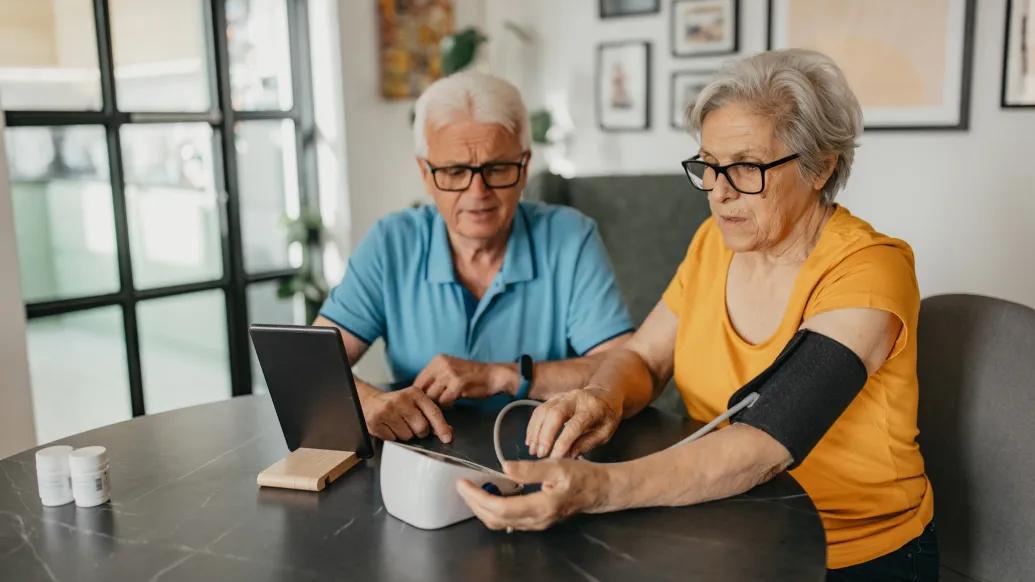
Each patient received a kit of devices to take their temperature, blood pressure, blood oxygen and weight, and a tablet that gathers data from the devices and asks questions about their symptoms.
The tablet automatically and instantly sends all this information to a medical team at U-M Health that can escalate patients to higher levels of care when needed.
The Patient Monitoring at Home program at U-M Health has more than paid for itself, with a $12 million return on investment thanks to avoided hospitalizations, according to the new study published in the journal Telemedicine and E-Health.
Large and long term study
Using data from more than 1,700 patients, the study may be the largest and longest to date of a remote patient monitoring program.
It was done by a team from Post-Acute Care Services, Virtual Care and the Division of Geriatric and Palliative Medicine at Michigan Medicine, U-M’s academic medical center, using data from the Patient Monitoring at Home program that launched in April 2020 for high-risk patients treated at U-M Health hospitals and clinics.
The program got its start early in the COVID-19 pandemic, during a time of great urgency for keeping patients out of the hospital or discharging them as soon as possible.
It capitalized on the COVID-19 emergency’s new flexibility in the rules for billing Medicare and other insurance for telehealth care.
But even as the pandemic waned, U-M’s program continued and grew -- as have programs like it at major medical centers and health systems nationwide.
In fact, the new study shows that even when the researchers excluded data from COVID-19 patients, they still saw a 49% relative reduction in the risk of hospitalization from the six months before home monitoring started to the end of six months after.
On average, patients used the kit of devices and support from nurses and physicians for one to two months. But the reduction in hospitalizations persisted after they mailed the kit back in.
The U-M team that performed the new study hopes their findings will help this emerging kind of care grow and develop standards and guidelines based on evidence.
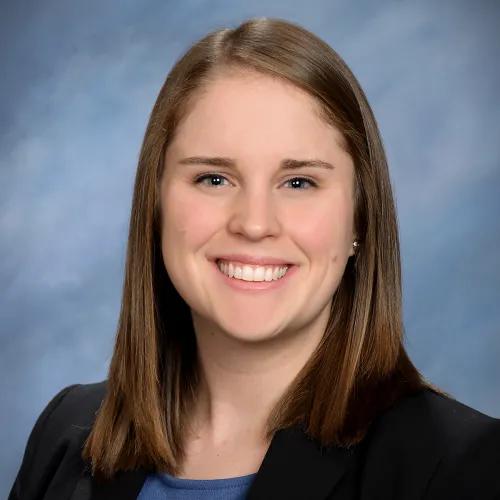
“These are promising results for hospitalization prevention, which is very exciting because the risk of hospitalization are so high in the geriatric patient population, especially those with certain conditions,” said Sara Margosian, M.D., who became involved in the study during her geriatric medicine fellowship at U-M Health and has now joined the faculty as a clinical instructor in geriatrics in the Department of Internal Medicine.
She added, “This program targets the people at highest risk for rehospitalization, and the ability to have an intervention that works is really exciting.”
How remote patient monitoring works
Margosian worked on the study with Ghazwan Toma, M.D., the medical director of the Patient Monitoring at Home program, which is within Post-Acute Care Services group at U-M Health and a clinical assistant professor in the Department of Family Medicine.
Toma oversees the group of nurses, nurse practitioners and physicians who devote all or part of their time to interacting with the patients participating in the program.
The team partners with Health Recovery Solutions, which assembles and ships the kit of devices, and runs the secure online system that collects patients’ vital signs and symptoms and makes it available to U-M clinicians to monitor.
The kit includes a tablet computer with an interface that is easy to use even for patients who don’t use other digital technologies.
It connects via Bluetooth to the thermometer, pulse oximeter, blood pressure monitor and scale in the kit, and transmits the vital signs from those devices and patients’ answers to symptom surveys via cellular signal to U-M clinicians’ dashboard.
Patients don’t need home Internet service to participate.
At U-M, the Patient Monitoring at Home program enrolls people who score 10 or higher on a scale called the LACE index, which predicts 30-day hospital readmission using length of stay, acuity of admission, comorbidities and emergency department use.
About 74% of the patients in the study enrolled immediately after a hospital stay. The others took part after an outpatient visit with a physician concerned about their risk of hospitalization, or after a short stay in a nursing home following a hospitalization.
Most patients in the study enrolled because of rehospitalization risks due to COVID-19, congestive heart failure and uncontrolled hypertension. But today, the program also enrolls patients with other cardiac conditions, liver cirhhosis, cancers requiring chemotherapy or CAR-T treatment, sepsis, diabetes, and chronic lung disease.
When the kits arrive at patients’ homes, they contact U-M’s Post-Acute Care Service nurses who talk them through a simple setup process.
Each day while they’re in the program, patients are asked to record vital signs and take at least one survey relevant to the diseases being monitored.
In the first years, patients completed these steps only about half the days they were in the program.
But by the third year of the program, the team had made changes to how it educates and encourages patients, and now patients on average monitor vital signs 75% of the time and complete surveys 71% of the time.
The nurses monitoring the vital signs and symptom data reach out to patients if they spot signs of trouble. The nurses further triage the conditions and escalate to other Post-Acute Care providers if need be. Patients can call the nurses from the tablet during weekdays and weekends, and they have video visits with one of the team’s doctors or nurse practitioners at least at the start and end of their participation.
Another feature of the Patient Monitoring at Home service is the ability to work closely with U-M Health’s HouseCalls and Michigan Visiting Nurses services to ensure patients' concerns are addressed promptly.
After a patient’s vital signs have been stable for four to five days, they’re discharged from the program and the nurses arrange for their kit to be picked up and sent back to be cleaned and used by the next patient.
Looking forward
The outcomes portion of the new study focuses on data from patients who enrolled starting in November 2020, after the first months of the COVID-19 pandemic, through August 2022, so the team could look for hospitalizations at U-M facilities up to six months after discharge from the monitoring program.
They looked back at hospitalizations among the same patients in the 6 months before they took part in the program.
The new study goes beyond previously published evaluations of RPM programs that focused only on COVID-19 patients or only on a short time after enrollment.
Margosian and Toma note the contributions of co-author Heather Crossley, a statistician in Michigan Medicine’s Department of Quality and Informatics.
She and her colleagues continue to evaluate the PMH program’s data to look for more ways to improve.
The team hopes to better understand which patients do best in the RPM model, and share this information with colleagues nationwide.
This could lead to a guideline for patient monitoring at home that could help improve quality and appropriateness, and inform coverage by Medicare, Medicaid and private health insurance. Right now, providers can get reimbursed for telehealth care of all kinds under temporary rules that were recently extended to fall of 2025 by Congress.
“While remote patient monitoring has been expanding across the country for five years, there is no consistent guideline for how to operate such a program, including optimum patient selection, and decision-making for escalation,” said Toma.
“Many home health agencies have added it to their home-based service offerings, and academic medical centers have created their own RPM programs, but the types of monitoring and patient interfaces vary widely. We hope our findings can inform best practices across the board.”
One of the key components of building a successful program, he notes, is educating colleagues across the health system on the role of the program so they can refer the appropriate type of patients to it from both inpatient and outpatient settings.
Additional authors: In addition to Margosian, Toma and Crossley, the study’s authors are Maryann Riggs, B.S.N., Toni Henkemeyer, B.A., Mary Fisher, B.A., M.P.H., Akshar Patel, B.S., M.S., as well as Chad Ellimoottil, M.D., M.S., who is medical director for virtual care at Michigan Medicine, and Grace Jenq, M.D., who is associate chief clinical officer for post-acute care at Michigan Medicine.
Paper cited: “Impact of a Large-Scale Remote Patient Monitoring Program on Hospitalization Reduction, Telemedicine and E-Health," Telemedicine and E-Health. DOI: 10.1089/tmj.2024.0600
Sign up for Health Lab newsletters today. Get medical tips from top experts and learn about new scientific discoveries every week.
Sign up for the Health Lab Podcast. Add us wherever you listen to your favorite shows.

Health Lab
Explore thousands of health news & research stories by visiting the Health Lab homepage for more.
Media Contact

Public Relations
Department of Communication at Michigan Medicine
In This Story

Ghazwan Toma
Clinical Assistant Professor
Sara L Margosian
Clinical Assistant Professor
Stay Informed
Want top health & research news weekly? Sign up for Health Lab’s newsletters today!
Featured News & Stories
Telehealth didn’t increase Medicare visits, but drove down post-visit costs
Medicare pays for message-based e-visits. Are older adults using them?
Keep telehealth alive and well, experts tell Senate subcommittee

Top 7 tips for choosing Medicare prescription drug coverage for 2027
The AI is listening: Implications of machine generated clinical notes on health care