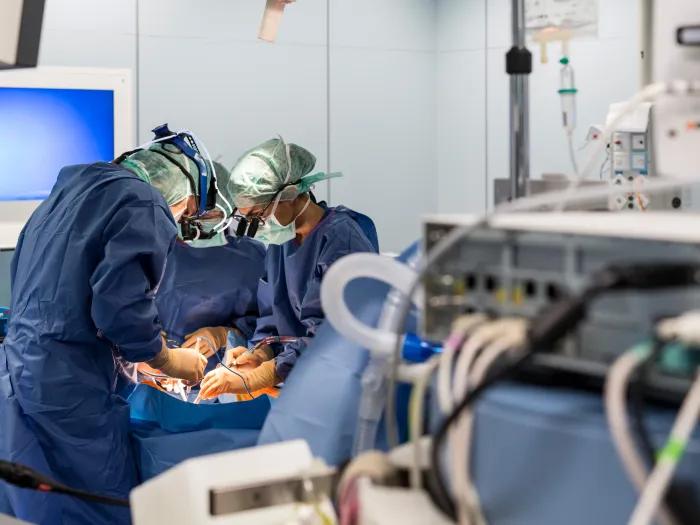
Jalen Hurts’ blood clot diagnosis: doctors answer common questions
What to know about different blood clots, their treatment and safely returning to athletics
12:00 PM
Author |

The season-ending blood clot diagnosis for Philadelphia Eagles quarterback Jalen Hurts unfolded in stages.
The team first announced that Hurts had a superficial blood clot and later said he would not play in a game against the Carolina Panthers on Oct. 18.
Days later, the Eagles and Hurts' agent revealed he had been diagnosed with a deep vein thrombosis (DVT) and bilateral pulmonary emboli, requiring treatment with blood-thinning medication and ending his season.
The updates prompted questions about different types of clots, how they are diagnosed and treated, and what recovery can look like.
University of Michigan Health experts Geoffrey Barnes, M.D., M.Sc., a cardiologist and vascular medicine specialist and Jordan Schaefer, M.D., M.Sc., a hematologist, answer common questions and explain what patients should know about blood clot risks, treatment and returning to activity.
What is the difference between a superficial blood clot, a deep vein thrombosis and a pulmonary embolism?
Schaefer: These types of clots differ in their location and potential complications. It is possible to have a superficial blood clot, deep vein thrombosis and pulmonary embolism at the same time.
A superficial clot forms in a vein just beneath the skin, often in the legs. It can also occur in the arms — for example, after placement of an intravenous (IV) catheter. Symptoms often include redness or discoloration, warmth, pain, tenderness and a cord-like area along the vein.
A deep vein thrombosis (DVT) forms in a deep vein, most commonly in the leg. Symptoms depend on the clot’s location and extent and may include swelling, pain or tenderness, and warmth and skin discoloration. Some DVTs cause no symptoms.
A pulmonary embolism usually occurs when part or all of a DVT breaks loose, travels through the veins and the right side of the heart and becomes lodged in an artery in the lungs. It is potentially life-threatening and may cause sudden shortness of breath, chest pain, a rapid heart rate, low oxygen levels, coughing up blood, lightheadedness or fainting.
How are blood clots diagnosed and treated?
Barnes: Blood clots in the legs (superficial and deep vein thromboses) are typically diagnosed with an ultrasound. This is a relatively quick test that does not require any radiation therapy and is available in many doctor’s offices.
Blood clots in the lungs (pulmonary embolism) are typically diagnosed with a CT scan.
For milder superficial blood clots, standard treatment can often focus on conservative measures, such as applying a warm compress and elevating the leg.
However, we know there is a risk that some folks have an undetected DVT. When a patient has a higher risk based on the clot length or location, or other risk factors, we may treat is with an anticoagulant (blood thinner).
When someone has a DVT, we treat them with anticoagulants, typically for at least three months. We also frequently recommend use of compression stockings and walking or other physical activity to help reduce swelling and discomfort.
When a patient has pulmonary embolism, there are several steps we can take.
We always start with medical management by prescribing an anticoagulant. For select patients with a more serious pulmonary embolism, there are also minimally invasive treatments that can be utilized.
These involve placing a catheter into the arteries of the lung where the clot is blocking blood flow and then delivering a clot-busting medication or removing the clot entirely. For patients who cannot use anticoagulant medications, interventional teams may insert a filter into the inferior vena cava to prevent the clot from traveling from the legs up to the lungs.
What increases your risk factor for superficial blood clots, DVT or PE?
Schaefer:
Risk factors for blood clots include:
- Inherited or genetic clotting disorders
- Personal or family history of blood clots
- Surgery
- Immobility, such as during hospitalization or after an injury
- Long-distance travel
- Certain medications or hormones
- Pregnancy
- Various health conditions such as cancer and antiphospholipid syndrome.
Risk also increases with older age, smoking, obesity and several other factors. Varicose veins and intravenous catheters are risk factors for superficial vein thrombosis.
Can I still exercise or play a sport with a blood clot? If not, when can I return?
Barnes: We encourage anyone with a blood clot to remain active, as this helps their blood circulate. If someone has a pulmonary embolism, we usually suggest avoiding rigorous exercise until their breathing has returned to normal.
One of the big risks with activity is the risk of bleeding while people are being treated with anticoagulant medications (blood thinners). We generally recommend avoiding any contact sports — like soccer, basketball, football — while taking a blood thinning medication because of bleeding risk.
Most people can eventually return to their exercise and sports but should do so only after talking with their doctor about how to return safely.
Does long distance travel increase the risk of a clot?
Schaefer: Yes, travel lasting more than four hours is associated with an increased risk of blood clots, although the overall risk is generally small and is higher in people with other risk factors.
In general, the longer the travel, the greater the risk. We generally suggest avoiding prolonged immobility during long-distance travel by walking and stretching periodically and regularly flexing your ankles and calves while seated.
Should you avoid sleep if you have a blood clot or are traveling with one?
Barnes: While we want people with blood clots to remain active and avoid prolonged sitting/lying down, we also know that sleep is incredibly important for our overall health.
Therefore, it is not typical to recommend that someone avoid sleeping just because they have developed a blood clot. High-quality rest can be healing!

Health Lab
Explore thousands of health news & research stories by visiting the Health Lab homepage for more.
Media Contact

Public Relations
Department of Communication at Michigan Medicine
In This Story

Geoffrey D Barnes, MD, MSc
Associate Professor

Jordan Schaefer, MD, MSc, FACP, FAHA
Clinical Associate Professor
Related
Pulmonary embolism deaths, disparities high despite advancements in care
Stay Informed
Want top health & research news weekly? Sign up for Health Lab’s newsletters today!
Featured News & Stories
Could a diabetes medication be the next wonder drug?

Gene editing is coming for common diseases. Are we ready?

Digital alerts support timely treatment decisions of critically ill cardiac patients

Is the United States Lagging Behind Europe in Memory Improvement?
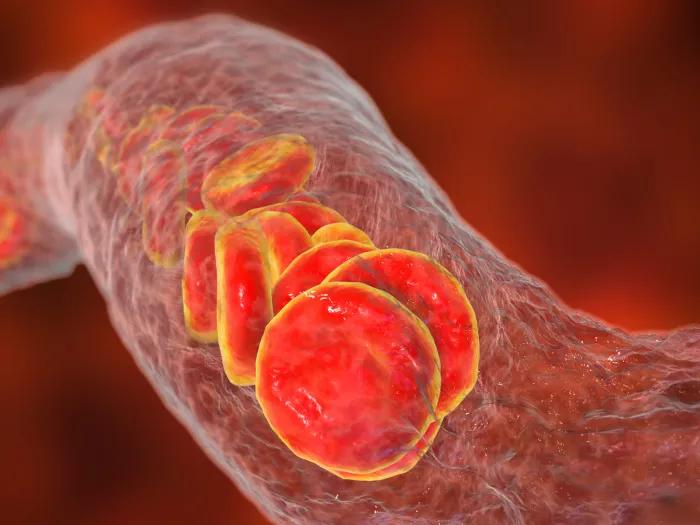
FDA-approved drug offers hope for patients with polycythemia vera, a rare bone marrow disorder