Innovative AI tool enhances patient-centered care and clinician well being
The new technology aims to reduce physician burnout while improving the patient-doctor experience
5:00 AM
Author |

This story originally appeared in Headlines by Michigan Medicine.
Artificial intelligence, or AI, is rapidly transforming industries worldwide, including health care.
While concerns around its use often surface when it comes to technology reducing the human touch in medicine, Michigan Medicine is leveraging innovative AI tools to enhance the patient-provider relationship and bring professional balance back to its busy clinicians.
The institution’s recent adoption of Dragon Ambient Experience, better known as DAX Copilot, is part of an ongoing initiative to leverage AI to improve patient experience and reduce administrative burden for providers.
“We surveyed our clinicians and found that many experience significant administrative responsibilities as part of their roles,” said Chief Well-Being Officer Elizabeth Harry, M.D.
“Because of this, we realized it was important for us to become early adopters of tools and strategies that help reduce burnout and cognitive load for our clinicians.”
Impact and reduced cognitive load
Harry described a recent pilot in which DAX Copilot was deployed among a portion of Michigan Medicine clinicians to assess its impact, and she said the preliminary results with this pilot group “were very impressive.”
“We found that the use of this tool was associated with decreased (self-reported) time spent charting after hours, reduced interference of work with family life and lower cognitive load, as well as increased job satisfaction and decreased levels of burnout,” she said.
Harry notes that their pilot study involved 196 clinicians and observed a 15% decrease in cognitive load.
“This finding was significant, as it underscored the value of integrating a tool like DAX Copilot to enhance both the professional and personal well-being of our clinicians. Based on these initial results, we recognized the importance of offering this solution throughout our health system to those it might benefit.”
DAX Copilot works by using AI to generate real-time clinical notes after listening to office visits and other information the provider records, which are then reviewed and finalized by the clinician.
By reducing documentation workload, clinicians can devote more attention to direct patient care, leading to a more personalized and satisfying experience for everyone involved.
“This, in turn, frees up our clinicians so their main focus can be on their patients,” said Harry.
“While the term ‘ambient’ refers to technology that uses AI to capture clinical conversations and generate real-time notes within the electronic health record, these notes are always reviewed by our clinicians before being finalized.”
Dana Habers, M.P.H., chief innovation officer and chief operating officer of pharmacy services, went on to emphasize the institutional effort required to make the initiative happen.
“Implementing the use of DAX Copilot has required tremendous work by our Health Information Technology and Services team and many others throughout our institution. Their agility and commitment have enabled us to deploy DAX Copilot rapidly and expand access for our clinicians. These efforts are justified by the clear benefits to our care teams and patients," Habers said.
“AI is already substantially reshaping health care as a tool that is actively improving the lives of our caregivers so they can better care for our patients. With the right guardrails – ethical use, oversight, transparency and a focus on equity, I believe AI will become one of the most powerful tools for improving health outcomes in our lifetime. Its impact on the Michigan Medicine team as a way to lift caregivers up from the burdens of our field, and bring us back to our professional purpose, is truly inspiring.”
Beyond a provider tool
Carolyn Winslow, Ph.D., organizational research psychologist and well-being research and analytics lead in the Office of Well-Being, is leading ongoing research on DAX Copilot’s impact on clinicians using the tool, which includes many collaborative team members beyond physicians, including social workers, pharmacists and others.
Winslow said, “[The team] specifically evaluated how different provider groups (e.g., specialty care versus primary care, for example) are experiencing DAX Copilot. And pilot data showed statistically significant pre- and post-DAX Copilot use improvements in key provider well being metrics for most of those groups, with women and primary care providers experiencing the greatest benefits."
She also added that interviews with participating clinicians provided key insights for maximizing DAX Copilot’s enterprise-wide impact across a variety of clinical settings, and “future analyses are now planned to round out the investigation, including evaluating the relationship between using DAX Copilot and various measures of workload and clinical documentation burden, specifically.”
While Michigan Medicine’s research continues, various peer-reviewed studies have shown similar tools nationally have been associated with reduced cognitive load, burnout and improvements in indicators of clinical documentation burden, like time spent notetaking.
“By streamlining documentation, clinicians no longer must split their attention between the computer and their patient during visits when using DAX Copilot. Instead, they can devote more time to truly listening, thinking through medical details, determining the best course of treatment and connecting with patients about how their symptoms are impacting their lives,” said Greta Branford, M.D., who serves as the physician lead of the DAX Copilot team.
“After all, we chose this profession to care for people. This technology eases the heavy paperwork burden that often comes with medical practice today, allowing us to focus on what matters most, providing attentive, compassionate care."
Lastly, Harry added that this tool will ultimately have a resounding impact on the Michigan Medicine community, by and large.
“This initiative exemplifies how, as a statewide system, we can pilot innovative technologies, assess their impact and then scale them to benefit our entire health system. As early adopters, we are uniquely positioned to evaluate DAX Copilot’s effectiveness and contribute valuable feedback to enhance its use,” she said.
“We are proud to advance this tool at Michigan Medicine to support the well-being of both our clinicians and patients. Overall, our efforts with DAX Copilot reflect a commitment to improving both clinician satisfaction and patient care through the strategic use of innovative technology.”
Paper cited: “Evaluation of an Ambient Artificial Intelligence Documentation Platform for Clinicians,” JAMA Network Open. DOI: 10.1001/jamanetworkopen.2025.8614

Health Lab
Explore thousands of health news & research stories by visiting the Health Lab homepage for more.
Media Contact

Public Relations
Department of Communication at Michigan Medicine
In This Story

Elizabeth Harry, MD, DipABLM
Director, Academic Program
Stay Informed
Want top health & research news weekly? Sign up for Health Lab’s newsletters today!
Featured News & Stories

Emergency room intervention pairs smartphone, telehealth counseling to reduce risky firearm behavior
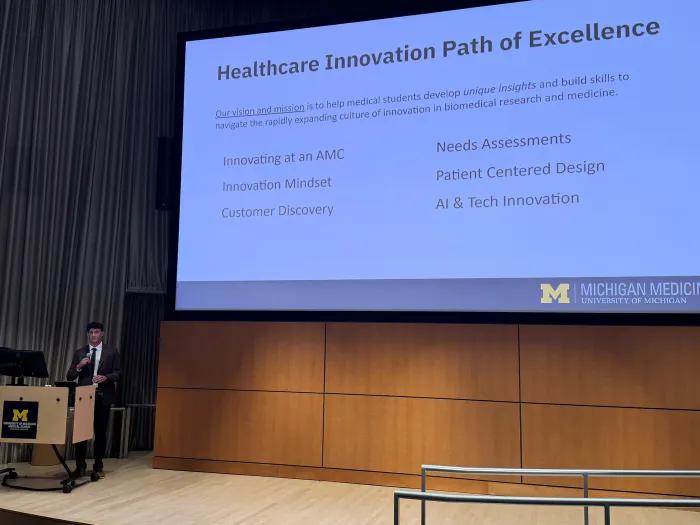
Medical students develop novel technological solutions for unmet patient needs
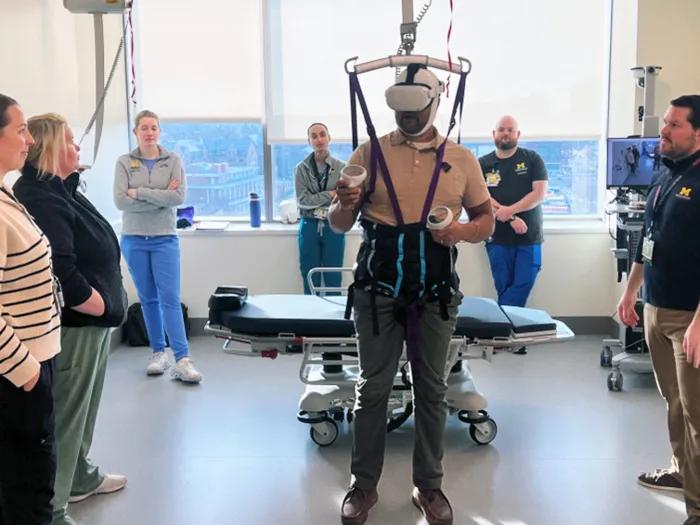
How new care models, within a new building launch, are helping optimize patient care

Studying neurons using neurons
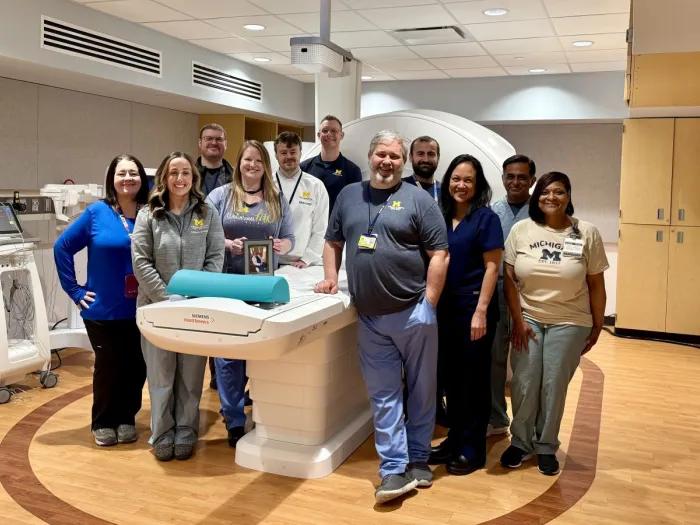
New prostate biopsy technique shows potential future of MRI