Identifying avoidant, restrictive food intake disorder in gastroenterology patients
Researchers have investigated one screening tool’s efficacy for those with disorders of gut-brain interaction
5:00 AM
Author |
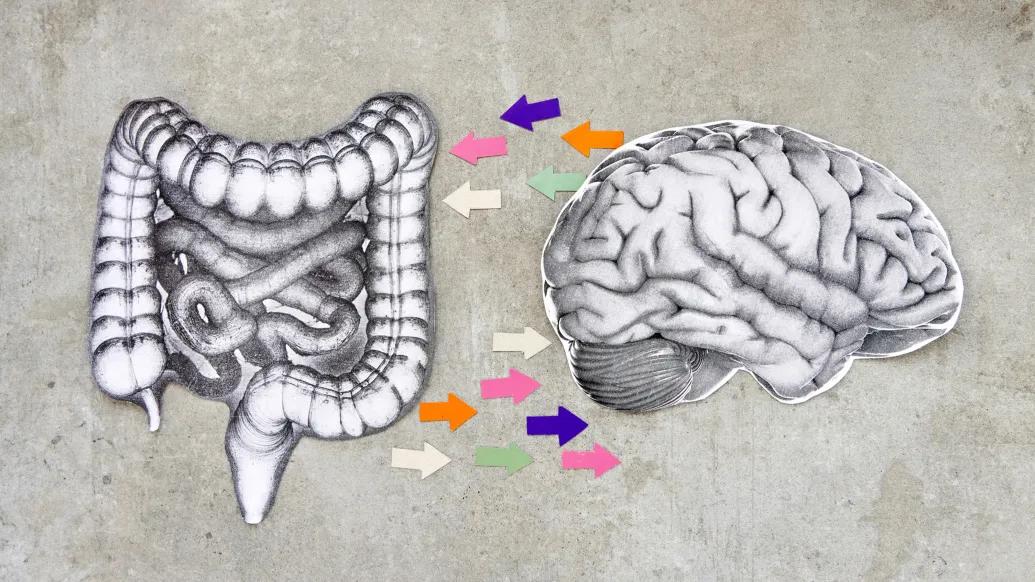
For patients who experience the gastroenterological conditions known as disorders of gut-brain interaction, or DGBI, their relationship with food can become complicated.
Disorders of gut-brain interaction affect approximately 40% of adults and include functional constipation, functional dyspepsia and irritable bowel syndrome.
Food is common trigger for these conditions. And self-management can lead to a relationship with food consistent with avoidant/restrictive food intake disorder, or ARFID.
New research from Michigan Medicine gastroenterologists attempts to better calibrate an existing screening tool for avoidant/restrictive food intake disorder, the Nine-Item ARFID Screen, for patients with disorders of gut-brain interaction.
Here, co-senior author Allen Lee, M.D., M.S., Assistant Professor of Internal Medicine, answers questions about the relationship between gastrointestinal and eating disorders.
What is the causal relationship between avoidant/restrictive food intake disorder and disorders of gut-brain interaction?
Lee: Up to 90% of patients with IBS associate their symptoms — such as abdominal pain, nausea, early satiety, bloating, or bowel urgency — with specific foods.
As a result, these IBS symptoms may cause patients to fear eating, lose interest in food, or progressively restrict their diets.
In some patients, these initially adaptive behaviors become disproportionate and lead to nutritional or psychosocial consequences consistent with ARFID.
Is it important to screen for ARFID before proposing that you attempt an elimination diet?
Lee: Yes — particularly before recommending a restrictive intervention such as the low-FODMAP diet.
Screening can identify patients who may require additional assessment or support before further dietary restriction is introduced.
A positive screen should not automatically preclude dietary therapy, but it should prompt consideration of dietitian involvement, monitoring of nutritional adequacy, and, when appropriate, evaluation by a GI psychologist or eating-disorder specialist.
Our findings suggest that the NIAS is most useful as a rule-out tool.
At the proposed cutoff of ≥22, sensitivity was 94.6% and the negative predictive value was 97.6%. However, the positive predictive value was only 43.8%, so an elevated score should not be interpreted as a diagnosis of ARFID.
Instead, it identifies patients who may benefit from a more comprehensive clinical evaluation.
One of your findings was that previous studies may have "overestimated the prevalence of ARFID in DGBI populations." What are those current estimates, and do you have an idea of what a better estimate might be?
Lee: Published estimates vary widely.
A recent population-based study reported positive screens in 34.6% of adults with DGBI, while some studies of selected GI populations have reported rates exceeding 50%. However, these estimates generally reflect positive questionnaire screens — not clinician-confirmed ARFID.
In our tertiary-care DGBI cohort, 47.3% screened positive at the screening cutoff of ≥22, whereas only 23.7% were classified as having possible or probable ARFID after clinical assessment.
This suggests that screening questionnaires may overestimate clinically meaningful ARFID by approximately twofold in selected DGBI populations. However, 23.7% should not be viewed as a general-population prevalence estimate because our cohort was referred for GI behavioral care and was therefore enriched for more complex patients.
A definitive prevalence estimate will require population-based studies using structured clinical assessment rather than questionnaires alone.
Why was the ≥24 mark for a positive screen on the NIAS not accurately calibrated for DGBI?
Lee: The ≥24 threshold was developed for patients with eating disorders and was not validated in a DGBI-specific clinical context.
Several screen items overlap with common DGBI experiences, including poor appetite, fear of gastrointestinal consequences, and food avoidance.
In DGBI, some of these behaviors may be reasonable responses to symptoms rather than evidence of an eating disorder.
In our held-out testing sample, the historical cutoff of ≥24 had a sensitivity of 81.1% and negative predictive value of 92.9%.
A cutoff of ≥22 improved sensitivity to 94.6% and negative predictive value to 97.6%, making it more suitable for screening before a restrictive dietary intervention.
The tradeoff was lower specificity, reinforcing that the screening should help identify who needs further evaluation — not independently establish an ARFID diagnosis.
Can you briefly explain the Nine-Item ARFID Screen subscales? And do you have any theories as to why appetite and fear outperformed the sensory subscales in this study?
Lee: The Nine-Item ARFID Screen assesses three motivations for restrictive eating:
Sensory: Avoidance related to food characteristics such as taste, texture, smell, or appearance
Appetite: limited interest in eating, low appetite, or difficulty consuming an adequate amount
Fear: avoidance because of concern about adverse consequences such as pain, nausea, vomiting, choking, or other gastrointestinal symptoms.
In our study, the appetite and fear subscales showed good discrimination for clinician-adjudicated ARFID, with AUCs of 0.807 and 0.796, respectively.
The sensory subscale performed less well, with an AUC of 0.654.
One possible explanation is that appetite loss and fear of eating are closely connected to common symptoms of DGBI, such as nausea, early satiety, abdominal pain, which can directly reduce appetite or create conditioned fear of eating.
Sensory avoidance is less directly related to gastrointestinal symptoms and less effective at distinguishing clinically significant ARFID in this population.
Additional authors: Yingxin Wang, Adeline Answine, Michigan Medicine ARFID Working Group, William D. Chey, Jessica P. Naftaly, Prashant Singh
Funding/disclosures: AAL is supported by grants from the National Institutes of Health DK124567 and DK139095 as well as the Leona M. and Harry B. Helmsley Charitable Trust. PS is supported by grants from the National Institutes of Health DK142736 and DK129327 as well as the Leona M. and Harry B. Helmsley Charitable Trust.
Tech transfer(s)/Conflict(s) of interest: WDC is a consultant for Ardelyx, Atmo, Biomerica, Gemelli, Nestle, Salix/Valeant, Vibrant. He has received grant/research funding from Commonwealth Diagnostics, FDA, NIH, Salix/Valeant. He has stock options for Coprata, Evinature, FoodMarble, Kiwi Bioscience, Modify Health. He is a board member of American College of Gastroenterology, GI Health Foundation, International Foundation for Gastrointestinal Disorders, Rome Foundation. He holds patents for My Nutrition Health, Digital Manometry, Rectal Expulsion Device. Allen Lee has consulted for Atmo Biosciences, GSK, and Kiwi Biosciences. Prashant Singh has consulted for Kiwi Biosciences, Gastroknowmi and received funding from Evommune Inc.
Paper cited: “Diagnostic Performance of the Nine-Item ARFID Screen in Patients with Disorders of Gut-Brain Interaction,” Clinical Gastroenterology and Hepatology. DOI: 10.1016/j.cgh.2026.07.035
Sign up for Health Lab newsletters today. Get medical tips from top experts and learn about new scientific discoveries every week.
Sign up for the Health Lab Podcast. Add us wherever you listen to your favorite shows.

Health Lab
Explore thousands of health news & research stories by visiting the Health Lab homepage for more.
Media Contact

Public Relations
Department of Communication at Michigan Medicine
In This Story

Allen Lee, MD, MS
Assistant Professor
Stay Informed
Want top health & research news weekly? Sign up for Health Lab’s newsletters today!
Featured News & Stories

Better prenatal care data could help prevent maternal complications, experts say

Pain, psychological factors and physical function closely linked in people with systemic sclerosis

Many hospitals still don’t do enough to prevent UTIs from catheters

Rural-urban disparities in head and neck cancer

Study outlines a new framework for direct cell reprogramming