IBS treatment response predicted by gut microbiome in new study
The low FODMAP diet and the antibiotic rifaximin provided comparable relief in a head-to-head comparison
5:00 AM
Author |
In a new study published in Clinical Gastroenterology and Hepatology, the low FODMAP diet and the antibiotic rifaximin provided similar and significant relief for patients with irritable bowel syndrome with diarrhea (IBS-D).
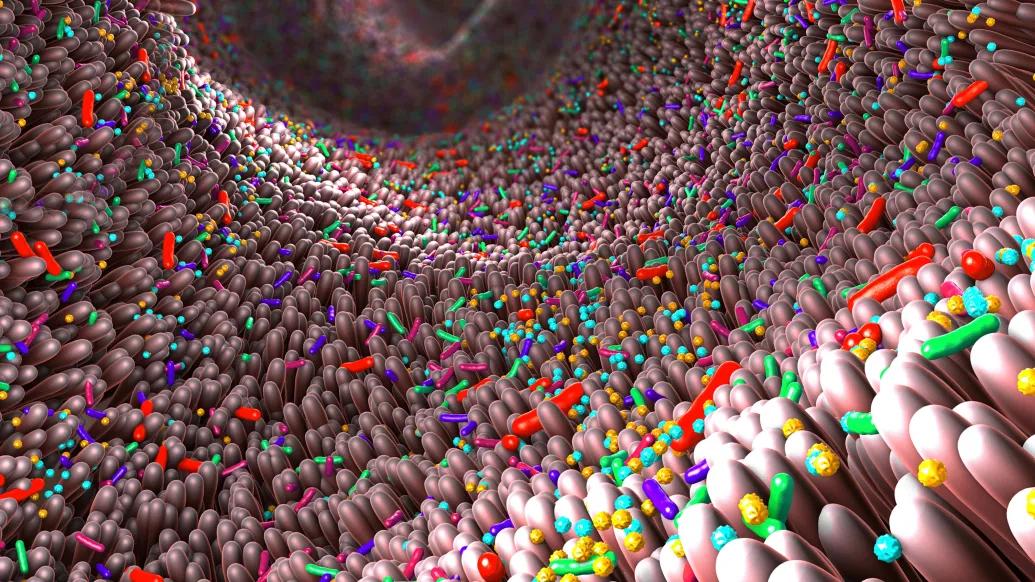
Researchers also observed distinct characteristics of patients’ gut microbiomes that predicted whether they responded to the low FODMAP diet or rifaximin — or did not respond to treatment.
“Importantly, we found that differences in the gut microbiome may help predict which patients respond to specific therapies,” said Allen Lee, M.D., M.S., Assistant Professor of Internal Medicine at the University of Michigan Medical School and lead author of the paper.
“We also identified a distinct microbial signature among patients who did not respond to either treatment, suggesting that it may be possible to identify non-responders to common microbiome-based therapies, such as rifaximin and the low FODMAP diet, before starting treatment.”
Irritable bowel syndrome affects 10% to 15% of adults in the United States and is characterized by symptoms such as abdominal pain, bloating and altered bowel habits.
The low FODMAP diet is a proven therapy involving the elimination of foods containing certain carbohydrates.
Still, the low FODMAP diet and rifaximin are each effective in fewer than half of patients.
In addition to comparing low FODMAP diet and rifaximin, the researchers aimed to investigate the possibility that gut microbial testing could one day allow for more precise treatment recommendations.
“Right now, treating IBS often involves a trial-and-error approach, where patients cycle through therapies before finding one that works. This can be frustrating, time-consuming, and burdensome for patients,” Lee said.
“Our study was motivated by emerging evidence that the gut microbiome plays a key role in IBS, and that these microbial differences may help explain why some patients respond to certain treatments while others do not. By better understanding these patterns, we hope to move toward a personalized approach to care.”
In this single-center, randomized controlled trial, 65 subjects were assigned to either a 14-day course of rifaximin or low FODMAP diet counseling.
After five weeks, both groups achieved comparable and significant decreases in abdominal pain and bloating.
Meanwhile, stool samples were collected at weeks 0, 2, 4, and 5 for analysis of the participants’ gut microbiomes.
Researchers were able to analyze whether specific bacteria predicted treatment response, as well as how different microbiome characteristics corresponded to the improvement of different symptoms.
(Breath tests were also performed but found to be ineffective at predicting treatment response.)
Among their findings was that patients who responded to the low FODMAP diet had lower baseline abundance of putative saccharolytic taxa and demonstrated increases in microbial diversity over time.
The rifaximin responders, meanwhile, were enriched in taxa with potential short-chain fatty acid-producing and bile acid-modifying capabilities, suggesting a microbial community more resilient to antibiotic exposure.
Notably, patients who didn't respond to either therapy were enriched in putative proteolytic taxa, highlighting a distinct microbial profile associated with treatment resistance.
Ultimately, the researchers emphasize that findings are “hypothesis-generating rather than definitive.”
They hope future validation will lead to more personalized clinical therapy.
Additional authors: Krishna Rao, Prashant Singh, Jared Fehlman, Jun Gao, Will Takakura, Amanda Lynett, Emily Haller, Sarah Ball, Alicia Marand, Amy Liu, Eric Shah, Stacy Menees, Raani Punglia, Borko Nojkov, Shanti Eswaran, Jason Baker, William D. Chey, Chung Owyang, Vincent Young, William L. Hasler
Funding/disclosures: National Institutes of Health grants DK124567, DK139095, and KL2TR002241; HS027431; and AI182787.
Tech transfer(s)/Conflict(s) of interest: Krishna Rao, M.D. is supported in part from an investigator-initiated grant from Merck & Co, Inc.; he has consulted for Seres Therapeutics, Inc., Rebiotix, Inc. and Summit Therapeutics, Inc.; William D. Chey, M.D. is a consultant for Ardelyx, Atmo, Biomerica, Gemelli, Nestle, Salix/Valeant, Vibrant. He has received grant/research funding from Commonwealth Diagnostics, FDA, NIH, Salix/Valeant. He has stock options for Coprata, Evinature, FoodMarble, Kiwi Bioscience, Modify Health. He is a board member of American College of Gastroenterology, GI Health Foundation, International Foundation for Gastrointestinal Disorders, Rome Foundation. He holds patents for My Nutrition Health, Digital Manometry, Rectal Expulsion Device. Vincent B. Young, M.D./Ph.D has consulted for Vendanta Biosciences and Debiopharm. Allen Lee, M.D. has consulted for GlaxoSmithKline and Atmo Biosciences.
Michigan Research Core(s): University of Michigan Medical School Microbiome Core and the Michigan Nutrition Obesity Research Core (DK089503)
Paper cited: “A Randomized Trial of Rifaximin vs Low FODMAP Diet for Symptom Outcomes and Microbiome Changes in Irritable Bowel Syndrome,” Clinical Gastroenterology and Hepatology. 10.1016/j.cgh.2026.04.014
Sign up for Health Lab newsletters today. Get medical tips from top experts and learn about new scientific discoveries every week.
Sign up for the Health Lab Podcast. Add us wherever you listen to your favorite shows.

Health Lab
Explore thousands of health news & research stories by visiting the Health Lab homepage for more.
Media Contact

Public Relations
Department of Communication at Michigan Medicine
In This Story

Allen Lee, MD, MS
Assistant Professor
Stay Informed
Want top health & research news weekly? Sign up for Health Lab’s newsletters today!
Featured News & Stories

Top 7 tips for choosing Medicare prescription drug coverage for 2027

Enzyme supplement improves IBS symptoms for most in new study

Comprehensive DNA sequencing reveals hidden drivers of cancer

‘Molecular glue’ stabilizes protein that inhibits development of non-small cell lung cancer and uterine cancer

Many older adults make Medicare decisions quickly and most don’t change plans, poll finds