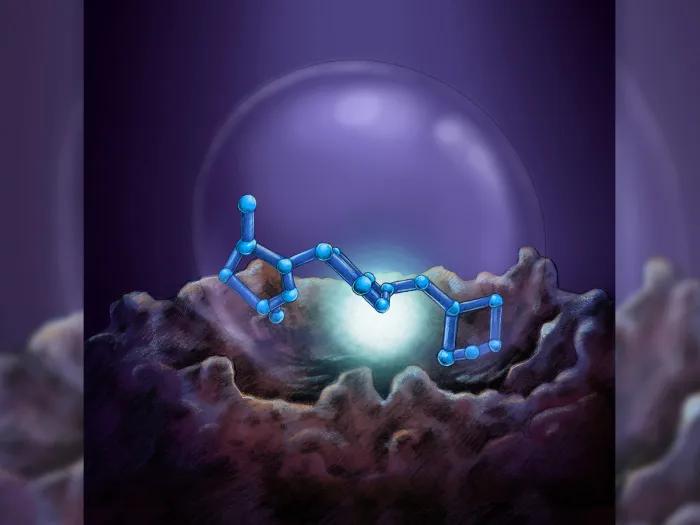
How virus-like proteins shape a cell’s stress response
They are implicated in several cancers and neurodegenerative diseases
5:00 AM
Author |
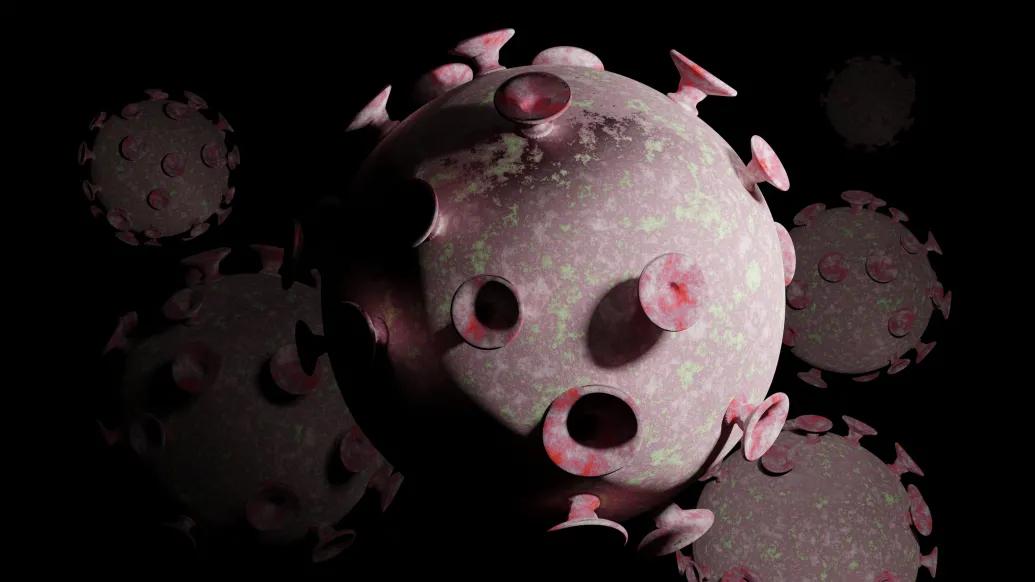
The human genome is full of genetic material derived from viruses, called retroviruses.
While most of these retroviruses have lost their functionality, some remain active and have developed new roles in human biology. How exactly they function, however, is not often understood.
Researchers from the University of Michigan have now identified the pivotal roles of a pair of these virus-like proteins and their effect on how cells self-regulate and respond to stress.
These two retroviruses interact with UBQLN2, a protein that shuttles away misfolded proteins before they are broken down. Mutations in the UBQLN2 gene are directly associated with several neurogenerative diseases, including frontotemporal dementia and amyotrophic lateral sclerosis, or ALS.
Investigators found that the two proteins regulate UBQLN2 and its downstream functions. Results are published in Science Advances.
“Our study identifies previously unrecognized, critical roles of retrovirus-like proteins in the organization and function of cellular stress responses,” Lisa M. Sharkey, Ph.D., co-senior author and research assistant professor of neurology at University of Michigan Medical School.
“These proteins make up just under 10% of the human genome. Studies like this help uncover the mystery of their presence and function, which will benefit science moving forward.”
While UBQLN2 regulates the virus-like protein known as paternally expressed gene 10 (PEG10), researchers learned that it does so in manner that requires a second protein, retrotransposon gag-like 8 (RTL8).
RTL8 then enables the PEG10 protein to shuttle UBQLN2 to stress granules, which are cellular compartments that form in response to stress and protect the cell from damage.
PEG10, which is upregulated in certain cancers, forms additional virus-like particles within those stress granules.
Researchers say the improved understanding of these virus-like proteins and their functions will allow scientists to more accurately research their role in disease development.
“Our next steps will focus on determining whether targeting these proteins could open the door to new treatments for ALS, dementia and cancer,” said Henry L. Paulson, M.D., co-senior author, Lucille Groff Professor of Neurology at University of Michigan Medical School, and Director of the Michigan Alzheimer’s Disease Research Center.
Additional authors: Harihar M. Mohan, Ph.D., Martin G. Fernandez, Camellia Huang, M.S., Rita Lin, Jaimie H. Ryou, Donald Seyfried, M.S., Nikolas Grotewold, Ann J. Bagnet, Sami J. Barmada, M.D., Ph.D., Venkatesha Basrur, Ph.D., and Shyamal Mosalaganti, Ph.D., all of University of Michigan, and Alexandra M. Whiteley, Ph.D., of University of Colorado Boulder.
Funding/disclosures: This study was partially supported by the National Institute of General Medical Sciences (GM141840, GM007863, GM150019-01), the National Institute of Neurological Disorders and Stroke (NS097542, NS113943, NS128110-01, NS122302) and the National Institute on Aging (AG072931) of the National Institutes of Health.
The content is solely the responsibility of the authors and does not necessarily represent the official views of the NIH.
Paper cited: “Endogenous retrovirus-like proteins recruit UBQLN2 to stress granules and shape their functional biology,” Science Advances. DOI: 10.1126/sciadv.adu6354
Sign up for Health Lab newsletters today. Get medical tips from top experts and learn about new scientific discoveries every week.
Sign up for the Health Lab Podcast. Add us wherever you listen to your favorite shows.

Health Lab
Explore thousands of health news & research stories by visiting the Health Lab homepage for more.
In This Story

Lisa Sharkey, PhD
Research Assistant Professor

Henry L Paulson, MD PhD
Professor
Featured News & Stories
Mutations attracted to the X chromosome amplify disease risk
CRISPR acts as commander-in-chief for backup defenses in bacteria

E-bikes are faster than ever. Are families prepared for the risks?
Scientists discover that bacteria use an understudied polymer found in all life to protect cell functions during stress
The hidden life of parasites like Cyclospora