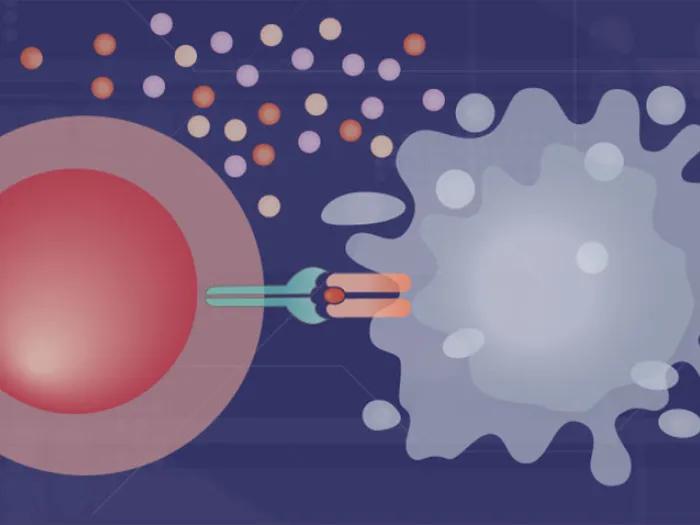
How a Poorly Explored Immune Cell May Impact Cancer Immunity and Immunotherapy
Cancer can damage undifferentiated naive T cells, which keeps the fighter cells from doing their job.
2:00 PM
Author |
The immune cells trained to fight off the body's invaders can become defective. It's what allows cancer to develop. So most cancer immunotherapy research has targeted these so-called effector T cells.
MORE FROM THE LAB: Subscribe to our weekly newsletter
But a new study steps back and considers: What if the problem isn't with the effector T cells, but starts higher up the cellular chain?
And so researchers looked at naive T cells — a type of immune cell that hasn't yet been triggered to fight. Naive T cells differentiate into the fighter effector T cells.
"People didn't realize the problem may not only be directly from the effector cells themselves, but may also stem from a defect in the naive cells," says study author Weiping Zou, M.D., Ph.D., the Charles B. de Nancrede Professor of Surgery, Pathology, Immunology and Biology at the University of Michigan.
"We found naive cells already have a problem in patients who have cancer. If the naive cells are functionally impaired, the effector cells cannot be healthy."
Naive T cells are not well understood in cancer, in part because the effector T cells have direct control over tumor immunity. So that's where researchers have focused their attention. Also, naive T cells are rare in the tumor microenvironment — the traditional battlefield between cancer and immune cells.
The study, published in Science Immunology, finds that tumor metabolism impacts naive T cells. The tumor cells use a lot of glucose. When the glucose is metabolized, it produces lactate — and lactate turns out to be bad for naive T cells. Once the tumor produces a certain level of lactate, it causes damage to the naive T cells, including cell death.
SEE ALSO: Scientists Discover Surprising Immune Cell Activity That May Limit Immunotherapy
Currently, efforts to predict response to cancer immunotherapy focus on memory and effector T cells. The research suggests another path.
"Yes, you do see problems in effector T cells, but you have to keep in mind that to begin with, the naive T cells are functionally impaired by the tumor metabolism," Zou says.
Next, researchers will look for ways to manipulate the metabolism to try to recover the function of the naive T cells in hopes of making immunotherapy more effective. Some early phase clinical trials are testing a way to target the lactate pathway. Researchers hope this could provide a rationale for combining immunotherapy with a therapy to regulate metabolism.
"When you have increased healthy naive T cells to begin with, hopefully you will get increased healthy effector T cells, which will overcome some of the resistance we see with immunotherapy," Zou says.

Health Lab
Explore thousands of health news & research stories by visiting the Health Lab homepage for more.
Media Contact

Public Relations
Department of Communication at Michigan Medicine
Stay Informed
Want top health & research news weekly? Sign up for Health Lab’s newsletters today!
Featured News & Stories
Certain gene signaling rewires tumors after immunotherapy
New clues toward treating pediatric brain tumors harboring epigenetic mutation
Common diabetes drug promising against rare childhood brain tumor in laboratory studies
Researchers uncover way to harness the power of immunotherapy for advanced prostate cancer
Researchers Discover First Immune Stimulating Long Noncoding RNA Involved in Body's Response to Cancer