How new care models, within a new building launch, are helping optimize patient care
The advanced strategic thinking and enhancement of several clinical offerings within the facility have already resulted in lifesaving improvements
5:00 AM
Written by Emily Jenkins, a communications specialist at Michigan Medicine. The story was originally published by Headlines, an internal publication by U-M.
With the opening of the D. Dan and Betty Kahn Health Care Pavilion, the newest Michigan Medicine adult inpatient facility, health care teams have been able to increase their capacity to help patients with complex and high acuity needs.
In the months since the opening, teams within the pavilion have had the opportunity to launch and utilize new care models unique to the facility, including:
An Epilepsy Monitoring Unit Day Room
A nocturnal intensivist in the CICU and neuro critical care unit
The ability to perform fluoroscopy procedures bedside in the cardiac intensive care unit
A dedicated code team in the pavilion
The innovative care models unique to the pavilion exemplify a commitment to providing the safest, highest quality care to patients.
The following models are just a few examples of the cutting edge innovation and teamwork happening throughout U-M Health system.
An Epilepsy Monitoring Unit Day Room
The epilepsy team long envisioned having a specific room for epilepsy patients when the new building was being designed.
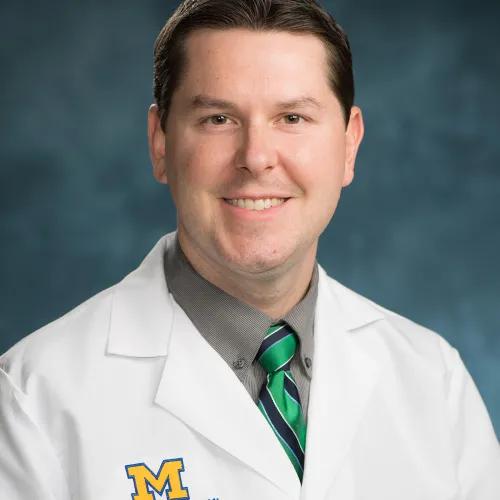
“My colleagues in the epilepsy division were instrumental in advocating for a day room while the pavilion was still in a conceptual phase,” said Nick Beimer, M.D., the Medical Director for the Epilepsy Monitoring Unit Day Room.
“The goal was to improve patient experience while improving the diagnostic yield of tests.”
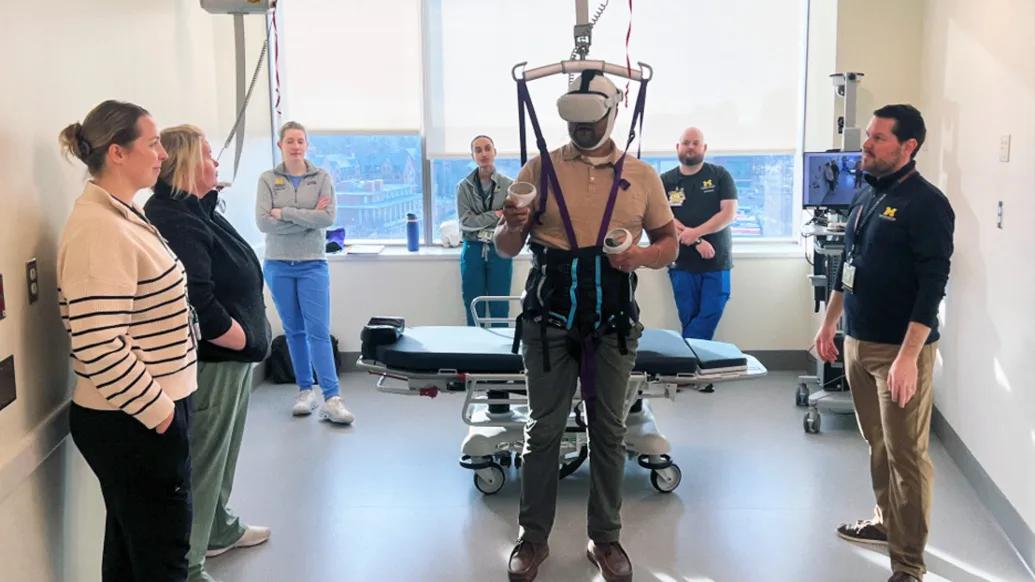
Within the Epilepsy Monitoring Unit Day Room, Beimer describes the day room as a space that's a hybrid of a physical therapy gym and a medical unit capable of caring for someone who’s having a severe seizure.
“In all An Epilepsy Monitoring Unit Day Rooms, there are strict policies requiring patients to be confined to their beds,” explained Beimer.
“This is to ensure patient safety and reduce the risk of falls.”
Nevertheless, these policies can be frustrating for patients and counterproductive to the goal of monitoring patients during a seizure; many patients experience seizures while they are active, and therefore their seizures aren't captured if confined to a bed.
The day room, however, is an innovative technological solution to the problem.
“Patients can seamlessly move from their inpatient room to the day room by wearing a harness that's connected to a track in the unit’s ceiling,” said Beimer.
“Once the patient is in the day room, they're able to move independently without physical help from clinicians.”
Additionally, patients are hooked up to EEG monitoring during the entire experience so clinicians can monitor any seizure activity.
Currently, the room contains a treadmill patients can use, but future plans include adding different means of activity to the room and potentially incorporating interactive virtual reality games to simulate real-world environments.
Beimer explains that in the months since the new building opening, the epilepsy monitoring room team is working on training patient care technicians in safe patient handling unique to the day room to increase availability to patients.
“We're excited to offer this unique experience to patients moving forward,” Beimer said.
A nocturnal intensivist
The addition of a nocturnal intensivist to critical care units is another new care model implemented in the new building.
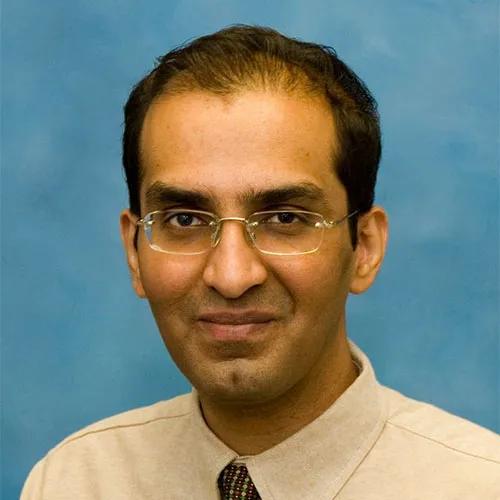
Krishna Rajajee, M.D., Medical Director of the neuro critical care unit, explained the importance of having an attending critical care physician working overnight.
“It's vital to have an attending physician trained in critical care in the pavilion after hours in case of emergencies in those units,” Rajajee said.
“Additionally, patients in other units sometimes decompensate quickly and may suddenly require critical care.”
Since the new building opened, there have been many instances where having a nocturnal intensivist in those critical care units have been lifesaving.
“In the past, we would depend on someone who is on-call at home to respond to emergencies,” explained Rajajee.
"They would need to drive into the hospital to perform a procedure, but that could take upwards of 20 minutes for that commute.”
Rajajee recalled a recent incident where the presence of a nocturnal intensivist saved a patient’s life.
“A patient started decompensating rapidly and required an emergency bronchoscopy to extract a blood clot clogging one of the breathing passages in their lung,” he said.
“Without the ability to perform that procedure immediately, the patient may not have survived.”
Bedside fluoroscopy procedures
A fluoroscopy is a medical imaging technique that uses continuous X-rays to create real-time images of body structures and help visualize the placement of medical devices.
Prior to the building opening, these procedures were primarily performed in dedicated areas of the hospital, like the cardiac catheterization lab.
“The transition to the pavilion has allowed us to utilize this technique at the bedside in the cardiac intensive care unit,” explained Raymond Pashun, M.D., FACC, Medical Director for the Cardiovascular Intensive Care Unit.
Tasha Villalta, R.N., the Clinical Nursing Director for the Cardiovascular Intensive Care Unit, emphasized how this care model improves patient safety.
“We're able to perform urgent procedures without needing to transport patients away from the ICU setting,” she explained.
This is crucial, as not all patients in the unit can safely move off the floor for these procedures.
“Fluoroscopy-guided procedural support has been used numerous times thus far,” Pashun said.
“It has allowed us to appropriately position medically necessary devices and utilize the information from them to provide optimal patient-specific therapies during a critical time of care.”
A dedicated code team
The dedicated code team within this new pavilion is now consistently available, full of highly trained clinicians who respond to medical emergencies within the building.
Jen Ilacqua, M.S.N., R.N., ACNP-BC, the Cardiovascular Medicine Advanced Practice Provider Manager, described the value of having a dedicated pavilion code team.
“A distinguishing feature of this model is the expectation that all practice providers working in the pavilion contribute to code response efforts,” Ilacqua said.
“This reinforces a culture of readiness, accountability and clinical excellence.”
The primary code responders in the pavilion are within the cardiovascular intensive care unit; these expert-level providers are supported by a broader network of practice providers across specialty teams, including neurosurgery, cardiac surgery and heart failure/transplant/miniaturized ventricular assist device, who serve in a secondary code response role.
“All these code responders are exceptionally skilled clinicians,” said Ilacqua.
"The advanced practice provider-led code team structure in the pavilion is an innovative approach to leveraging this expertise in acute and critical care.”
This new care model enhances patient care both by ensuring rapid, reliable access to an experienced emergency response team, and by optimizing team performance.
“This approach represents an important step in recognizing and fully utilizing the depth of knowledge, leadership and clinical skill that APPs bring to complex healthcare environments,” Ilacqua said.

Health Lab
Explore thousands of health news & research stories by visiting the Health Lab homepage for more.
Media Contact

Public Relations
Department of Communication at Michigan Medicine
In This Story
Nicholas J Beimer, MD
Clinical Associate Professor
Venkatakrishna Rajajee, MBBS
Clinical Professor
Stay Informed
Want top health & research news weekly? Sign up for Health Lab’s newsletters today!
Featured News & Stories
Many hospitals still don’t do enough to prevent UTIs from catheters
Rural-urban disparities in head and neck cancer
Study outlines a new framework for direct cell reprogramming

New insight into how lipodystrophy can affect overall health

Nerf gun accident causes retinal detachment in pediatric patient