How lifesaving care after teen’s sudden cardiac arrest made motherhood possible years later
Once revived after collapsing at soccer practice, a woman returns to the same care team to safely grow her family
5:00 AM
Author |
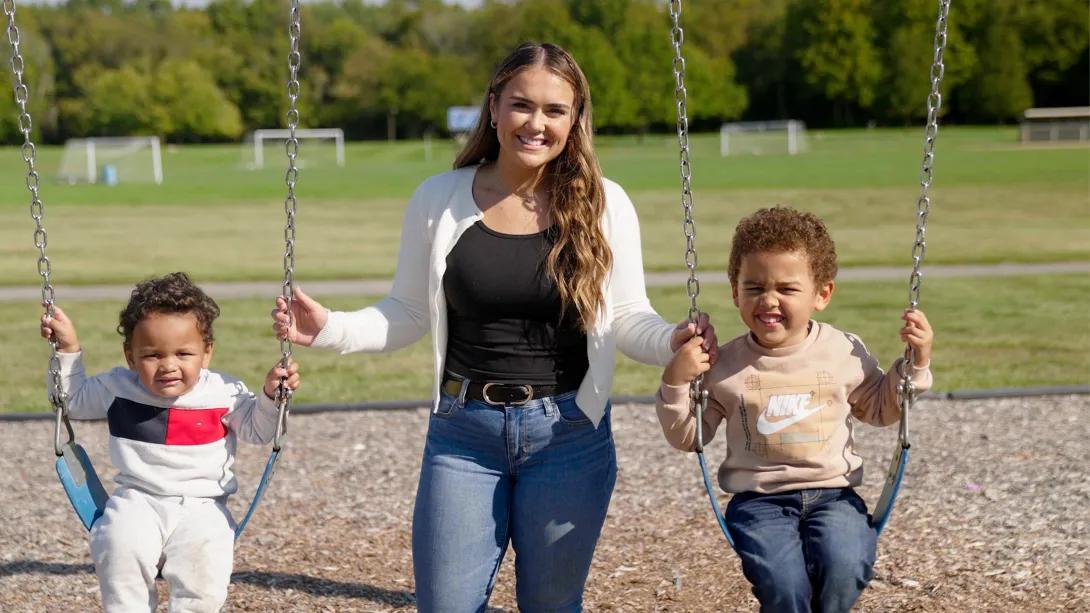
Emily Orta spent a recent afternoon kicking a soccer ball with sons, Malakai, 4, and Maddox, 1, at their school.
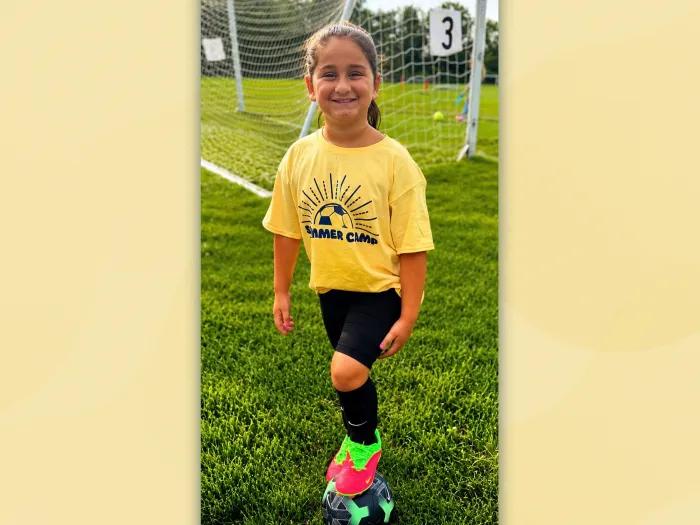
It’s a simple joy she doesn’t take for granted: More than a decade earlier, on that same field, her life nearly ended.
At 14, Orta collapsed during soccer practice after suffering a sudden cardiac arrest caused by a rare, undetected heart condition.
Thanks to immediate CPR, use of an AED and lifesaving care at University of Michigan Health C.S. Mott Children’s Hospital, she survived.
Her recovery carried her back to sports, school and everyday teenage life.
Years later, it brought her back once again to Michigan Medicine, this time to prepare for a life-changing milestone: motherhood.
“Sometimes I still have to stop and think ‘did that all really happen?'” she said.
“It’s an absolute miracle to be able to sit here today, on the same field where I had my cardiac arrest and feel so healthy. My two boys are my whole world. Being here to watch them grow up is something I’ll always be thankful for.”
A healthy teen with a hidden heart condition
Before her cardiac arrest, Orta appeared perfectly healthy.
“I did everything. Soccer, cheer, track, ice skating. I was active almost every day,” she said. “I felt like a normal 14-year-old kid.”
But unknown to her or her family, Orta was living with a rare congenital heart defect called anomalous left coronary artery from the pulmonary artery, or ALCAPA.

The condition prevents oxygen-rich blood from properly reaching the heart muscle, weakening the heart over time.
“Most children with ALCAPA show symptoms as newborns,” said David Bradley, M.D., a pediatric cardiologist at Mott.
“It’s extremely uncommon for someone to reach adolescence without any warning signs.”
Orta was one of those rare cases; Her first symptom was cardiac arrest.
Sudden cardiac arrest affects about one in 100,000 children and teens.
It happens when the heart suddenly develops a dangerous rhythm and stops pumping blood.
Project Adam and Heart Safe Schools are among groups that help ensure schools have the necessary training, equipment and plans to respond to a sudden cardiac arrest within minutes.
“Immediate CPR and use of an AED were critical to Emily’s survival,” Bradley said.
The day everything changed
Orta doesn’t remember that spring day in 2014 when she had her cardiac arrest, only what others later told her.
She had seemed unusually fatigued and dizzy.
During practice, she went to kick a goal and missed badly.
Moments later, she collapsed.
It’s an absolute miracle to be able to sit here today, on the same field where I had my cardiac arrest and feel so healthy. My two boys are my whole world. Being here to watch them grow up is something I’ll always be thankful for.”
-Emily Orta, patient at Michigan Medicine
At first, some thought she was having a seizure.
A school lifeguard who happened to be on campus rushed in to perform CPR. An AED was used at least twice to restore her heart rhythm.
“Everybody was in the right place at the right time,” Orta said. “That’s the reason I’m here today.”
When she arrived at Mott, Orta was critically ill and confused from lack of oxygen, unable at first to recognize her parents.
After weeks of care, she began to recover and doctors explained the cause.
“They told me I basically had half a heart working,” she said. “There were no signs my whole life that anything was wrong so it was shocking news.”
“Everyone seemed to have the same question: ‘how did I make it this long?’”
Repairing her heart and returning to life
Jennifer Romano, M.D., a pediatric heart surgeon at the U-M Congenital Heart Center at U-M Health C.S. Mott Children's Hospital, remembers being on call when she got a message that a patient may need surgery for ALCAPA.
She assumed it was an infant, just like most of her ALCAPA cases.
“I was shocked to see a 14-year-old,” Romano remembered.
Orta underwent an open-heart surgery led by Romano to reattach her left coronary artery to the aorta.
Recovery was challenging, but within weeks she was back at school, finishing finals and returning to normal routines.
“Our goal is always to get kids back to living full lives,” Romano said. “Hearing about where Emily is now, healthy and thriving as a mom, is incredibly meaningful.”
Returning for motherhood
After high school, Orta earned her business degree in 2020.
When she began planning for pregnancy, she returned to the same U-M Health team that had saved her life.
“Getting pregnant came with fears about how my heart would handle it,” she said.
“But having the same doctors who knew my history was so comforting and reassuring. They’ve been so supportive.”
Her care required close coordination between pediatric cardiology, adult cardiology and the cardio-obstetrics teams at Michigan Medicine.
While her first pregnancy went smoothly, her second placed more strain on her heart.
In 2024, doctors recommended an implantable cardioverter defibrillator, or ICD, as a preventative measure.
The device detects and stops irregular heartbeats.
“It gives me peace of mind,” Orta said. “If something were to happen when I’m alone with my kids, it could save my life.”
And today, she’s continuing to achieve goals and dreams, recently traveling to places like Costa Rica, writing a book, training for a half marathon and keeping up with her energetic young sons.
“I’ve been able to do almost everything I’ve wanted to,” she said. “More than anything, when I reflect back on everything that’s happened, I’m just grateful to be here, present and making memories with my family.
Sign up for Health Lab newsletters today. Get medical tips from top experts and learn about new scientific discoveries every week.
Sign up for the Health Lab Podcast. Add us wherever you listen to your favorite shows.

Health Lab
Explore thousands of health news & research stories by visiting the Health Lab homepage for more.
Media Contact

Public Relations
Department of Communication at Michigan Medicine
In This Story

Jennifer Romano
Professor
Related
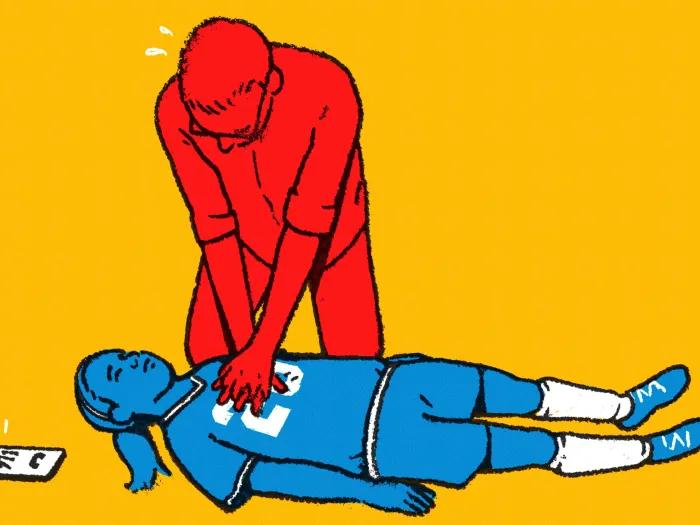
Sudden cardiac arrest in young athletes: 5 things parents should know
The dangerous intestinal disease fatal to premature babies and vulnerable infants
Stay Informed
Want top health & research news weekly? Sign up for Health Lab’s newsletters today!
Featured News & Stories
How to use an AED in a cardiac emergency
A pediatric epilepsy fundraiser that changes lives
Better prenatal care data could help prevent maternal complications, experts say

Digital alerts support timely treatment decisions of critically ill cardiac patients

Is the United States Lagging Behind Europe in Memory Improvement?