How to improve mental health safety on social media – not just for young people
New settlements, court rulings and other news draw attention to the harmful design of multiple platforms; experts offer free research-based tools that can help anyone reduce harm
4:00 PM
Author |
Originally published March 27, 2026. Updated August 26, 2026 after the Meta settlement.
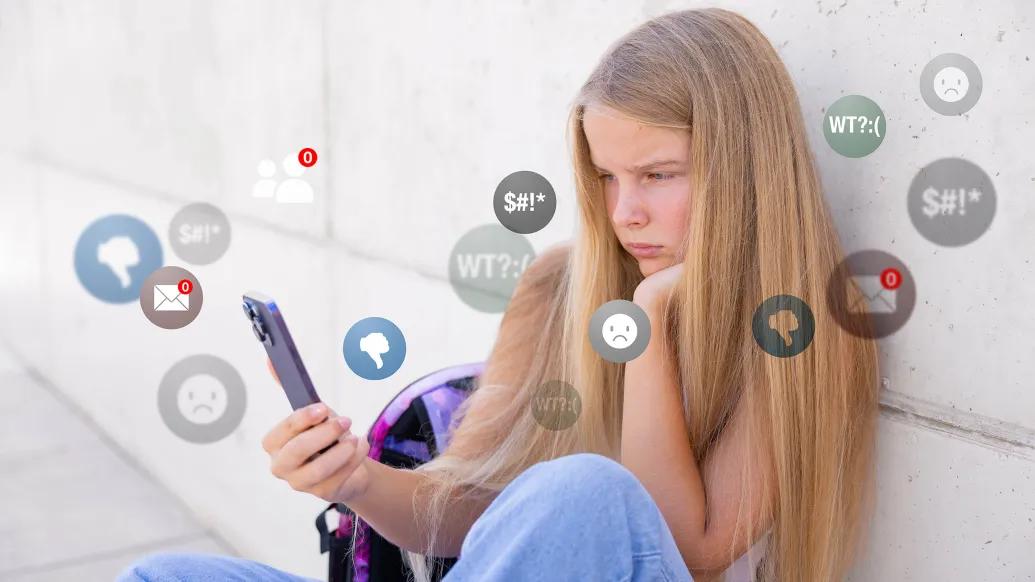
Massive court case settlements by social media giants Meta and TikTok, and jury verdicts that found social media companies liable, have put billions of dollars into play after years of claims that the platforms expose young people to mental health harm, suicide risk and other safety issues.
The settlements involve self-imposed conditions that will change how young people interact with companies' platforms. And federal regulators, Congress, state governments are talking about requiring age verification, better monitoring, and more.
But even as they wait to feel the impact of the settlements and verdicts, young people, parents, and all social media users have options now to protect their mental health. They don't have to wait for juries, judges, lawmakers or companies to act, say experts from University of Michigan Health and their colleagues.
Earlier this year, they launched an easy-to-follow and free “Social Media Mini Course” that walks anyone through key settings on different social media platforms that users can change to make their experience more positive, and less risky, if they choose to stay on social media.
It’s available through the Instagram account @socialmediaminicourse, or directly, as an interactive webpage.
A link in the Instagram account’s bio leads to a page of even more information and free tools, as well as to the 988 Suicide and Crisis Lifeline.
The settings featured in the mini course – from disabling like counts on Instagram to refreshing the For You feed on TikTok – disrupt some potentially harmful properties of the platforms for young minds.
The toolkit also walks users through scenarios of how social media use can affect mood, self-image, sleep patterns and more, and asks them to reflect on their own use and what they might want to change.
The team tested the mini course with young people. They also included in the course quotes of advice from participants in the MyVoice study of youth, which has done text-message-based polling on social media and many other topics in teens and young adults for years.
U-M C.S. Mott Children's Hospital child and adolescent psychiatrist Jane Harness, D.O., helped lead the mini course development and testing.
“We are all certainly constrained by the settings offered and the design of the platforms themselves,” she said. “We have been able to introduce new information to young people about turning off the like counts, refreshing the For You or Explore pages, setting time limits and changing the content they are presented with on social media, but so much more could be done.”
Discussions about social media use between parents and young people, or among young people, are crucial, she said.
“Some young people use these features and settings, as we showed in our study several years ago, while others are not aware they exist,” said Harness, who is a clinical instructor in the U-M Medical School Department of Psychiatry and a National Clinician Scholar in the U-M Institute for Healthcare Policy and Innovation. “A growing concern also includes AI chatbots," she said, which may play a role in suicidal thoughts or the onset of signs of psychosis.
The team behind the mini course acknowledges that social media can have positive effects for young people if used in moderation and with safety settings on – for example, connecting them with friends, family and a wider world of information and views.
They hope their mini course will help families, young people and any social media user navigate the online world more safely.
Harness also wrote a free guide called Social Media and Youth Mental Health: A Guide for Parents and Caregivers, which she and her colleagues have made available through the American Academy of Child and Adolescent Psychiatry’s Social Media and Screen Time Resource Center.
In addition to Harness, the social media mini course was created by clinical child psychologist Sarah E. Domoff, Ph.D., of the University at Albany, child psychiatrist Heide Rollings, M.D. and Amy Mancuso, LMSW of Michigan State University and Pine Rest Christian Mental Health Services in Grand Rapids, Michigan, and clinical psychologist Jessica Schleider, Ph.D., of Northwestern University. The MyVoice study of youth is led by Tammy Chang, M.D., M.P.H., M.S., of the U-M Department of Family Medicine.
Another U-M researcher who thinks about young people, social media and mental health a lot is Tiffany Munzer, M.D., a clinical assistant professor of pediatrics and a developmental and behavioral pediatrician at the U-M Health C.S. Mott Children’s Hospital.
She is an ambassador of the American Academy of Pediatrics Center of Excellence on Social Media and Youth Mental Health, which is co-led by U-M associate professor of pediatrics Jenny Radesky, M.D.
Munzer was the lead author of AAP’s Digital Ecosystems, Children and Adolescents technical report and recently wrote a policy statement called “Helping Kids Thrive in a Digital World” for HealthyChildren.org, the AAP site for parents.
Of the Meta settlement, she said, “This is an important first step in ensuring digital design is more aligned with teens’ needs and wellbeing, but needs additional action and regulation to ensure the rules are being enforced.”
Additional AAP resources recommended for families by Dr. Munzer include
Conversation Starters for Families About Media and the Digital Design Guide: A Youth-Led Guide to Age-Appropriate Digital Design
The mini course evaluation was funded by the University of Michigan Medical School Research Scouts program and the Todd Ouida Clinical Scholars Award from the U-M Eisenberg Family Depression Center.
If you or someone you know is having a mental health crisis, including thoughts of suicide, the 988 Suicide and Crisis Lifeline is available 24 hours a day, 7 days a week via phone, text and webchat. Call or text 988, or visit 988lifeline.org.

Health Lab
Explore thousands of health news & research stories by visiting the Health Lab homepage for more.
Media Contact

Public Relations
Department of Communication at Michigan Medicine
In This Story

Jane Harness, DO
Clinical Instructor

Tiffany Munzer, MD
Clinical Assistant Professor

Tammy Chang, MD, MPH, MS
Associate Professor
Related
Many young people recognize negative impact of social media and have considered deleting accounts
How to help someone, or yourself, in a mental health crisis
Featured News & Stories

Many older adults make Medicare decisions quickly and most don’t change plans, poll finds

What’s the latest on 7-OH and kratom availability and addiction care?

Depression in OBGYN residents needs more attention, study suggests

Better prenatal care data could help prevent maternal complications, experts say
Pain, psychological factors and physical function closely linked in people with systemic sclerosis