How donor eggs helped one couple build the family they always hoped for
After learning her chances with her own eggs were low, a Michigan mom turned to donor eggs
9:56 AM
Author |
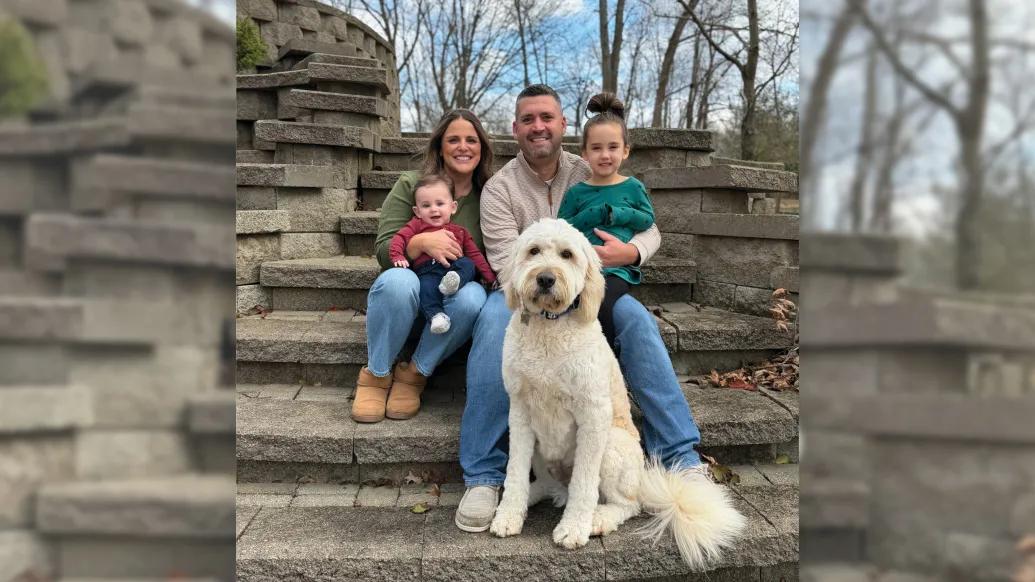
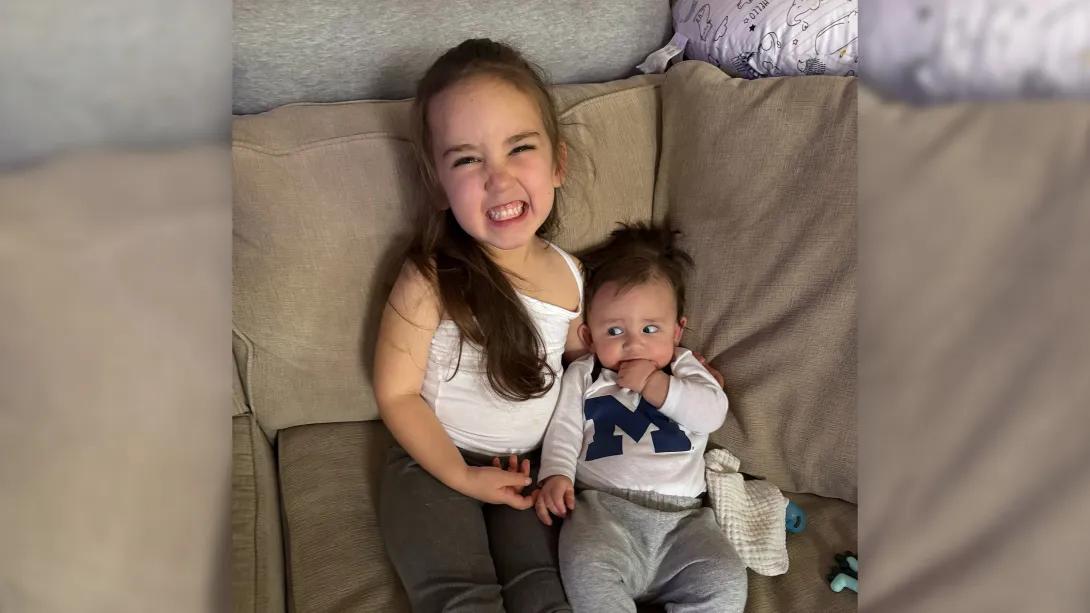
Megan Camden and her husband, Craig Camden, have two healthy children—Evan, age 4, and Mac, 8 months.
But the road to get there wasn’t what they expected when they started down the path of growing their family.
After actively trying for six months without success, Camden mentioned her issues to her obstetrician-gynecologist.
At age 35, tests revealed hormone levels that raised concerns.
Camden, who lives in Milan, Mich., and is now 41, was referred for fertility testing, which ultimately showed that both of her fallopian tubes were blocked and she had low ovarian reserve.
“This can be common as you get older, but at the time I was only 35,” she said.
“I had no prior health issues that would’ve caused concern—no trauma or bad annual (OB-GYN) visits. From a family history perspective, we had no reason to believe that we would have any issues getting pregnant. It was kind of a shock, and a lot to process.”
After starting infertility care at another institution, the couple eventually established care at the University of Michigan Health Center for Reproductive Medicine, where they met Yolanda Smith, M.D., a reproductive endocrinologist and OB-GYN who specializes in infertility and other reproductive endocrine conditions.
From the beginning, the approach stood out.
“From the onset, we liked U-M because, before they would do anything, they’d do a battery of tests,” Camden said.
“It wasn’t just, ‘let’s throw something at the wall and see what sticks.’”
Trying egg retrieval
The Camdens began the process of in vitro fertilization.
With Camden’s low ovarian reserve, retrieving healthy eggs was the primary concern.
As testing continued, the outlook for using Camden’s own eggs became increasingly uncertain.
“Close to the retrieval date, my care team notified me that the chance of retrieving any eggs was very low. They gave us the option to still go forward with it,” she said.
They moved forward, but the cycle was unsuccessful.
“We were not able to get any eggs—the three they'd seen on our ultrasound dissolved and were unable to be retrieved,” Camden said.
The couple decided to take time to regroup.
“We took the summer off to mentally wrap our heads around what had happened and try to have some honest conversations about where we wanted to go next,” she said.
“We talked about adoption or just being married without children. We have six nieces and nephews, and we had to ask if that was enough for us.”
Ultimately, they began to explore donor eggs as a possibility with the help of Lindsay R. Brennan, M.S.W., a social worker dedicated to the Center for Reproductive Medicine.
“Not sharing DNA was my biggest concern—how was I going to handle that, or how would we have conversations as our kids get older?” Camden said.
“Lindsay put our minds at ease.”
A very personal decision
In Megan’s particular situation, Smith said donor eggs would have a much higher success rate.
Using donor eggs is never a simple decision, though.
“The decision to move to using donor eggs is a very personal one—very complex and personal,” she said.
She felt, in Megan’s case, donor eggs offered the highest likelihood of success.
They are providing the nutrition, environment, and emotional state, all of which can cause epigenetic changes in the genetics of the baby. They are impacting the gene expression and health of the baby.”
– Yolanda Smith, M.D.
Soon, the couple began the process with World Egg Bank to find a donor.
“When I read the egg donor’s bio, I felt really strongly that she was the person we needed for our donor,” Camden said.
Of the frozen eggs they obtained, two progressed to embryos suitable for transfer.
The Camdens were shocked and overjoyed to learn that the transfer worked on the first try.
“It was a shock to both of us after 2.5 years of going through this process,” Camden said.
The pregnancy and delivery were uncomplicated, and the couple welcomed Evan in February 2022.
Two years later, the Camdens decided to try again using the second embryo.
“A part of me wasn’t as optimistic—what are the chances that we’re two for two?” Camden said. “I tempered my expectations—but it worked.”
Their son Mac joined their family in July 2025.
Smith said the outcome mirrored what donor egg cycles can offer in the right circumstances.
“She had very good success with it—pregnant right away on the first transfer and then on the subsequent frozen embryo transfer. It went ideally for her,” Smith said. “We were just thrilled for her.”
“Our family is now complete,” Camden said.
Changing the conversation around donor eggs
For Camden, sharing her story is part of reducing the silence that often surrounds infertility and donor conception.
“At first, it was one of those very taboo things—I didn’t know anybody at the time who had gone through IVF,” she said.
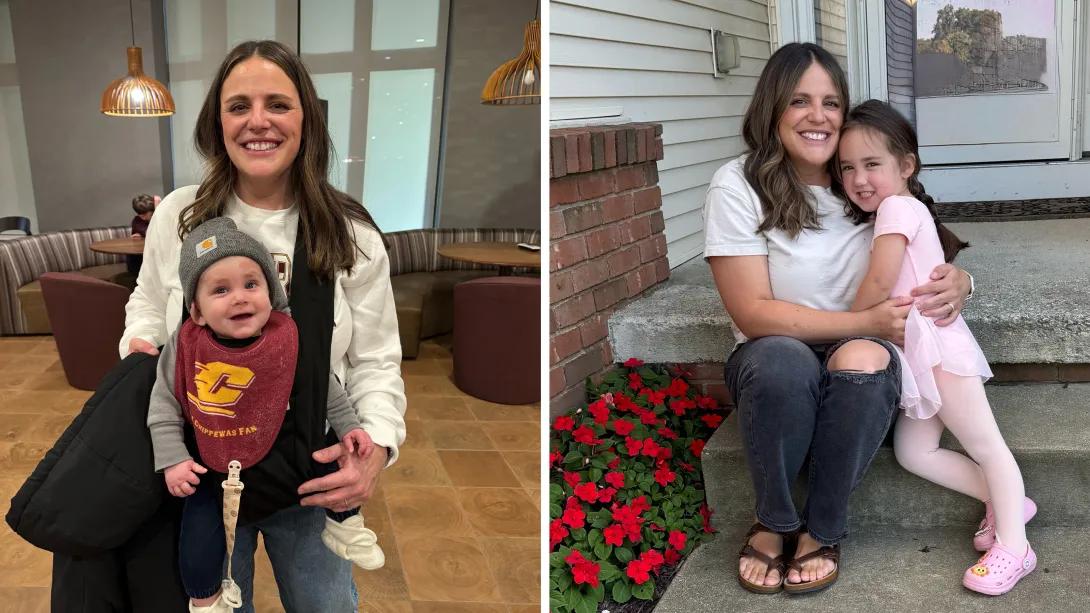
“I kind of felt alone, like I didn’t have a community where I could share. But the more people talk about it, the less taboo it is. The more others can feel they aren’t alone.”
Smith emphasizes that donor eggs can be an important—and often misunderstood—option.
“One of the reasons some women don’t want to consider it is because they’re concerned about not having the genetic link to the child,” she said.
To help ease this concern, she tells her patients that pregnancy itself plays a significant role in the baby’s genetics.
“They are providing the nutrition, environment, and emotional state, all of which can cause epigenetic changes in the genetics of the baby,” Smith said. “They are impacting the gene expression and health of the baby.”
With this reassurance, Smith just wants couples to know their options. “Donor egg IVF can be a really wonderful option for some couples to consider,” she said.
Today, Camden encourages others to seek support at U-M.
“We were very, very happy with U-M,” she said.
“Anyone we meet that unfortunately has to go through this, we always suggest they at least seek out a consultation with the U-M Health Center for Reproductive Medicine.”
Her message to others navigating infertility is one of reassurance.
“It wasn’t always easy. We didn’t always have success,” Camden said.
“It’s okay. There’s nothing wrong with you. Infertility is very hard, and there’s a world of support around you if you need it.”
Sign up for Health Lab newsletters today. Get medical tips from top experts and learn about new scientific discoveries every week
Sign up for the Health Lab Podcast. Add us wherever you listen to your favorite shows

Health Lab
Explore thousands of health news & research stories by visiting the Health Lab homepage for more.
Media Contact

Public Relations
Department of Communication at Michigan Medicine
In This Story
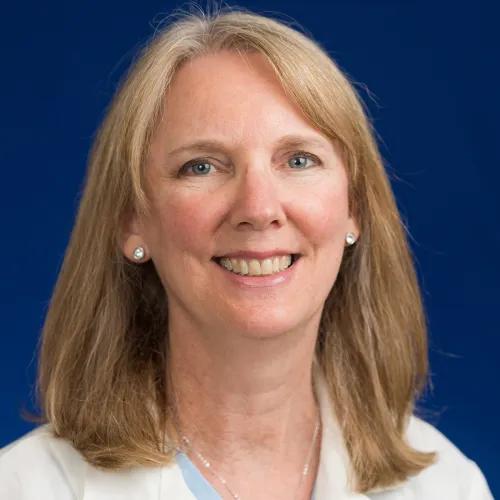
Yolanda Smith, MD
Professor
Stay Informed
Want top health & research news weekly? Sign up for Health Lab’s newsletters today!
Featured News & Stories
A tragedy and a trial shine a spotlight on new moms’ mental health
Michigan Medicine leadership changes set for regents consideration
Egg freezing: What women should know about fertility preservation
What to know about perimenopause and menopause
Long friendship inspires urology resident fund