How common is pacemaker use after heart valve surgery?
High volume hospitals with experienced surgeons may be able to achieve similar outcomes without needing to implant the device
10:48 AM
Author |

People having surgery to repair tight or leaking heart valves may receive a pacemaker more often than necessary — leading to a greater risk for life-threatening complications, studies show.
It’s common for a patient with a leaking mitral valve to have the same issue in the tricuspid valve. Not repairing the leaks, often referred to as regurgitation, can cause heart failure.
In a 2021 national study published in The New England Journal of Medicine, patients who had the two valve issues corrected in one surgery were less likely to experience worsening tricuspid valve disease.
However, when both valves were fixed, 14% of patients in the trial required a pacemaker, which regulates the heart’s rhythm.
Similar results were reported by the Society of Thoracic Surgeons in 2017.
“Needing a pacemaker after heart surgery is not benign and can put the patients at risk for late complications, including heart failure,” said Gorav Ailawadi, M.D, M.B.A., chair of the Department of Cardiac Surgery at U-M Health and a co-director of the U-M Health Frankel Cardiovascular Center.
“We were shocked about these reports and were interested in examining our experience at a high volume hospital with one of the largest experiences of mitral valve surgery.”
The research team at the Frankel Cardiovascular Center reviewed nearly 1,500 cases of patients receiving simultaneous mitral valve surgery and tricuspid valve repair between 2011 and 2021.
Patients who had operations performed by surgeons with mitral valve expertise received a pacemaker 4% of the time, less than one-third of the rate reported in the national study.
The results are published in The Annals of Thoracic Surgery.
“While there is clear clinical benefit of avoiding further tricuspid valve disease by doing simultaneous mitral and tricuspid surgery, our study reinforces that it’s possible to achieve a very low rate of pacemaker implantation for these patients,” said Catherine M. Wagner, M.D., M.Sc., co-author and integrated thoracic surgery resident at U-M Health.
“We anticipate similar results at other select hospitals with experienced surgeons who perform a high volume of mitral and tricuspid surgery.”
The findings highlight the importance of surgical training and experience in achieving consistent outcomes for this patient population, says Ailawadi, who was senior author of the study.
“Experience and technique do matter,” he said. “We owe it to patients to teach surgeons optimal techniques.”
Additional authors: Danika E. Meldrum, M.S., Tessa M.F. Watt, M.D., M.Sc., Robert B. Hawkins, M.D., M.Sc., China J. Green, Matthew A. Romano, M.D., Steven F. Bolling, M.D., all of the U-M Health Department of Cardiac Surgery, Alexander A. Brescia, M.D, M.Sc., of Washington University School of Medicine in St. Louis.
Funding/disclosures: Brescia is an associate editor for digital media and digital scholarship for the Annals of Thoracic Surgery.
Paper cited: “Risk of Pacemaker Implantation After Degenerative Mitral and Concomitant Tricuspid Valve Surgery,” The Annals of Thoracic Surgery. DOI: 10.1016/j.athoracsur.2024.05.008
Sign up for Health Lab newsletters today. Get medical tips from top experts and learn about new scientific discoveries every week by subscribing to Health Lab’s two newsletters, Health & Wellness and Research & Innovation.
Sign up for the Health Lab Podcast: Add us on Spotify, Apple Podcasts or wherever you get you listen to your favorite shows.

Health Lab
Explore thousands of health news & research stories by visiting the Health Lab homepage for more.
Media Contact

Public Relations
Department of Communication at Michigan Medicine
In This Story
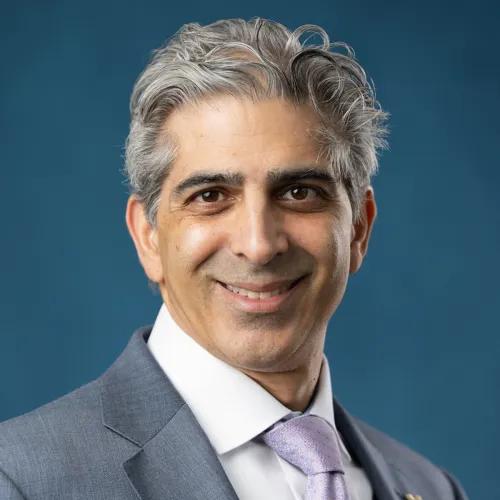
Gorav Ailawadi
Professor
Related
Female heart patients less likely to have additional problems fixed during surgery
Stay Informed
Want top health & research news weekly? Sign up for Health Lab’s newsletters today!
Featured News & Stories

Planting a tree, and hope, for a heart healthy future

Women more likely than men to die after heart surgery complications
Young father survives aortic dissection after delayed diagnosis

Weighing TAVR vs. SAVR for aortic stenosis treatment
C.S. Mott Children’s Hospital first in country to implant expandable heart valve during FDA review phase