How breast cancer cells survive in bone marrow after remission
Collaborative research approach unveils an important factor in why certain cancers come back
5:00 AM
Author |
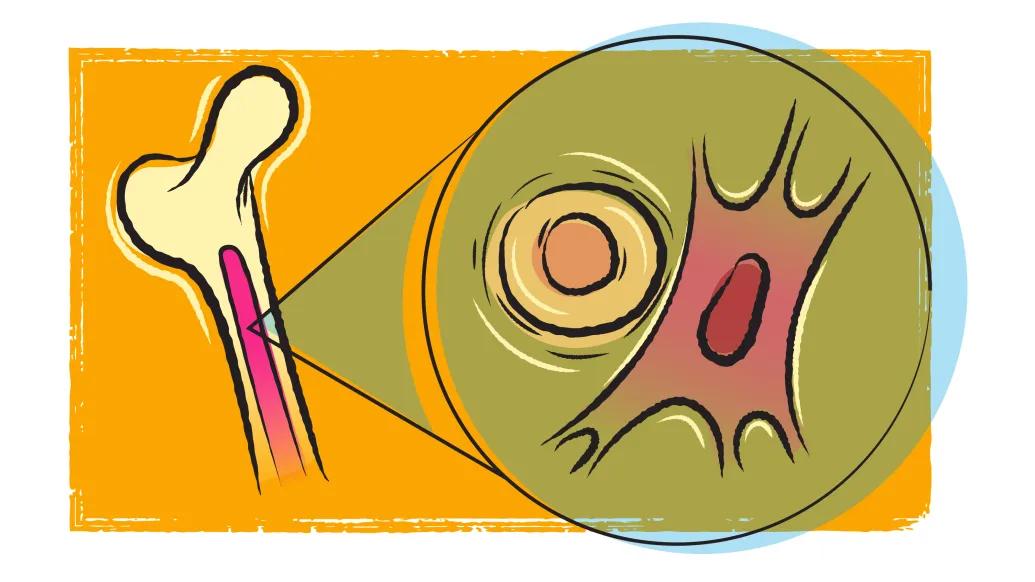
A study from researchers at the University of Michigan and the University of California San Diego has shed light on a previously poorly understood aspect of breast cancer recurrence: how cancer cells survive in bone marrow despite targeted therapies.
The paper, “Breast cancers that disseminate to bone marrow acquire aggressive phenotypes through CX43-related tumor-stroma tunnels,” appears in the Journal of Clinical Investigation.
Estrogen receptor positive breast cancer is the most common form of the disease, and cancer cells of this kind can live for years—or even decades—in bone marrow after remission.
The persistence of these cells in marrow leads to the disease recurring in a large proportion of patients (approximately 40%.)
This return can take the form of especially aggressive bone cancer with symptoms such as bone fractures and hypercalcemia.
The cells can also spread to other organs, causing recurrent disease that is currently incurable.
To better understand how these cancer cells survive, and why they cause such aggressive returning disease, researchers investigated what happens to these dispersed cells in bone marrow.
Their key finding was the mechanism by which a normal cell type, mesenchymal stem cells, in the bone marrow supports the cancer cells.
“We discovered that the breast cancer cells require direct contact with mesenchymal stem cells,” said Gary Luker, M.D., head of U-M’s Luker Lab within the Center for Molecular Imaging, and senior author on the paper.
“The cancer cells physically borrow molecules—proteins, messenger RNA—directly from the mesenchymal stem cells. Essentially the mesenchymal stem cells act as very generous neighbors in donating things that make the cancer cells more aggressive and drug resistant.”
In laboratory experiments, contact between cancer cells and mesenchymal stem cells induced changes in hundreds of proteins.
Further analysis of which proteins allowed for survival of breast cancer cells led researchers to focus on GIV, also known as Girdin.
The paper notes that GIV drives “invasiveness, chemoresistance, and acquisition of metastatic potential in multiple cancers.”
GIV makes these cancer cells specifically resistant to estrogen-targeted therapies, such as the drug Tamoxifen.
The researchers hope this understanding of the mechanism of cancer cell survival will one day lead to treatments that prevent estrogen receptor positive breast cancers from returning.
“Sleeper cells can be reawakened and cause estrogen receptor positive breast cancers to relapse years—in some cases as long as a decade—after patients were believed to be in remission,” said study author Pradipta Ghosh, M.D., a professor in the Departments of Medicine and Cellular and Molecular Medicine at UC San Diego School of Medicine.
“Since these cancer cells ‘borrow’ essential proteins from stem cells in the bone marrow through cellular tunnels—much like smuggling—approaches for targeting the tunnels or proteins they smuggle could help prevent the relapse and metastasis of estrogen receptor positive breast cancer.”
Additional authors: Saptarshi Sinha, Brennan W. Callow, Alex P. Farfel, Suchismita Roy, Siyi Chen, Maria Masotti, Shrila Rajendran, Johanna M. Buschhaus, Celia R. Espinoza, Kathryn E. Luker andPradipta Ghosh
Funding/disclosures: United States National Institute of Health grants 576 R01CA238042 (P.G. and G.D.L.); R01CA100768, R01CA160911 (P.G.); R50CA221807 (K.E.L) and 577 U01CA210152, R01CA238023, R33CA225549, and R37CA222563 (G.D.L), University of Michigan Comprehensive Cancer Center 587 support grant P30CA046592.
Tech transfer(s)/Conflict(s) of interest: Gary Luker has received research materials from Spexis.
Michigan Research Core(s): BRCF Advanced Genomics Core (AGC), BRCF Flow Cytometry Core, Center for Molecular Imaging (CMI) & Preclinical Molecular Imaging (PMI)
Paper cited: “Breast cancers that disseminate to bone marrow acquire aggressive phenotypes through CX43-related tumor-stroma tunnels,” Journal of Clinical Investigation. DOI: 10.1172/JCI170953
Sign up for Health Lab newsletters today. Get medical tips from top experts and learn about new scientific discoveries every week.
Sign up for the Health Lab Podcast. Add us wherever you listen to your favorite shows.

Health Lab
Explore thousands of health news & research stories by visiting the Health Lab homepage for more.
Media Contact

Public Relations
Department of Communication at Michigan Medicine
In This Story

Gary D Luker, MD
Professor
Stay Informed
Want top health & research news weekly? Sign up for Health Lab’s newsletters today!
Featured News & Stories
Comprehensive DNA sequencing reveals hidden drivers of cancer
‘Molecular glue’ stabilizes protein that inhibits development of non-small cell lung cancer and uterine cancer

Many older adults make Medicare decisions quickly and most don’t change plans, poll finds

What’s the latest on 7-OH and kratom availability and addiction care?

Depression in OBGYN residents needs more attention, study suggests