Hospital partnership improves follow up scans, decreases long term risk after aortic repair
Surveillance imaging was associated with a reduced death risk
10:05 AM
Author |
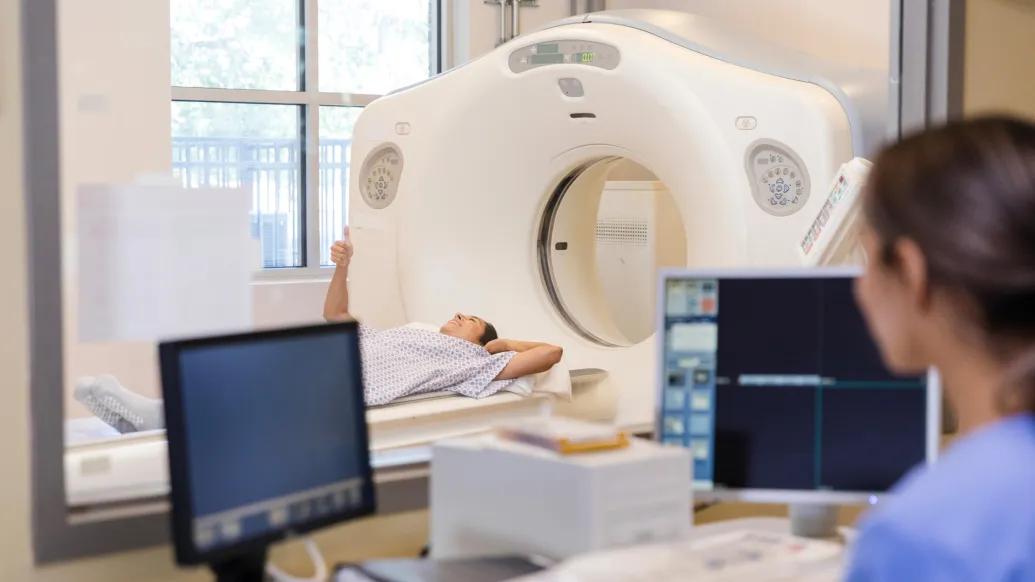
Through a statewide partnership, hospitals in Michigan drastically increased the number of patients who receive follow up imaging after undergoing aortic aneurysm repair, according to a recent study.
The rate of imaging in the year following endovascular aneurysm repair, or EVAR, improved from nearly 28% in 2017 to just below 80% in 2023.
Patients who participated in surveillance imaging had a nearly 60% decrease in the likelihood of dying within one year of surgery, after controlling for other comorbidities.
The results are published in Circulation: Population Health and Outcomes.
“EVAR is now more common that open surgery, yet as many as 57% of patients were missing essential follow up imaging,” said first author Frank M. Davis, M.D., assistant professor of surgery at University of Michigan Medical School and vascular surgeon at the U-M Health Frankel Cardiovascular Center.
“Through this partnership, we saw sweeping improvements in surveillance imaging that will allow clinicians to detect early problems that can lead to device failure or future, threatening complications such as aortic rupture.”
Current guidelines from the Society for Vascular Surgeons recommend annual lifelong surveillance after EVAR with CT scanning or ultrasound.
More than 30 hospitals participated in the improvement initiative that offered financial insurance reimbursement for encouraging surveillance imaging in the year following endovascular repair of abdominal aortic aneurysm.
The initiative formed through the Blue Cross Blue Shield of Michigan Cardiovascular Consortium, or BMC2, registry.
The consortium, housed at Michigan Medicine, is comprised of hospitals across the state of Michigan that use data they collect to inform quality projects, and improve care and patient outcomes.
Before the study, the rate of EVAR surveillance imaging just one year after the operation varied in Michigan from 3.7% at smaller hospitals to 62.5% at larger facilities.
The effort led to improvement across Michigan hospitals and was not driven by high-performing health care systems.
By 2023, 95% of participating hospitals had EVAR surveillance rates above 60%.
“The long term success of a surveillance program like this depends on identifying processes at each participating hospital that can be built into routine practice, making them easier for health care teams to sustain,” said senior author Nicholas Osborne, M.D., M.S., Ramon Bergeur M.D., Ph.D., Research Professor of Vascular Surgery at U-M Medical School and director of BMC2.
Each year, around 200,000 Americans are affected by abdominal aortic aneurysm.
Around 14% of patients who have EVAR require a second procedure within four to five years and less than 2% experience late aortic rupture as a complication.
Patients who received surveillance imaging during the study period had a higher number of repeat interventions than those who did not get imaging.
Their mortality rate, however, was significantly lower.
Past studies have mixed results as to whether follow up imaging is associated with reduced risk of death after endovascular repair.
Researchers say future studies using BMC2 data will assess mortality risk after five and 10 years of surveillance.
“This study demonstrates the importance of BMC2, as implementation of quality programs across the state of Michigan care lead to substantial improvement in care for patients including those who have aortic surgery,” Davis said.
Additional authors: Jeremy Albright, Ph.D., and Brennan Callow, both of University of Michigan, Loay Kobbani, M.D., and Tamer Boules, M.D., of Henry Ford Health System, Hue Thai, M.D., of Trinity Health Ann Arbor, and Nicolas Mouawad, M.D., of McLaren Health System.
Funding/disclosures: Davis is supported by a VA Career Development grant (IK2BX006562)
Support for BMC2 is provided by Blue Cross Blue Shield of Michigan and Blue Care Network as part of the BCBSM Value Partnerships program.
Although Blue Cross Blue Shield of Michigan and BMC2 work collaboratively, the opinions, beliefs, and viewpoints expressed by the author do not necessarily reflect the opinions, beliefs, and viewpoints of BCBSM or any of its employees.
Further, BCBSM does not have access to BMC2 data, and all patient episodes occurring at engaged hospitals are included in the data registries, regardless of payer.
Paper cited: “Association between Creation of an Endovascular Aortic Aneurysm Surveillance Program and One-Year Follow-Up and Mortality in the State of Michigan, USA,” Circulation: Population Health and Outcomes. DOI: 10.1161/CIRCOUTCOMES.125.012472
Sign up for Health Lab newsletters today. Get medical tips from top experts and learn about new scientific discoveries every week.
Sign up for the Health Lab Podcast. Add us wherever you listen to your favorite shows.

Health Lab
Explore thousands of health news & research stories by visiting the Health Lab homepage for more.
Media Contact

Public Relations
Department of Communication at Michigan Medicine
In This Story

Frank M Davis, MD
Assistant Professor

Nicholas Osborne, MD, MS, FACS, RPVI
Associate Professor
Related
Around 10% of deaths from coronary stenting, balloon angioplasty are preventable
Researchers find significant differences in care of life threatening shock after heart attack
Stay Informed
Want top health & research news weekly? Sign up for Health Lab’s newsletters today!
Featured News & Stories

Comprehensive DNA sequencing reveals hidden drivers of cancer
‘Molecular glue’ stabilizes protein that inhibits development of non-small cell lung cancer and uterine cancer

Many older adults make Medicare decisions quickly and most don’t change plans, poll finds

What’s the latest on 7-OH and kratom availability and addiction care?

Depression in OBGYN residents needs more attention, study suggests