Helping an employee-turned-patient overcome a brain tumor
How technology and a caring team helped one man recover
5:00 AM
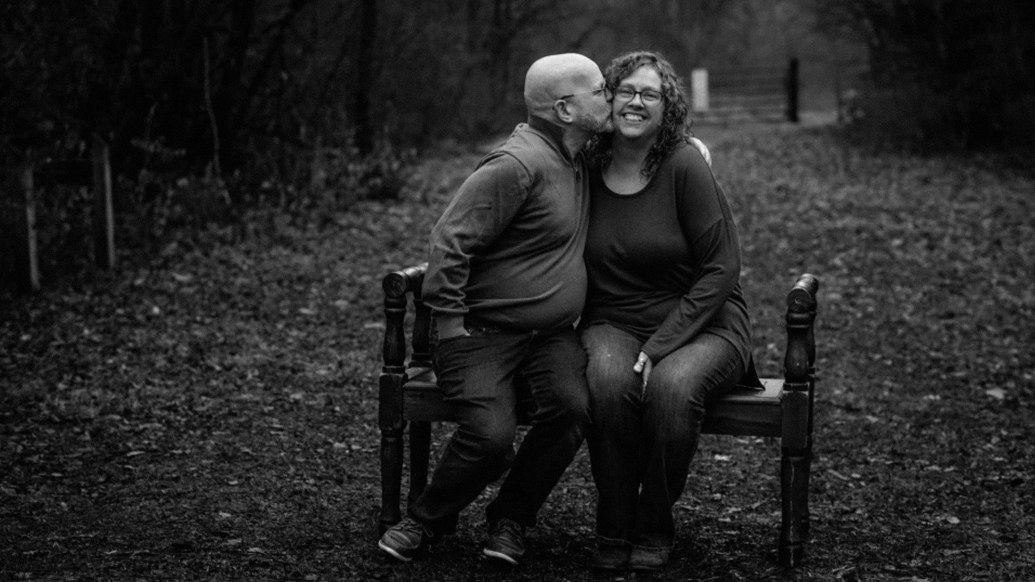
Written by Gary Mull and first published on Headlines
People often ask me, “How did you know you have a brain tumor? What were the symptoms?”
To be honest, I had no idea a brain tumor was developing in my head; I had symptoms, but they were nothing I would have associated with a brain tumor.
I thought brain tumor symptoms were nasty headaches and grand mal seizures.
I never experienced those.
It was much more subtle for me, and I had no vocabulary to describe what was happening because it was new to me and I had never heard anyone else describe what I was experiencing.
The best I could do was refer to early laptop computers where you’d press your thumb on the screen and it would go fuzzy or blurry.
That’s what my symptoms were like.
They were some sort of cognitive disturbance where my brain processes seemed to get fuzzy or blurry.
I didn’t feel any pressure, and my vision wasn't affected at all.
It was some sort of brain fog, but when I looked up brain fog online, my experience was nothing like how people described it.
These episodes would last three to five seconds, and then I’d continue on as if nothing happened.
At first, it happened randomly a few times each week.
After a couple months it started happening once a day.
It would happen while I was falling asleep, or driving my car, or teaching a piano lesson, or eating dinner, or chatting with someone or watching television or working at my computer.
I couldn't identify any trigger, and the people around me had no idea it was happening; there were no visible facial expressions or twitches or changes in my breathing or vision.
Nothing to alarm me or anyone else.
After several months, they began happening twice a day on many days, and then, after a few more months, up to three times a day.
That’s when I was referred for an MRI.
Imaging and surgery
It was Tuesday, May 21, 2024, when my journey truly began.
The results showed a large brain tumor and within hours, my neurologist ordered a consult with neurosurgery.
The neurosurgeon made time to see me that afternoon to make sure I understood the significance of the tumor. He knew right away what type of tumor it was and that surgery was the place to start.
But he also knew surgery couldn't remove all of the tumor because the MRI showed it was too embedded by small blood vessels and the surgeon didn't want to risk unnecessary damage to important brain functions or trigger a stroke.
Less than two weeks later I was in the operating room for a 10-hour surgery, followed by an expected four-to-five day stay in the hospital.
After surgery, pathology analyzed the tumor tissue and confirmed it was a WHO Grade 2 Astrocytoma caused by a mutation in my genes.
It was not genetic and the tumor started in my brain and luckily did not metastasize from somewhere else in my body, meaning it was completely localized.
But throughout my hospital stay, I made several important observations. I call them important because they represent philosophies, behaviors and culture that we, as employees, talk about here at Michigan Medicine, and I saw them first-hand being honored and emphasized:
Focus on safety
Soon after the surgery, and when it was safe, the surgical team had me up and walking around.
I heard a consistent message of “let’s do this safely” from all nurses, nurse aides, techs and therapists who worked with me.
It was clearly stated that I was never to get up on my own and that I would always start by pressing the nurse button so I wouldn’t get tangled in my IV lines or be a victim of unsteady balance.
I was to be always escorted through the halls of the neurology intensive care unit.
This relentless focus on my safety was most welcome.
Technology supporting care
My vitals were taken repeatedly, and never once did the technology fail our clinicians.
My wrist label was scanned often and always successfully. I watched employees badge into MiChart, which seemed noticeably faster than having to login.
And during all these technology successes, I observed that staff were not only wanting to do their best work for me, but also were well-trained in MiChart workflows, allowing for best practices to happen seamlessly in patient care.
They never stumbled over a button click or anything else that could have stalled them or needed a call to the Service Desk to report a problem (and therefore delay care.)
The recovery phase
I’m convinced the skilled surgical hands, excellent anesthesia practices, well-monitored in-hospital recovery, and well-informed and clearly stated follow up care, helped me to avoid the big post-op brain surgery problems of blood clots, stroke, excessive pain and swelling.
In fact, less than two weeks after surgery, with 53 staples still in my scalp, I was back playing the piano at my church.
I had constant support from my manager and colleagues and never felt rushed to get back to work; Actually, it was quite the opposite.
The stated emphasis was, “Gary, take the time you need to take care of yourself first.”
Follow up care
The next step was to attack more of the tumor with six weeks of radiation therapy.
All the staff showed concern for my comfort, safety and recovery.
Next up was chemotherapy, which, to my surprise, was administered through a pill that I took five days a month for six months.
I had monthly blood draws to ensure my body was ready for the next round.
Each lab was well staffed and was able to keep up with the group of patients needing their services.
And I discovered there are some phlebotomists who have my blood drawn and capped while I was still waiting for the poke. Lab results were consistently available within a few days, which never delayed clinical decisions or care.
Gratitude and reflection
Now that I’ve seen so much of our organization through the patient’s eyes, I realize how thrilled I am to be a part of Michigan Medicine.
Although in my role working to manage MiChart, we don’t directly care for our patients, we do enable our caregivers to focus on what they do best without having to wonder if the technology will help or hinder them in carrying out their individual mission to apply their experience, education, skills and compassion to make life better for their patients.
Over the course of almost an entire year, it felt like I touched nearly every part of our organization.
My interactions with registration, scheduling, admitting, online surveys, the patient portal, labs, parking lots and structures, radiology, radiation oncology, the operating room, pharmacy and clinicians at all levels were, without exception, filled with remarkable impressions of our superior facilities, our well-honed processes and our good people.

Health Lab
Explore a variety of health care news & stories by visiting the Health Lab home page for more articles.
Media Contact
Public Relations
Department of Communication at Michigan Medicine
Stay Informed
Want top health & research news weekly? Sign up for Health Lab’s newsletters today!
Featured News & Stories
Receiving personalized treatment for a rare neuroendocrine tumor
Stopping Ewing sarcoma relapses where they start
Study sheds light on how early pancreas lesions become cancerous
Teenage patient receives treatment for papillary thyroid cancer

Psychoactive substances and adverse side effects for patients with multiple sclerosis