Heart of Gold: Rare metal allergy leads to a unique heart device
After months of complications, Kera Patterson found a care team willing to listen. And a specially made device to protect her heart.
12:00 PM
Author |
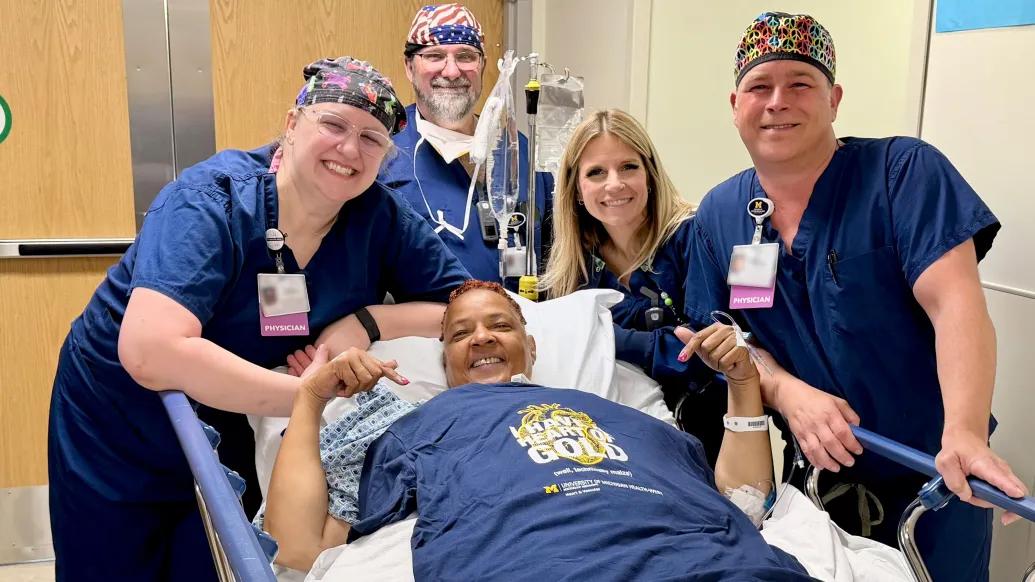
Kera Patterson has always known her body doesn't tolerate certain metals.
“I’ve never been able to wear jewelry unless it’s gold. Not costume jewelry, not silver,” she explained.
What she didn't know was that the same sensitivity could interfere with a device designed to save her life.
Patterson was diagnosed with heart failure more than a decade ago. In 2015, she received an implantable cardioverter-defibrillator, or ICD, at another hospital. The device monitors the heart's rhythm and can deliver an electrical shock to correct a potentially life-threatening arrhythmia.
But after the procedure, something wasn't right.
“The incision scar wouldn’t heal and kept showing signs of infection for months,” Patterson recalled. “That doctor wanted me to be on antibiotics for eight months.”
Despite prolonged treatment, the problems continued.
“I know my body, and I knew something was wrong.”
After about a year, Patterson asked to have the device removed. Her incision healed, but her underlying heart condition remained.
Years later, a new care team at University of Michigan Health-West would help her find a solution.
Finding someone who would listen
Patterson transferred her cardiovascular care to UM Health-West, in part because it was closer to home and her primary care physician was already in the U-M Health system.
She connected with Patricia Fick, M.D., who recognized that Patterson's heart condition still required protection from sudden cardiac death.
“Dr. Fick listened to me,” Patterson said.
But when Fick recommended another defibrillator, Patterson was hesitant.
“She told me I needed an ICD. I was wary because of the bad experience I had with the first device.”
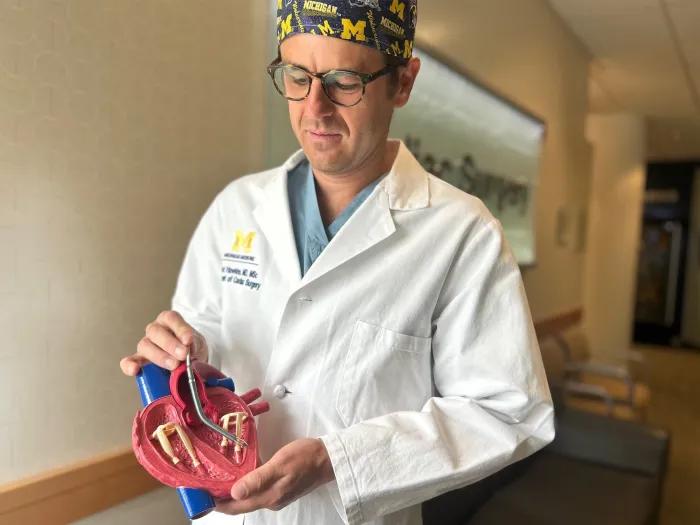
Patterson was referred to Emma Hegwood, D.O., a cardiac electrophysiologist at UM Health-West who specializes in heart rhythm disorders and related implantable devices.
Hegwood learned about Patterson's previous complications and another surgery in which her body had reacted to metal used to close an incision.
Allergy testing confirmed a severe nickel allergy, along with sensitivities to other metals. The allergist described Patterson's nickel reaction as the most vigorous he had ever seen, Hegwood said.
Rare complication, unique solution
Allergic reactions to implanted cardiac devices are uncommon, occurring in approximately 0.05% of implant cases, according to Hegwood.
Most ICD generators are made with titanium or titanium alloys, which are generally well tolerated. But some devices may contain trace amounts of other metals, including nickel.
In rare cases, patients can develop delayed hypersensitivity reactions, with symptoms resembling an infection, including redness, swelling and difficulty healing.
“Not all electrophysiologists have run into this, but the knowledge is important, especially when someone is failing to heal,” Hegwood said.
For Patterson, the answer was a gold plated ICD.
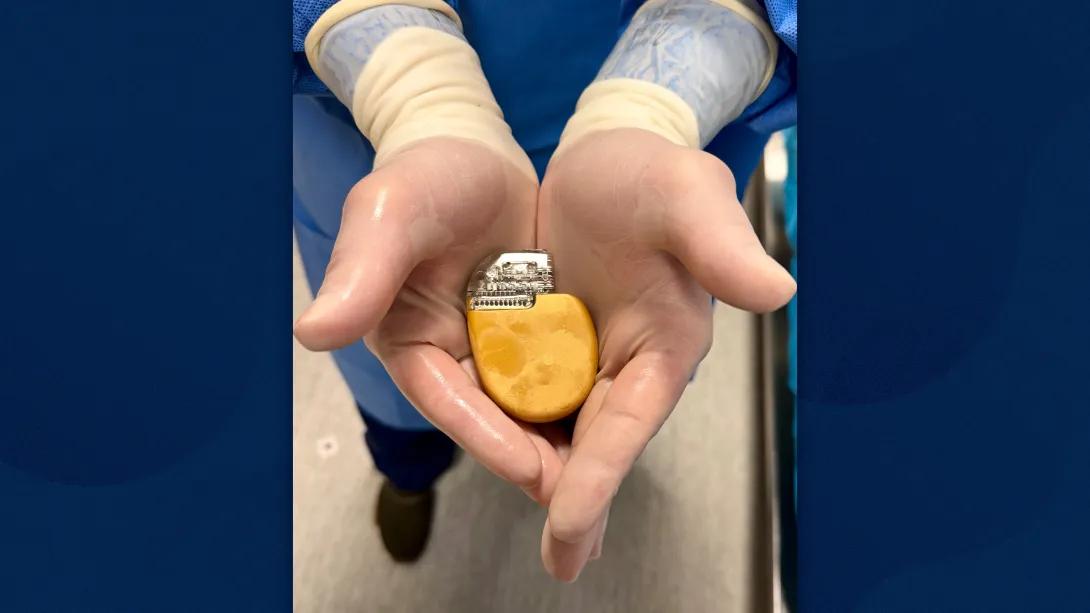
Gold is biologically inert, making it unlikely to trigger the same reaction. A thin gold coating creates a barrier between the device's underlying metals and surrounding tissue.
But obtaining one wasn't simple.
Hegwood contacted Medtronic, a trusted device manufacturer, which has experience producing gold coated ICDs for patients with metal allergies. The manufacturer had already exhausted its annual allotment of specialized devices, requiring additional approvals.
Hegwood worked with Medtronic's special requests department and navigated an approval process involving the U.S. Food and Drug Administration and a local institutional review board.
Even with expedited review, the process took approximately one to two months after the FDA submission.
The customized device came at no additional cost to Patterson.
Team approach to complex procedure
Once the device arrived, the surgical team faced another challenge.
Although Patterson's original ICD had been removed, the previous wire remained in place, along with considerable scar tissue from her previous procedure.
Hegwood collaborated with Matthew Sevensma, D.O., a cardiologist at UM Health-West, to plan the implantation. Sevensma helped address scarring and restricted access involving the left subclavian vein so the team could place the new leads.
The team had to carefully plan for potential complications, knowing they had just one specially manufactured device available.
In mid-September, they successfully implanted the gold plated ICD, which also provides cardiac resynchronization therapy to coordinate the heart's contractions and improve its pumping function.
The gold coating required special care during implantation to avoid scratching its protective surface.
Heart of gold
Patterson stayed overnight for observation following the procedure.
At an early follow-up, Hegwood said Patterson was recovering well, with improving discomfort and an incision showing no signs of infection or irritation.
For Hegwood, the case shows the importance of listening to patients and working across specialties to find solutions.
“It all started with listening to her,” Hegwood said, describing the effort as a combination of clinical investigation, resource coordination and teamwork.
Patterson agrees.
“They listened to me when I mentioned my metal sensitivity. It felt good to have a doctor pay attention.”
After months of complications with her first defibrillator, Patterson now has a device designed around her unique medical needs.
And she's found some humor in her unusual new implant.
“I always knew I had a heart of gold, it’s just official now.”

Health Lab
Explore thousands of health news & research stories by visiting the Health Lab homepage for more.
Media Contact

Public Relations
Department of Communication at Michigan Medicine
Related

Heart-assisting implants save lives, but Black and female patients don’t get them as often

3 Questions About ICDs for Arrhythmia Treatment
Stay Informed
Want top health & research news weekly? Sign up for Health Lab’s newsletters today!
Featured News & Stories
Distance, insurance, social factors may hinder access to lifesaving heart monitoring for children
Reducing infections after heart surgery could save Medicare $441 million per year
Young father survives aortic dissection after delayed diagnosis
C.S. Mott Children’s Hospital first in country to implant expandable heart valve during FDA review phase
Celebrating cardiac arrest survivors and their lifesavers