A heart attack 9 days after giving birth: Mother of 4 shares her SCAD experience
Spontaneous coronary artery dissection is a leading cause of heart attacks in women under 50, targets those who are pregnant or recently postpartum
5:00 AM
Author |
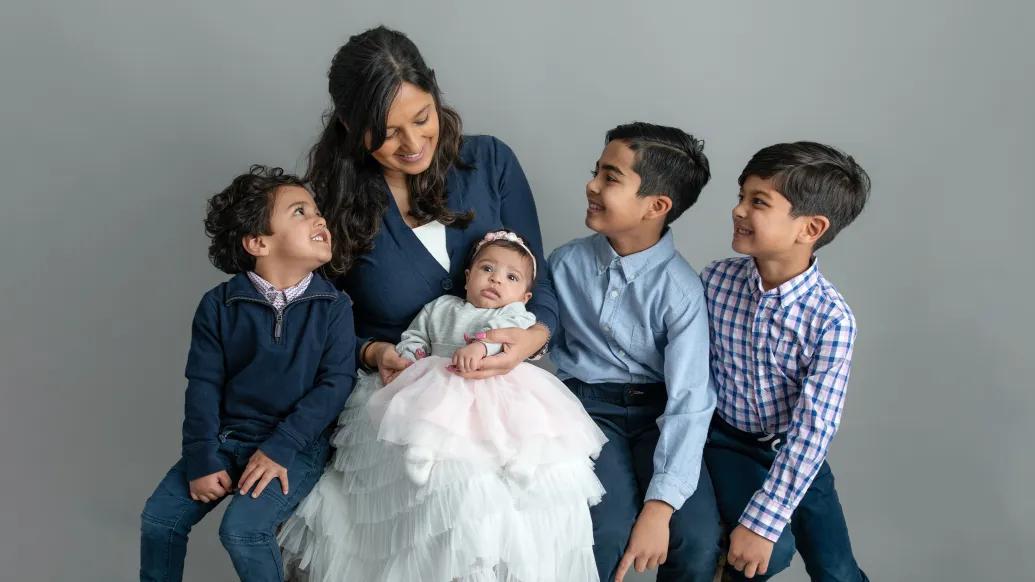
Nidhi Puri was sitting in her living room having coffee and bagels with family and friends when the chest pain began.
Nine days earlier, the mother of four had given birth to daughter, Nora.
As she struggled to catch her breath, she joked that this was likely just another irritating postpartum symptom.
Even as the pain reached her left arm, ear and jaw and her heart started racing, Puri was thinking of every reasonable explanation: Too much caffeine. Heartburn. Maybe she was simply exhausted from caring for a newborn and three rambunctious boys at home.
“I was 41 years old, had always been healthy and didn’t have any family history of heart issues,” she said.
“Never did I ever think this could be a heart attack. I just had my hand on my chest the whole time saying, ‘I’m fine.’”
But she wasn’t.
Puri was experiencing spontaneous coronary artery dissection, a sudden, deadly heart attack in which a tear forms in a coronary artery, blocking blood flow to the heart.
Unlike more common heart attacks caused by plaque buildup, SCAD may be linked to hormonal changes during pregnancy and the postpartum period.
These fluctuations can weaken the artery walls in some people, explains Ashley Hesson, M.D., Ph.D., Director of Research for the Cardio-Obstetrics Program at Michigan Medicine and high risk maternal fetal specialist at University of Michigan Health Von Voigtlander Women’s Hospital.
“SCAD is rare and underrecognized, but it’s a leading cause of heart attacks in women under 50 and the most common cause in women who are pregnant or postpartum,” said Hesson, who cared for Puri.
“It’s a lesser-known condition even among some health professionals.”
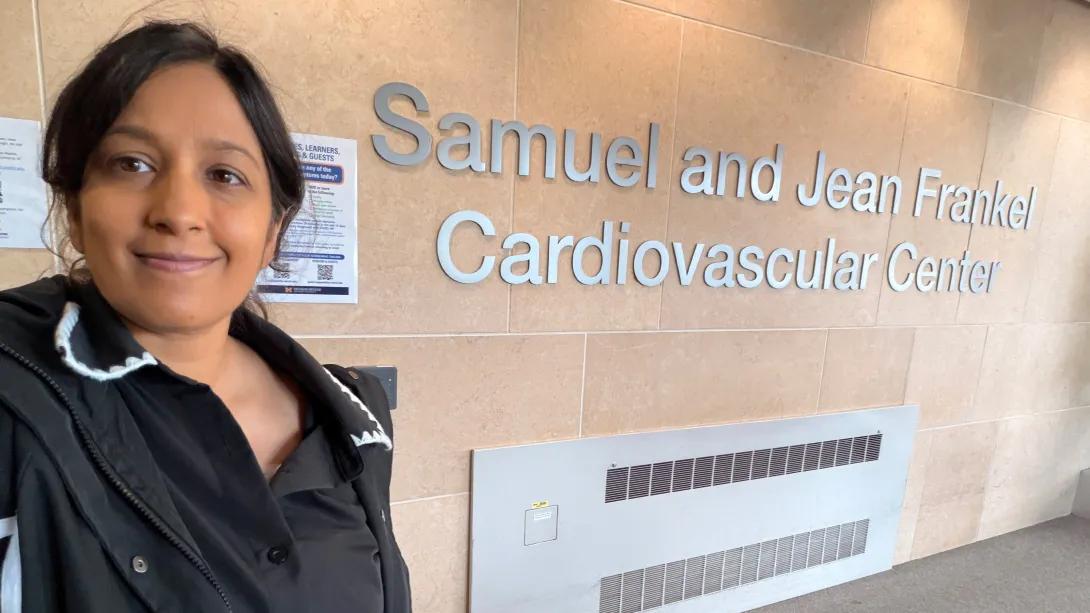
Now, Puri is sharing her story to raise awareness and encourage other women not to dismiss warning signs as she nearly did.
“As women, we tend to minimize our discomfort,” she said.
“Some of us are programmed to say ‘I’m fine’ because we feel like we have to keep going.”
“I’m safe and healthy, and now I feel like I need to honor this experience,” she added.
“I almost became a statistic. Women’s heart attacks don’t always follow the script, and other women need to know this can happen.”
Paying attention to warning signs
Puri is grateful that despite her hesitation, the people around her urged her to go to the hospital and get checked out.
When she arrived, her blood pressure was dangerously high.
Within minutes of being connected to monitoring equipment and explaining her symptoms, she went into crisis.
She heard the words “code blue.”
“It felt like an out-of-body experience,” she said.
“There were so many people around me, and everything sounded muffled. I was panicking. I remember whispering to a nurse, ‘Am I having a heart attack?’”
The postpartum period is a busy and overwhelming time. New moms are focused on their babies and pulled in many directions, but they also need to take care of themselves. If something doesn’t feel right, it's important to follow your instincts.”
-Ashley Hesson, M.D.
After her initial hospitalization and recovery, Puri was referred to U-M Health’s Cardio-Obstetrics Program, which cares for patients with pregnancy-related SCAD.
Program leaders collaborate with clinicians at the Frankel Cardiovascular Center, who diagnose and treat all forms of SCAD.
She says her first conversation with Hesson brought an immediate sense of relief.
“I felt so heard and seen,” she said. “I started crying because I’d felt so lost. This just rocks your world. I could tell right away that I was at the right place.”
Hesson stresses that women should never ignore potential warning signs of SCAD.
These can include chest pain that doesn’t go away, unexplained arm pain and shortness of breath even at rest or during conversation.
“The postpartum period is a busy and overwhelming time,” she said.
“New moms are focused on their babies and pulled in many directions, but they also need to take care of themselves. If something doesn’t feel right, it's important to follow your instincts.”
“Nidhi is a fierce advocate for her health and for her family's well-being, and it's been a privilege and an inspiration to take care of her,” Hesson added.
“What I hope women take from her story is the importance of trusting yourself and making sure you receive the care you need and deserve.”
Michigan Medicine is advancing SCAD care and research through a program led by cardiologist Santhi Ganesh, M.D., at the U-M Health Frankel Cardiovascular Center.
Several studies are focused on better understanding the condition’s biology and genetic risk factors.
“SCAD requires careful, individualized management, especially in the postpartum setting where both cardiac and recovery considerations intersect,” said Ganesh.
“Our approach is to bring together cardiology, maternal-fetal medicine, vascular medicine and genetics so patients receive coordinated care during a very vulnerable time.”
Early progress is already emerging.
Through data sequencing and advanced analytics, researchers are identifying genes, biological pathways and areas of the vessel wall that may not function normally in people who develop SCAD.
These insights, Ganesh says, could lead to new treatments, improved understanding of long term outcomes and answers about whether risk can be inherited.
“This is an unpredictable disease that affects young, healthy women without traditional risk factors, which tells us it follows a different process,” Ganesh said.
“There is still much to learn. We’re working to understand why it happens in some women so we can improve prevention and reduce risk.”
Slowing down and finding joy
Moving forward, Puri will continue to see a cardiologist and monitor her blood pressure and overall heart health.
She also realized the importance of caring for her mental and emotional well being after such a traumatic experience.
She considers herself fortunate, crediting her recovery to quick medical care and access to U-M specialists.
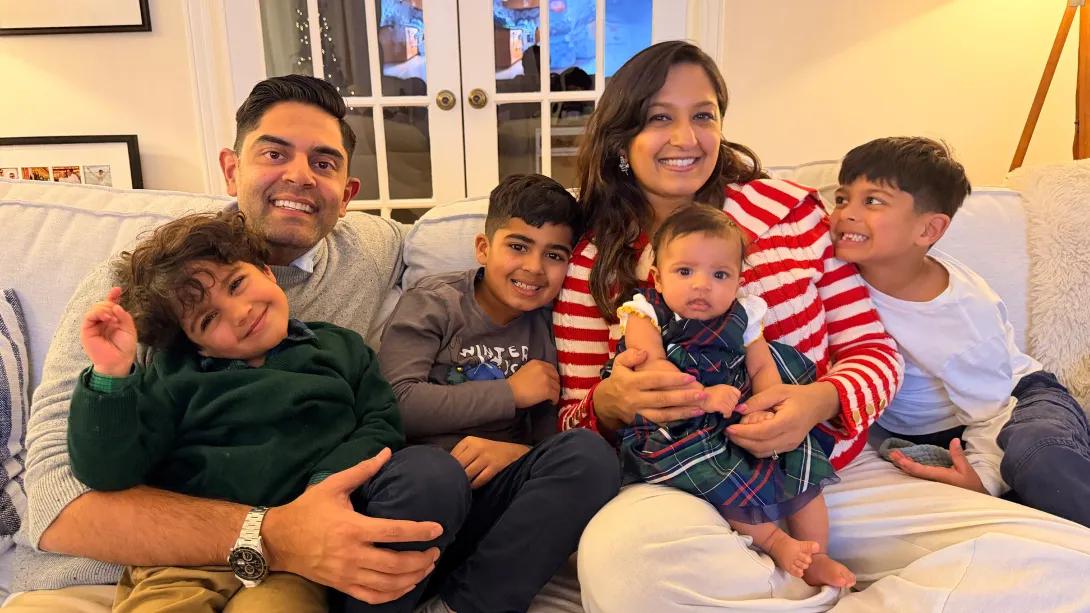
Her husband, Ranjeev Puri, a Michigan state representative, has also helped raise awareness.
He recently introduced a resolution recognizing SCAD during Heart Month in February.
Now, Puri says she is taking the signal to slow down, something she believes can be a struggle for some moms.
That means soaking up simple moments with her children Rohin, 10; Shaan, 7, Kiaan, 3 and baby Nora: Making pancakes together on the weekends even if it leads to arguments over who gets to stir. Movie nights. Playing games. Finding joy in the big and small.
“Being a mom is my superpower. My kids are the center of my world,” she said.
“Something I’d never heard about almost took me away from them and my family. I’m just trying to savor the moments because I’ve experienced the fear of possibly not being here for it.”
“This has shown me how strong I can be and I’m trying to model that for my kids,” she added.
“I always tell them ‘we can do hard things.’ I’m saying it to them but I’m also saying it to myself.”
Sign up for Health Lab newsletters today. Get medical tips from top experts and learn about new scientific discoveries every week.
Sign up for the Health Lab Podcast. Add us wherever you listen to your favorite shows.

Health Lab
Explore thousands of health news & research stories by visiting the Health Lab homepage for more.
Media Contact

Public Relations
Department of Communication at Michigan Medicine
In This Story

Santhi K Ganesh, MD
Professor
Ashley M Bartell, MD, PhD, FACOG
Assistant Professor
Related
2 heartbeats, 1 future: Why pregnancy is a critical window for women’s heart health

Uncovering the Genetics Behind Heart Attacks That Surprise Young, Healthy Women
Stay Informed
Want top health & research news weekly? Sign up for Health Lab’s newsletters today!
Featured News & Stories
New heart, three medals and a shot at the world stage

From patient to artist: A project close to her heart
What’s changing in Medicaid and what can you do?

Michigan man undergoes complex heart repair after last minute surgery cancelation
More babies with hypoplastic left heart syndrome surviving critical period between surgeries