Hearing Aids Linked to Lower Risk of Dementia, Depression and Falls, Study Finds
Only 1 in 8 older adults with hearing loss who belong to Medicare HMOs have a hearing aid, despite partial insurance coverage for cost.
9:00 AM
Author |
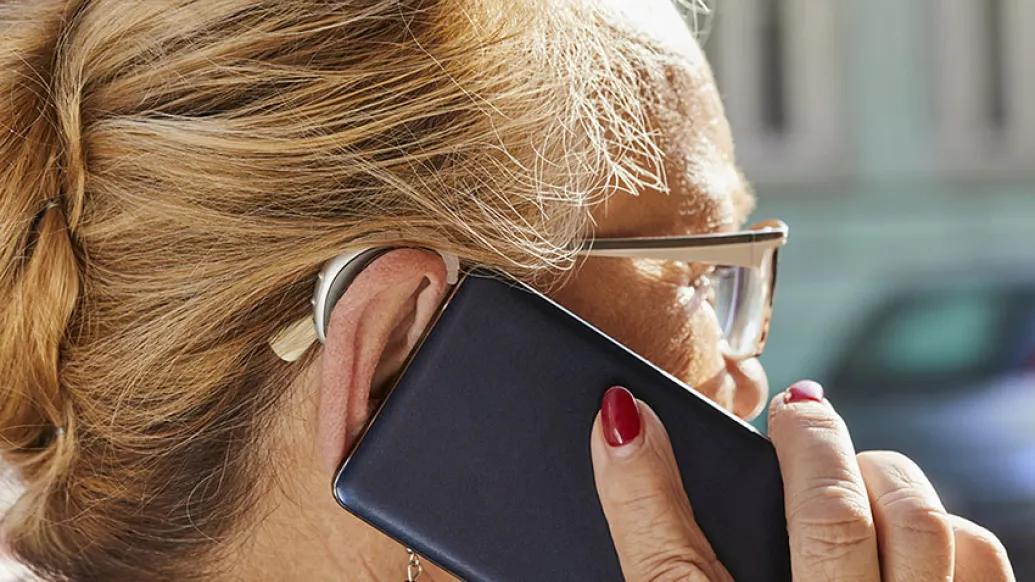
Older adults who get a hearing aid for a newly diagnosed hearing loss have a lower risk of being diagnosed with dementia, depression or anxiety in the following three years, and a lower risk of suffering fall-related injuries, than those who leave their hearing loss uncorrected, a new study finds.
Yet only 12% of those who have a formal diagnosis of hearing loss actually get the devices – even when they have insurance coverage for at least part of the cost, the study shows. It also reveals gaps in hearing aid use among people of different racial and ethnic backgrounds, geographic locations and genders.
LISTEN UP: Add the new Michigan Medicine News Break to your Alexa-enabled device, or subscribe to our daily updates on iTunes, Google Play and Stitcher.
The findings, made by a University of Michigan team using data from nearly 115,000 people over age 66 with hearing loss and insurance coverage through a Medicare HMO between 2008 and 2016, are published in the Journal of the American Geriatrics Society.
Unlike traditional Medicare, Medicare HMOs typically cover some hearing aid costs for members diagnosed with hearing loss by an audiologist.
Elham Mahmoudi, M.B.A, Ph.D., the U-M Department of Family Medicine health economist who led the study, says it confirms what other research has shown among patients studied at a single point in time – but the new findings show differences emerging as time goes on.
"We already know that people with hearing loss have more adverse health events, and more co-existing conditions, but this study allows us to see the effects of an intervention and look for associations between hearing aids and health outcomes," she says.
"Though hearing aids can't be said to prevent these conditions, a delay in the onset of dementia, depression and anxiety, and the risk of serious falls, could be significant both for the patient and for the costs to the Medicare system."
Long-term tracking
Mahmoudi and her colleagues at the U-M Institute for Healthcare Policy and Innovation looked at anonymous insurance data to perform the study, and looked at the data for each person with hearing loss one year before their diagnosis, and three years after, so they could see only newly diagnosed dementia, depression, anxiety and fall injuries.
Though hearing aids can't be said to prevent these conditions, a delay in the onset of dementia, depression and anxiety, and the risk of serious falls, could be significant both for the patient and for the costs to the Medicare system.Elham Mahmoudi, M.B.A., Ph.D.
They intend to keep studying further data from this population, to see if the differences in health outcomes continue beyond three years.
The study shows that men with hearing loss were more likely to receive a hearing aid – 13.3% compared with 11.3% of women. Only 6.5% of people of Latino heritage received a hearing aid for their hearing loss, compared with 9.8% of African-Americans and 13.6% of whites.
Nearly 37% of people with hearing loss who lived in the north-central part of the country, as designated by the Census Bureau, used a hearing aid, compared with just 5.9% of people in the mountain states.
Differences in diagnosis
When the researchers looked at the path that patients who received hearing aids took over three years, compared with those who didn't get the devices, significant differences emerged.
In all, the relative risk of being diagnosed with dementia, including Alzheimer's disease, within three years of a hearing loss diagnosis was 18% lower for hearing aid users. The risk of being diagnosed with depression or anxiety by the end of three years was 11% lower for hearing aid users, and the risk of being treated for fall-related injuries was 13% lower.
The study also confirms previous studies' findings that people with hearing loss had much higher rates of dementia, depression and fall injuries than the general population.
The reasons for this are complicated, and can include loss of social interaction, loss of independence, loss of balance and less stimulation to the brain. Some researchers also believe that the loss of nerve impulses from the ear to the brain, and loss of cognitive ability leading to dementia, could be part of the same aging process.
What's to come
The study only included individuals who billed their insurance company for part of the cost of their hearing aid, Mahmoudi notes. The coming of FDA-approved over-the-counter hearing aids in 2020 for people with mild to moderate hearing loss could make the devices much more accessible for many people.
MORE FROM MICHIGAN: Sign up for our weekly newsletter
But those new devices could also complicate researchers' ability to study the effects of hearing aids on other health outcomes, if people don't use insurance coverage and researchers can't tell if they have one.
"Correcting hearing loss is an intervention that has evidence behind it, and we hope our research will help clinicians and people with hearing loss understand the potential association between getting a hearing aid and other aspects of their health," says Mahmoudi.
She notes that Medicaid in the state of Michigan is now covering hearing aid testing, fitting and purchase, since a policy change in 2018, and that it will be important to study impacts in this population as well.
Paper cited: Elham Mahmoudi, et al. "Can Hearing Aids Delay Time to Diagnosis of Dementia, Depression, or Falls in Older Adults?" Journal of the American Geriatrics Society. DOI: 10.1111/jgs.16109.
In addition to Mahmoudi, the new study's authors are IHPI statisticians Tanima Basu, M.S. and Neil Kamdar, M.A., and IHPI members Kenneth Langa, M.D., Ph.D., Michael M. McKee, M.D., M.P.H., Phillip Zazove, M.D. and Neil Alexander, M.D. Langa and Alexander are professors in the U-M Department of Internal Medicine; McKee and Zazove are assistant professor and chair, respectively, of the U-M Department of Family Medicine. Langa also holds faculty positions in the U-M Institute for Social Research and the VA Ann Arbor Center for Clinical Management Research.

Health Lab
Explore thousands of health news & research stories by visiting the Health Lab homepage for more.
Media Contact

Public Relations
Department of Communication at Michigan Medicine
Stay Informed
Want top health & research news weekly? Sign up for Health Lab’s newsletters today!
Featured News & Stories
Cost, Coverage and More Drive Hearing Aid Inequality

Better prenatal care data could help prevent maternal complications, experts say

Many hospitals still don’t do enough to prevent UTIs from catheters

Digital alerts support timely treatment decisions of critically ill cardiac patients

What’s changing in Medicaid and what can you do?