Health care access gaps for people with disabilities
Recent research highlights ongoing barriers to care for people with disabilities and policy and practice changes that could help improve health care delivery
5:00 AM
Author |
This article was originally published on Institute Health care Policy & Innovation
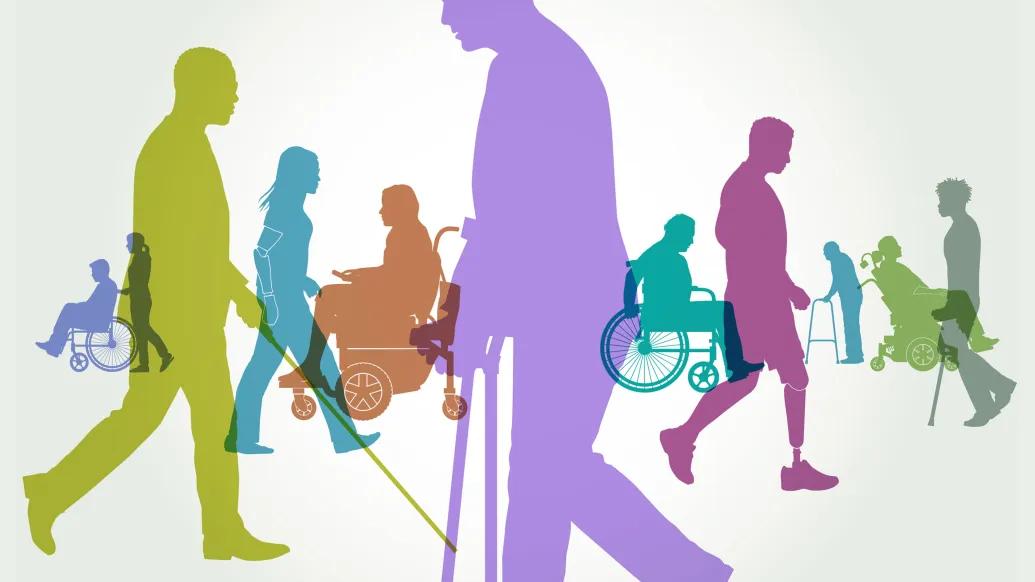
People with disabilities continue to face persistent barriers when seeking health care—from clinics that are difficult to navigate to communication challenges and insurance rules that can interrupt access to needed services.
These obstacles persist despite federal requirements for accessibility under the Americans with Disabilities Act.
A collection of recent studies from experts at the University of Michigan Institute for Healthcare Policy & Innovation and the U-M Center for Disability Health and Wellness offers insights into how these barriers show up in everyday care and how practical changes in communication, care delivery and policy could help create a more equitable health system for people with disabilities.
Understanding and identifying disability support needs in health care settings
Many older adults may not identify as disabled, overlooking needed health care accommodations
Findings from IHPI’s National Poll on Healthy Aging, conducted in collaboration with Michelle Meade, Ph.D., M.S., professor of physical medicine and rehabilitation and founding director of the U-M Center for Disability Health and Wellness, show that while only 19% of adults age 50 and older identify as having a disability, as many as half may qualify under the Americans with Disabilities Act based on functional limitations affecting daily life.
Yet only a small share of those who could benefit (18%) said they asked for or received assistance during health care visits, such as help navigating clinics or understanding medical instructions.
“Our findings suggest both a need to explore disability identity issues among older adults as well as the importance of encouraging health care providers and systems to ask about and provide disability-related accommodations for older adults and others with functional limitations,” said Meade.
A practical tool for assessing accommodation needs
To help ensure patient needs are recognized, a team led by Michael McKee, M.D., M.P.H., co-director of the U-M Center for Disability Health and Wellness and professor of family medicine, developed and tested a new disability and accommodations questionnaire in Michigan Medicine primary care clinics.
Among the 541 patients who completed the tool during routine visits, about 13% reported a disability, and just over half of those individuals (54%) said they needed at least one accommodation — most often communication support such as American Sign Language interpreters, cognitive support like involving a care partner, or mobility assistance.
“Our questionnaire equips clinicians with a practical and scalable means of identifying disabilities among our patients.
This allows us to arrange any required accommodations or visit modifications to make the health care visit more accessible and equitable,” said McKee.
“It’s a small change that can make a substantial difference in improving the quality of their care while reducing disparities for patients with disabilities.”
Improving communication access for Deaf patients
Another study led by McKee sheds light on barriers in health communication for Deaf people who use American Sign Language.
Researchers compared health literacy, or the ability to understand health information, among more than 400 Deaf ASL users and a similar number of hearing English speakers using a validated tool available in both languages.
They found that Deaf participants were nearly four times as likely to not have adequate health literacy. Individuals with inadequate health literacy often struggle with understanding health information.
The study also showed that Deaf participants with stronger ASL skills and better English reading ability were more likely to understand health information.
The researchers suggest these findings reflect overlapping inequities, limited access to health materials in ASL, fewer opportunities to learn health information informally, and frequent communication gaps in health care settings.
“Health information needs to be clearly communicated and be made available in a language people can fully understand,” McKee said.
“Providing information in ASL, allotting extra time for health care visits, and ensuring access to qualified interpreters or ASL-fluent clinicians can help Deaf patients make more informed decisions and improve their health.”
Supporting blind and low-vision patients in navigating health care environments
To improve support for people who are blind or have low vision to navigate health care facilities, clinician-researchers at Michigan Medicine developed a guide training program for hospital volunteers and staff focused on safe, respectful support to help patients get around health care facilities.
In an evaluation of the program led by Tyler G. James, Ph.D., M.S., assistant professor of family medicine, staff participants said the training significantly improved their knowledge and confidence in assisting patients.
The researchers noted that while training is a key step, continued efforts to remove physical barriers and improve wayfinding tools will be essential to ensuring blind or low-vision patients can move through health care environments safely and independently.
“Supporting accessibility starts before a patient comes through the door. It starts with intentional design of our physical spaces and ensuring our staff and volunteers are appropriately trained,” James said.
“Simple skills like announcing yourself and describing the environment can improve patient experience. These are practical techniques that every health system can incorporate into routine staff training.”
Preparing clinicians to provide disability-inclusive care
A recent national survey co-authored by Claire Kalpakjian, Ph.D., professor of physical medicine & rehabilitation, finds that many obstetrics and gynecology resident physicians feel underprepared to care for pregnant people with physical disabilities, despite this population’s higher risk of complications.
Among 88 residents across the country, only 8% reported receiving disability-specific training in residency, and fewer than half (44%) said they had received such education in medical school.
Residents reported low comfort performing key aspects of care, with 73% feeling uncomfortable positioning patients for pelvic exams and 89% unsure about making recommendations about mode of delivery, such as whether a vaginal birth or cesarean section would be appropriate.
Yet even limited training was associated with improved confidence, and over 92% of residents expressed a strong desire for more education.
“Pregnant people with disabilities deserve clinicians who are confident, competent and prepared to provide high quality care,” Kalpakjian said.
“Both people with disabilities and clinicians are disadvantaged by a significant gap in training. Fortunately, residents are eager for education that helps address those gaps. Disability-inclusive obstetric care can’t be left to chance; it must be built into curricula, simulations, and mentorship.”
A separate national survey also authored by Kalpakjian underscores why this training matters for patients.
Women with physical disabilities reported gaps in practical pregnancy information—especially about adapting as their bodies changed (54.4% reported having the least knowledge) and what infant care equipment they might need (57.9%).
While most had some to a lot of confidence (66.7%) in health care providers’ recommendations, experiences varied in how well providers understood their disability-related concerns.
Planning for disability support in community health systems
Community Health Needs Assessments are meant to guide local decisions about health priorities and resources, yet a recent analysis by Tyler G. James, Ph.D., M.S., of 77 CHNAs in Florida found that people with disabilities are often missing from these planning efforts.
While most assessments mentioned “disability,” few included data on specific disability types, defined how disability was measured, or engaged disability-focused organizations in the process.
For instance, less than half of nonprofit hospital CHNAs (47%) consulted groups such as Centers for Independent Living, and only 23% reported on Americans with Disabilities Act compliance.
Mental health conditions were commonly tracked, but cognitive, sensory, and mobility disabilities, which more broadly affect daily functioning, were frequently overlooked.
“People with disabilities make up more than a quarter of U.S. adults, yet their health needs are too often not adequately considered in local planning,” said James.
“Including disability data and lived experience in CHNAs is essential for ensuring that every community member is represented when health priorities are set and resources are allocated.”
How health insurance policies and coverage influence access to care
Preventive health care gaps for adults with disabilities
Adults with functional disabilities use health care more often than adults without disabilities, but a large national study suggests that more care does not necessarily mean better or more appropriate care.
Using data from nearly 190,000 U.S. adults, a JAMA Network Open study led by A. Mark Fendrick, M.D., professor of internal medicine and director of the Center for Value-Based Insurance Design, found that adults with severe functional disabilities were more likely than those without disabilities to receive routine care, such as tests or medications that can be provided during a regular doctor visit, but were less likely to receive important preventive services like cancer screenings, that often require separate appointments or coordination.
Higher overall health care use also did not mean medical needs were consistently met. Instead, ease of access played a major role in whether people received both high- and low-value care.
“Our findings highlight the importance of health policies that make recommended, high-value care easier to access for people with disabilities, while reducing reliance on low-value services,” said Fendrick.
“Improving access to recommended preventive services, including those that are not easily performed during a routine clinician visit may help better align care with individuals’ needs.”
Medicaid coverage changes could disrupt essential health care for older adults and people with disabilities
During the COVID-19 public health emergency, states paused Medicaid eligibility redeterminations, allowing millions of people, including many with disabilities, to maintain continuous coverage.
As those protections have ended and the Medicaid “unwinding” continues, a policy analysis published in the Journal of the American Geriatrics Society by Renuka Tipirneni, M.D., M.Sc., associate professor of internal medicine, and colleagues suggests that adults over age 65 and people with disabilities are especially vulnerable to losing coverage.
These individuals are often enrolled in Medicaid through pathways that do not rely on income alone, known as “non-MAGI” (Modified Adjusted Gross Income) eligibility, which typically includes people who qualify based on disability status or who need long-term services and support.
Because many rely on Medicaid for help with daily care and to pay Medicare premiums, deductibles and copayments, even short gaps in coverage can disrupt essential health care services.
Despite how important it is for older adults to maintain Medicaid coverage when eligible, another study by Tipirneni and colleagues found that half of older adults with low incomes did not know they had to renew this coverage every year.
“It is important for coverage policies and renewal processes to support continuity of care for older adults and people with disabilities,” Tipirneni said.
“Streamlined, accessible renewal systems can help ensure eligible individuals retain the services they rely on to stay healthy and independent in the community.”
From paper to practice: Aligning policy and lived experiences
Research and policy engagement by U-M faculty aims to improve health care for people with disabilities by strengthening accommodations, communication access, physical environments, and insurance policies and coverage that support safer, higher quality care.
By centering the experiences of people with disabilities, this work is informing changes in preventive care, provider training, and policy that enhance daily life and promote better health.
Explore more disability-focused work from IHPI experts across disciplines and care settings, and visit the U-M Center for Disability Health and Wellness to learn more about research and resources dedicated to improving access and outcomes for people with disabilities.
Articles & reports cited
Experiences of disability after 50: Poll looks at self-identity and help with health care visits
Self-Reported Accommodation Needs for Patients with Disabilities in Primary Care. The Joint Commission Journal on Quality and Patient Safety.
Predictors of health literacy among Deaf American Sign Language users. Patient Education and Counseling.
Human Guide Training to Improve Hospital Accessibility for Patients Who Are Blind: Needs Assessment and Pilot Process Evaluation. JMIR Rehabilitation and Assistive Technologies.
Obstetrics and Gynecology Resident Comfort in Caring for Pregnant People with Physical Disabilities. American Journal of Perinatology.
Pregnancy Decision-Making Among Women With Physical Disabilities: Cross-Sectional Survey Study. BJOG.
Analysis of Community Health Needs Assessments (CHNAs) in Florida and disability inclusion. SAGE Journals.
Health Care Utilization Patterns Among Adults With or Without Functional Disabilities. JAMA Network Open.
Use of preventive service and potentially preventable hospitalization among American adults with disability: Longitudinal analysis of Traditional Medicare and commercial insurance. Preventive Medicine Reports.
Older adults and people with disabilities are at risk for Medicaid disenrollment. Journal of the American Geriatrics Society.
Medicaid Unwinding Experiences in Dual-Eligible Older Adults. JAMA Health Forum.

Health Lab
Explore thousands of health news & research stories by visiting the Health Lab homepage for more.
Media Contact

Public Relations
Department of Communication at Michigan Medicine
In This Story
Renuka Tipirneni, MD, MSc, FACP
Associate Professor
Stay Informed
Want top health & research news weekly? Sign up for Health Lab’s newsletters today!
Featured News & Stories

Comprehensive DNA sequencing reveals hidden drivers of cancer

Many older adults make Medicare decisions quickly and most don’t change plans, poll finds

What’s the latest on 7-OH and kratom availability and addiction care?

A metabolic “switch” that could help reset scar-producing cells in scleroderma

Depression in OBGYN residents needs more attention, study suggests