Half of newborns with severe spina bifida have trouble breathing during sleep
Researchers say routine screening for sleep disorders may be necessary
9:47 AM
Author |
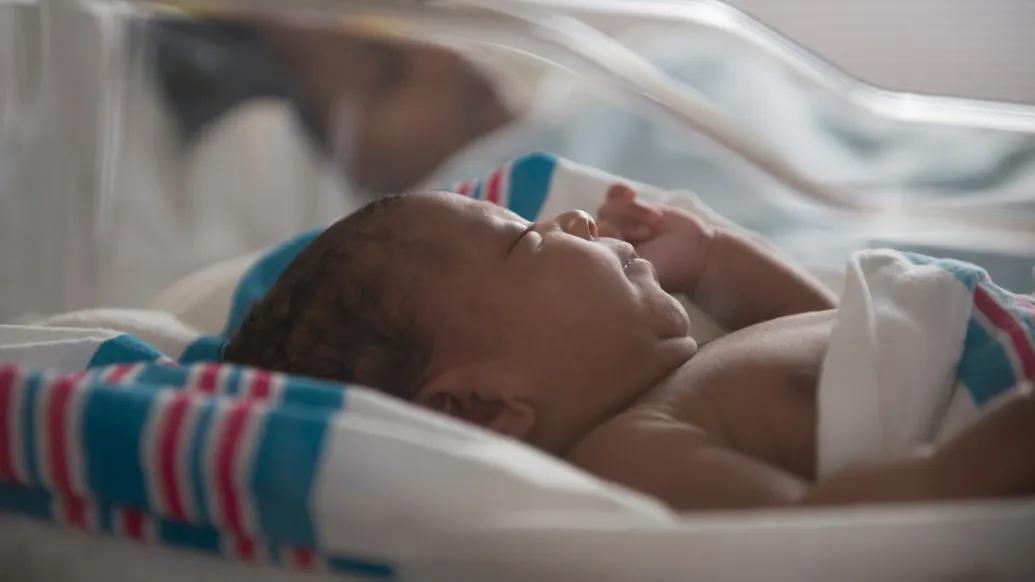
Many infants with the most severe form of spina bifida, called myelomeningocele, experience breathing disruptions during sleep — increasing the risk of cognitive deficits later in life, a new study finds.
Sleep disorders are common among adults and older children with myelomeningocele, a congenital defect that occurs when parts of the developing spinal cord and nerves break through an opening in the back.
The research, led by Michigan Medicine and Washington University School of Medicine in St. Louis, reveals that sleep problems in this population occur much earlier in life than previously known.
The results are published in Pediatrics.
“Sleep-disordered breathing, such as sleep apnea, is a significant contributor to behavioral problems during wakefulness, and likely to cognitive deficits as well, but it has not been well studied or routinely screened for in newborns,” said co-senior author Ronald Chervin, M.D., M.S., the Michael S. Aldrich Collegiate Professor of Sleep Medicine at the University of Michigan Medical School.
“This study addresses a critical gap in our understanding of the prevalence and onset of these sleep and breathing disturbances, and raises the possibility of high-impact interventions that could improve long term outcomes for these children.”
Around three of every 10,000 babies in the United States are born with myelomeningocele.
The multi-center study focused on sleep in newborns with the condition who underwent either fetal repair before delivery or postnatal surgery.
Researchers assessed 173 newborns before they left the hospital using a polysomnogram.
Also known as a sleep study, the polysomnogram tracks multiple bodily functions during sleep, including brain waves and heart rhythms.
They found that 53% of newborns had sleep-disordered breathing, an array of conditions confined to sleep, of which sleep apnea is most common.
Babies born more prematurely than others had more breathing disturbances per hour during sleep.
The timing of fetal spina bifida surgery, which can improve mobility and quality of life, wasn’t linked to worsening symptoms except through its influence on premature birth.
“While fetal spina bifida repair is greatly beneficial, effective treatments for sleep-disordered breathing also can be delivered — but the condition must first be identified,” said co-senior author John Barks, M.D., professor of pediatrics at U-M Medical School.
“Even at health systems with robust myelomeningocele programs, screening for sleep disorders is not routine. Intervention as early as the first weeks after delivery could make a tremendous difference in the lives of these children.”
Untreated sleep-disordered breathing, regardless of the child’s health in other respects, potentially can lead to long term complications.
These include, for example, attention deficits, hyperactive behavior, learning disabilities and cardiovascular conditions.
Researchers say the findings highlight a novel potential opportunity to find and address sleep disorders in high risk infants — and thereby protect their neurodevelopment.
“For children who have a high risk of sleep problems and who also have a high risk of developmental disabilities, this study identifies a relatively accessible and potentially powerful intervention that could meaningfully improve long-term outcomes,” said lead author Renée Shellhaas, M.D., professor of neurology at WashU Medicine.
Additional authors: Fauziya Hassan, M.D., M.S., Marjorie C. Treadwell, M.D., Niko A. Kaciroti, Ph.D., Harlan McCaffery, M.S., Hemant A. Parmar, Lora Merley, RPSGT, Stephanie Rau, CCRP, all of University of Michigan, Thornton A. Mason, M.D., Ph.D., MSCE, of The Children’s Hospital of Philadelphia, Jagruti Anadkat, M.D., of Washington University in St. Louis School of Medicine, Ellen Bendel-Stenzel, M.D., and Robin M. Lloyd, M.D., of Mayo Clinic, Stephanie Eyerly-Webb, Ph.D., of Children’s Minnesota, Cindy K. Jon, M.D., M.P.H., Lydia S. Youmans, M.D., and Ramesha Papanna, M.D., M.P.H.; all of UT Health Houston, Julie S. Moldenhauer, M.D., of Nemours Children’s Health, John E. Pascoe, M.D., Stefanie Riddle, M.D., and Narong Simakajornboon, M.D., of Cincinnati Children’s Hospital Medical Center, Regina Reynolds, M.D., of University of Colorado School of Medicine, Brandon G. Rocque, M.D., M.S., and R. Bradley Troxler, M.D., both of University of Alabama at Birmingham
Funding/disclosures: This work was supported by the National Heart, Lung, and Blood Institute (R01HL147261) of the National Institutes of Health, with additional support from the University of Michigan.
The content is solely the responsibility of the authors and does not necessarily represent the official views of the NIH.
Paper cited: “Sleep-Disordered Breathing in Newborns After Myelomeningocele Repair,” Pediatrics. DOI: 10.1542/peds.2025-073458
Sign up for Health Lab newsletters today. Get medical tips from top experts and learn about new scientific discoveries every week.
Sign up for the Health Lab Podcast. Add us wherever you listen to your favorite shows.

Health Lab
Explore thousands of health news & research stories by visiting the Health Lab homepage for more.
Media Contact

Public Relations
Department of Communication at Michigan Medicine
In This Story

Ronald D Chervin, MD, MS
Professor

John Barks, MD
Professor
Stay Informed
Want top health & research news weekly? Sign up for Health Lab’s newsletters today!
Featured News & Stories

Comprehensive DNA sequencing reveals hidden drivers of cancer
‘Molecular glue’ stabilizes protein that inhibits development of non-small cell lung cancer and uterine cancer

Many older adults make Medicare decisions quickly and most don’t change plans, poll finds

What’s the latest on 7-OH and kratom availability and addiction care?

Depression in OBGYN residents needs more attention, study suggests