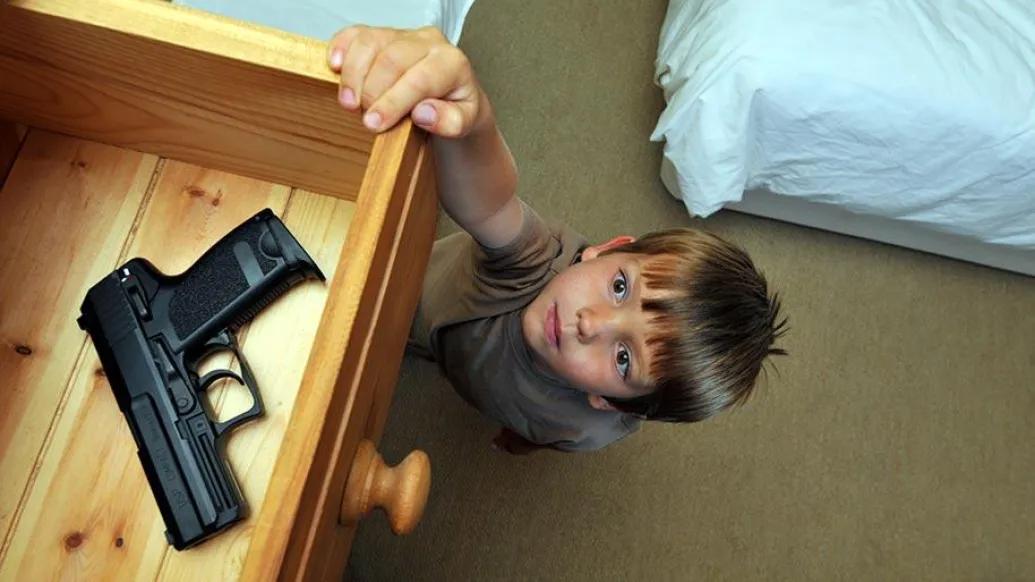
Firearms are a significant cause of injury and death in the United States. Studies have shown that 1 in 3 homes with guns also have children in the home. Unfortunately, firearm injuries are among the top four causes of death for children ages 10–24, with homicide by firearm being a leading cause of death in children ages 1–9. The Michigan community has tragically suffered from gun violence with the shooting at Oxford High School in November of 2021.
The American Academy of Pediatrics (AAP) believes that “The absence of guns from children’s homes and communities is the most reliable and effective measure to prevent firearm-related injuries in children and adolescents.”
Current medical research on the subject has concluded that if you have children, it is safer not to have a gun in your home. The American Surgical Association (APSA) notes that there had been a reduction in motor vehicle deaths due to a multidimensional public health approach. They believe a similar public health approach to gun safety could help reduce the number of children who are injured or have died from firearms.
For families who choose to keep guns in the home, there are steps that can be taken to reduce the risk of firearm injury or death.
Gun storage
For those who keep a gun in the home, each of the following four measures helps protect children and teens from accidental firearm injury and suicide:
- Keep the gun unloaded
- Keep the gun locked
- Store the ammunition locked and in a separate place from the gun
- Never let children know where the keys are located
Children, even older children, should not be told about the location of the keys.
There are programs available for free safety kits. Another option is to disassemble the gun so that it cannot be used (i.e. remove the bolt from hunting rifle or pistol slide on a handgun).
If there are concerns about mental illness, then it is safest to remove all firearms from the home to prevent any tragedies.
Guns at homes of others
Before your child goes to a friend's house you should ask the friend's parent whether the family has firearms in the house and how they are stored. This can be part of all the usual things you would discuss before a visit, like allergies, snacks, sunscreen, etc. The AAP offers suggestions on questions families should ask at Asking Saves Kids (ASK).
If your friends or family keep a firearm, urge them to keep it locked and unloaded.
Adolescents, Teens and Guns
Parents of teenagers are less likely to store firearms safely. This is a big concern since most firearm injuries happen to teens. Teens are at greater risk of attempting suicide and a suicide attempt with a gun is likely to be deadly. More than 90 percent of suicide attempts with a gun are deadly and teens in homes with firearms are at higher risk for committing suicide. Again, if there are concerns about mental illness, then it is safest to remove all firearms from the home to prevent any tragedies.
Teaching children about what to do in the presence of a gun
Teach your children never to touch guns. Parents can also talk about how a child might ask to go home or call a parent if they become aware of a gun in their presence.
Unfortunately, a number of studies suggest that even kids who are trained not to touch guns can't resist the curiosity, and that parents have unrealistic expectations about their kids' behavior around guns. That's why parents are encouraged to keep guns unloaded and locked separately from ammunition, and to ask about guns at the houses where their children play.
Non-powder guns, BB guns and toy guns
Non-powder guns such as ball-bearing (BB) guns, pellet guns, air rifles, and paintball guns can cause serious injuries to children and teens.
- Pellet and BB guns are high powered and can easily injure or kill a child. They should be used only under adult supervision. The Consumer Products Safety Commission recommends only kids 16 years of age or older use BB guns.
- Parents may underestimate the potential for injury from BB and pellet guns unless their child has been wounded by one.
- Playing with toy guns could make it easier for your child to mistake a real gun as a toy.
- Police officers may also mistake a toy gun for a real gun. Toy guns should not look like real guns and should always retain the orange cap on the barrel.
- Toy guns with projectiles, such as Airsoft guns and paintball guns, can cause eye injuries, including severe and permanent vision loss. Kids should wear eye protection when using them.
- Make sure the firing sound is not too loud as it could damage your child's hearing. Children should wear hearing protection. Don't let kids fire cap guns closer than one foot from their ears, and only use them outdoors.
- Don't let kids put caps from toy guns in their pockets. They can ignite and cause burn injuries.
Additional resources:
- 6 strategies for keeping kids safe from gun accidents (MichiganHealthBlog.org)
- Fiream Injuries and Children: Position Statement of the ASPA (American Academy of Pediatrics)
- Parents more confident that tweens can deal with fire and storms than guns (MichiganHealthBlog.org)
- Gun safety for parents (kidshealth.org)
- Gun safety for kids (kidshealth.org)
- Someone at school has a weapon. What should I do? (kidshealth.org)
- Gun safety tips (safekids.org)
- ASK campaign (askingsaveskids.org)
- Teaching firearm safety to children: Failure of a program (NIH)
- A firearm safety program for children: They just can't say no (NIH)
- Preventing Teen Suicide: When to Remove Firearms from Your Home (Michigan Medicine Health Blog)
Updated by Andrew Jones, MD
Reviewed by Sara Laule, MD
Updated by Sydney Ryckman MD, January 2022

Health Lab
Explore thousands of health news & research stories by visiting the Health Lab homepage for more.
Media Contact

Public Relations
Department of Communication at Michigan Medicine
Stay Informed
Want top health & research news weekly? Sign up for Health Lab’s newsletters today!
Featured News & Stories
Safe sleep for babies

Spring and Summer Safety

Summer Camp

Vaccine Safety

PFAS Contamination