Growing number prefer virtual medical residency interviews
Over three quarters of applicants would rather not interview in-person
5:00 AM
Author |
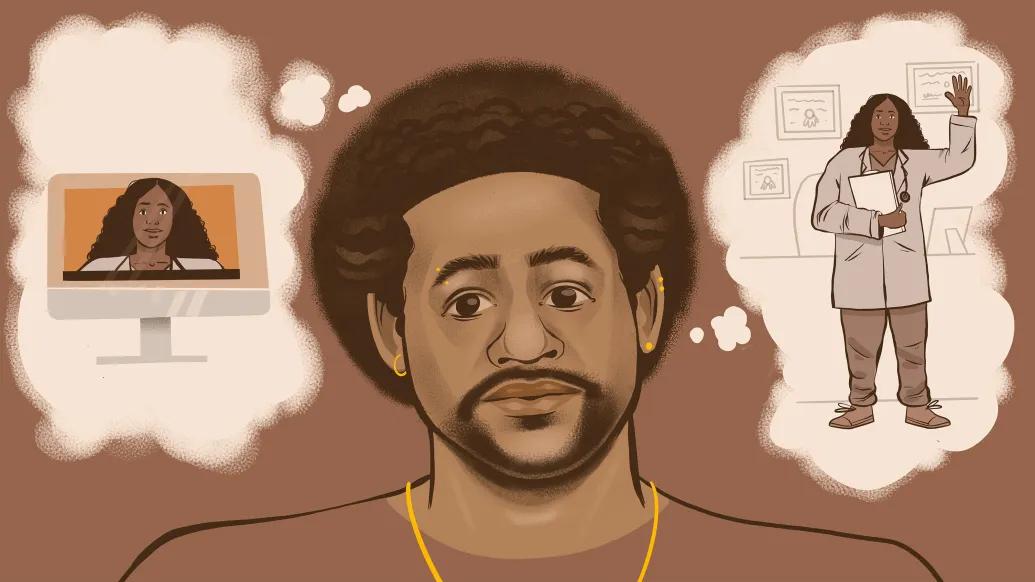
An increasing number of medical residency applicants prefer virtual interviews to in-person ones, according to a study in the Journal of Graduate Medical Education.
Using survey data from over 20,000 applicants, researchers noted an increase from 57.5% prospective trainees expressing a preference for virtual interviews in 2021 to 70.2% in 2022 and 78.8% in 2023.
Notably, female applicants (78%), applicants from groups underrepresented in medicine (83.4%) and applicants from the Western United States (72.2%) favored virtual interviews, compared to people outside of those groups.
“I was interested in virtual interviews because I went through them myself as an applicant,” said Nicholas R. Lenze, M.D., M.P.H., resident in the University of Michigan Medical School department of otolaryngology and lead author on the paper.
“I applied to residency at the height of the pandemic, so all my interviews were virtual. Then I saw there were discussions about resuming the in-person interviews, but there wasn’t a lot of evidence to guide these decisions, especially related to applicant preferences.”
Researchers used data from the Texas Seeking Transparency in Application to Residency survey.
In addition to overall trends in preference, the STAR data allowed for breakdowns within specific sociodemographic categories.
The Association of American Medical Colleges has recommended that program use virtual interviews during the 2024-’25 application at least in part due to the financial costs of interviewing.
Research from before the COVID-19 pandemic found that many prospective residents spent up to $5,000 or more on attending interviews.
The U-M researchers hypothesize that cost remains the biggest factor driving the preference for virtual interviews.
Applicants who were in the first generation of their families to go to college and applicants with a history of food or housing insecurity were more likely to favor virtual interviews than in-person.
“These are very general socioeconomic indicators, so it's hard to draw meaningful conclusions,” Lenze said.
“But I think overall these findings point to the suggestion that applicants with lower socioeconomic backgrounds were more likely to favor virtual interviews.”
Female applicants preferring virtual interviews has been suggested by other studies, but researchers indicated more qualitative data would be needed to interpret that result.
Lenze also expressed a desire to dig deeper into different preferences among specialties.
Applicants to surgical specialties were less likely to favor the continuation of virtual interviews.
Future qualitative studies could help uncover some of the drivers of these differences in preferences between applicants.
Another possible future area of study is the preference for a potential hybrid interview option.
Even as some programs revert to in-person meetings, they may desire to maintain some of the accessibility afforded by virtual interviews during the COVID-19 pandemic.
Even before more qualitative studies come out, however, the clear preference for virtual interviews has given leaders something to consider.
“I am a believer in the value of co-production of medical education programs with learners,” said Louito C. Edje, M.D., MHPE, FAAFP, senior associate dean of medical education at the University of Michigan Medical School and an author on the paper.
“They are the consumers of the curricula within programs and the users of institutional processes in the transitions between stages of training. To understand that over two thirds of applicants want to keep virtual interviewing for residency is something to be taken seriously as each specialty innovates around the application cycle.”
Michigan Medicine’s current policy is a preference for virtual interviews. As reflected in this study’s data, however, preferences for in-person interviews vary by specialty.
Said J. Sybil Biermann, M.D., professor of orthopaedic surgery and associate dean of graduate medical education at the U-M Medical School, “We work to balance the needs of the applicants, while not having our training programs experience what they consider might be a disadvantage.”
Additional authors: William J. Benjamin, M.P.H.; Angela P. Mihalic, M.D.; Lauren A. Bohm, M.D.; Marc C. Thorne, M.D., M.P.H.; Robbi A. Kupfer, M.D.; Michael J. Brenner, M.D.
Paper cited: “Evaluation of Residency Applicant Preferences for Continuing Virtual Interviews: A National Database Analysis,” J Grad Med Educ. DOI: 10.4300/JGME-D-24-00478.1
Sign up for Health Lab newsletters today. Get medical tips from top experts and learn about new scientific discoveries every week.
Sign up for the Health Lab Podcast. Add us wherever you listen to your favorite shows.

Health Lab
Explore thousands of health news & research stories by visiting the Health Lab homepage for more.
Media Contact

Public Relations
Department of Communication at Michigan Medicine
Stay Informed
Want top health & research news weekly? Sign up for Health Lab’s newsletters today!
Featured News & Stories
College of Pharmacy alum advances U-M Medical School addiction research
Rethinking how clinicians learn to feel disease
Rethinking care: How ‘de-implementation’ can improve quality and reduce burnout

The Questions That Shape the Future of Medicine
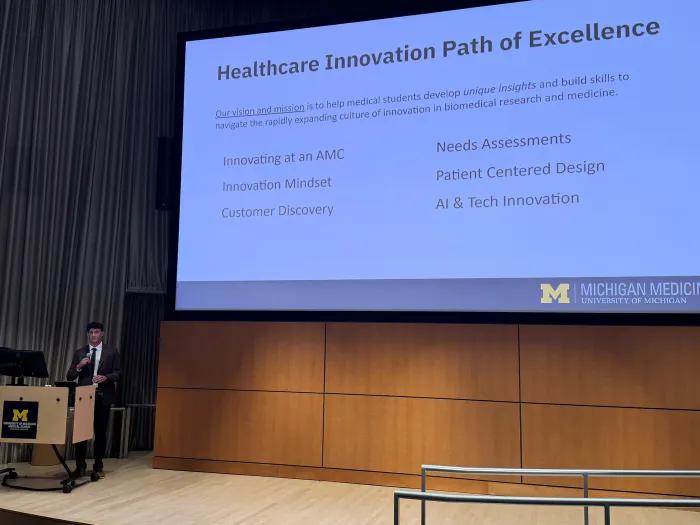
Medical students develop novel technological solutions for unmet patient needs