Former pediatric patient “comes home” as patient care technician at C.S. Mott Children’s Hospital
Olivia Ohmer was diagnosed with type 1 diabetes at age 3. She spent most of her life as a patient advocate and is now training to be a medical professional
5:00 AM
Author |
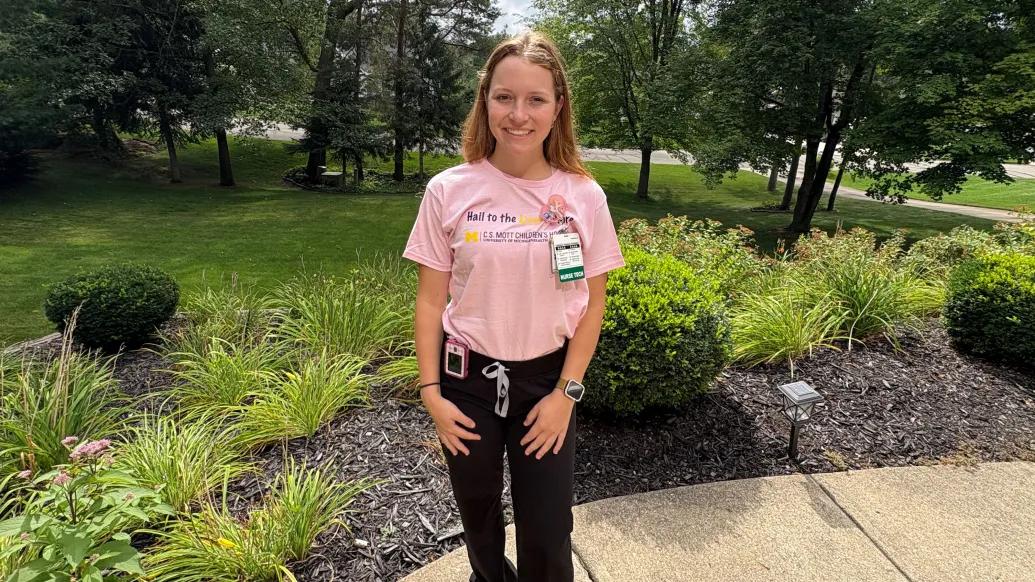
Olivia Ohmer, now 22, was a healthy child for the first few years of her life.
When Ohmer was three, her mother, Amy, noticed she was starting to lose weight and constantly sleeping.
Initially, the family thought that Ohmer’s summer activities were tiring her out.
Her symptoms worsened and soon Ohmer needed to use the bathroom constantly, and even though she had been potty trained, she started wetting the bed.
At first, her doctor assumed that Ohmer’s condition was due to the flu or seasonal allergies.
Her mother, however, wasn't convinced.
“I knew that something wasn’t right,” said Amy Ohmer. “Even though it isn’t recommended, I looked up her symptoms on Google and the first thing that popped up was type 1 diabetes.”
The family demanded a urine analysis test that confirmed their suspicions.
Immediately after the diagnosis, they brought Ohmer to the Pediatric Intensive Care Unit at University of Michigan Health C.S. Mott Children’s Hospital.
Ohmer was in and out of consciousness when she was brought in, and her blood sugar levels were eight times higher than what’s considered normal.
“The worst day for parents is when their child is diagnosed with type 1 diabetes because they are not aware of the warning signs,” said Ram Menon, M.D., who oversaw Ohmer’s care at Mott.
“Even though the disease only affects the child, the family’s life changes because everything revolves around the life long management of diabetes.”
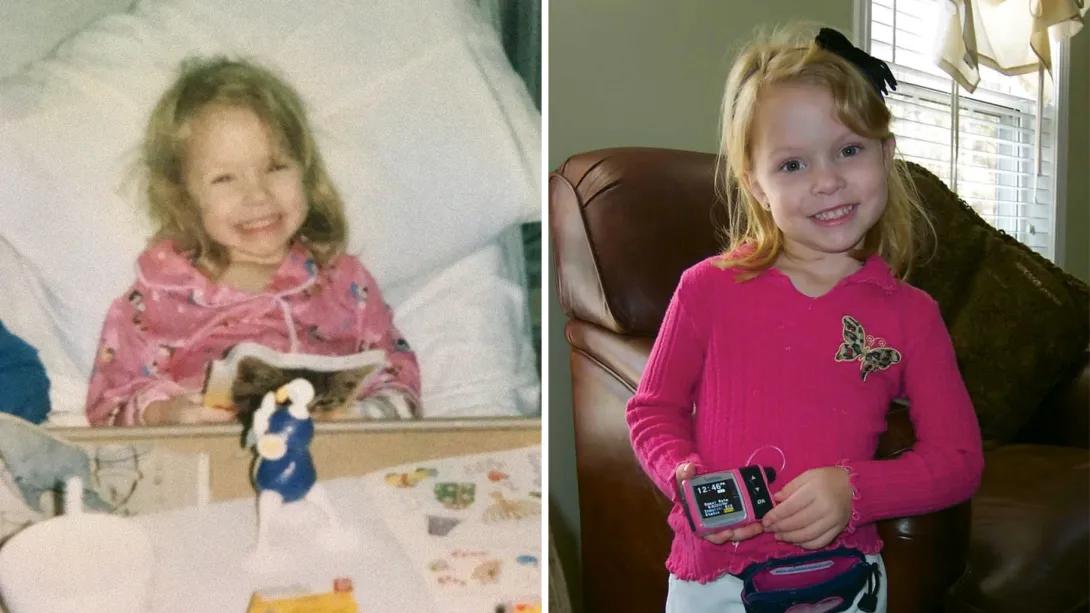
Type 1 diabetes is an autoimmune disease, which causes the immune system to destroy the insulin-producing cells in the pancreas.
Additionally, some patients develop other autoimmune conditions including Hashimoto’s disease, where the immune cells target the thyroid gland.
The symptoms include fatigue, muscle aches, dry skin and hair loss.
Despite the challenges, Menon insists that most of his patients don’t see a worsening in their quality of life.
His support encouraged Ohmer’s family to learn everything they could about her condition and help her navigate her medication routine as a child.
Ohmer spent a week in the PICU recovering from her six-month weight loss.
She remembers every subsequent doctor’s appointment as a playground visit, filled with toys, crayons and doctors who were happy to see her.
One year after her diagnosis, Ohmer was diagnosed with Hashimoto’s disease.
When she became a teenager, she also developed solar urticaria, a rare skin condition where exposure to sunlight causes a red itchy rash.
Choosing to pursue a career in medicine
Ohmer led an active lifestyle throughout her childhood, pursuing her passion for golf.
She enrolled at Adrian College to earn a degree in biology with a minor in public health.
Throughout her time there, Ohmer continued playing college-level golf while juggling her medication regimen.
Her diabetes is controlled by an insulin pump, and she measures her blood sugar levels using a continuous glucose monitor that is attached to her arm.
The monitor helps her keep track of how much insulin she needs. If she eats a cupcake, for example, Ohmer includes that in her calculations for the pump.
She also takes a synthetic hormone replacement called Levothroxine for Hashimoto's disease and a drug called Xolair for her urticaria rashes.
Despite being a kid with medical needs, she was proud of winning the Michigan Intercollegiate Athletic Association and earning the conference title of the Most Valuable Player during her sophomore year.
“Even though I did well, I didn’t want to pursue golf as a career, and I was interested in every biology class I had taken,” Ohmer said.
“I found it difficult to figure out what I wanted to do.”
In the summer of her junior year, Ohmer worked at a nursing home to gain experience in patient care.
Despite being assigned 20 residents, she found that it was a natural fit.
Torn between her interest in medical school and becoming a physician assistant, Ohmer took a gap year to shadow different medical professionals.
Ohmer soon realized that regardless of the field, she valued the provider-patient relationship the most.
After graduating summa cum laude in May 2025 and holding the title of the most decorated golfer in the history of Adrian College, she joined Mott as a patient care technician, where she works the night shift from 7 p.m. to 7 a.m.
“My first day was incredible, it felt like being back home because I grew up here,” Ohmer said.
“No one wants to come to the PICU as a patient, but I can help the families navigate their way just like I did.”
Empowering other families as a patient advocate
Supporting patient families is not new for the Ohmers.
Both Ohmer and her mother have been actively involved in patient advocacy since Ohmer’s diagnosis.
Amy Ohmer spent many years learning about type 1 diabetes and became committed to sharing her knowledge with other parents.
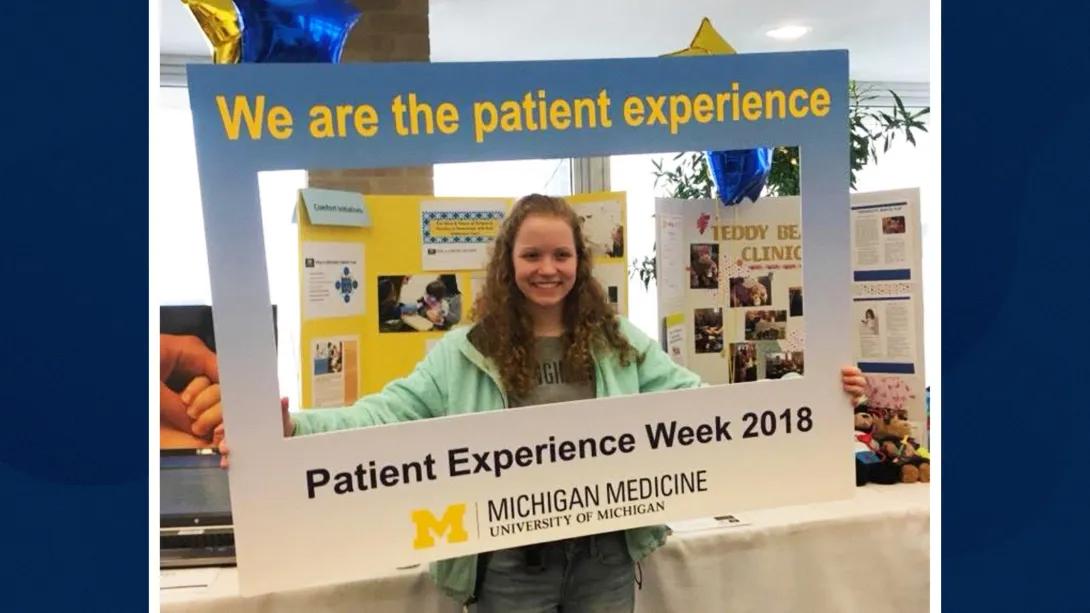
She has been a part of the Caswell Diabetes Institute Patient Family Advisory Council and the pediatric endocrinology parent team.
Ohmer and her sister, who was diagnosed with type 1 diabetes three years after Ohmer received her diagnosis, were part of the Teen Advisory Council at Mott.
The council would provide feedback to the hospital about the changes they wanted to see.
“A lot of the focus was on children younger than 10, which is great, but we didn’t want gowns with teddy bears. Instead, we asked them to use things that teenagers liked,” Olivia Ohmer said.
Along with a team of students at the University of Michigan, Ohmer and her sister helped develop an app for patients and caregivers.
Although they had phones, Ohmer, who was eight at the time, wanted to include emoticons that were relevant to diabetes.
Using symbols like a cupcake or an insulin pump, she was able to send her parents quick updates about any source of carbohydrate she ate and whether she had adjusted her insulin dose.
Ohmer also participated in diabetes camps where she shared her experience with families and described how she learned to stabilize her condition, which is challenging for many teenagers.
“Olivia has always been reassuring and calm during her interactions with patient families. She is open about her experiences, especially being a student athlete, which teaches others that type 1 diabetes does not limit them from achieving their goals,” said Inas Thomas, M.D., clinical associate professor of pediatrics who worked with Ohmer when she was a teenager.
“I want my patients to learn how to live independent lives while they manage their diabetes. Watching Olivia excel in this and teach other patients has been wonderful.”
Ohmer is now hoping to become a physician’s assistant and use the skills she has developed at Mott over the past 19 years to guide other patients in need.
Sign up for Health Lab newsletters today. Get medical tips from top experts and learn about new scientific discoveries every week.
Sign up for the Health Lab Podcast. Add us wherever you listen to your favorite shows.

Health Lab
Explore thousands of health news & research stories by visiting the Health Lab homepage for more.
Media Contact

Public Relations
Department of Communication at Michigan Medicine
In This Story

Ram Kumar Menon, MD, MBBS
Professor
Related

A Wife and Mother Turned Diabetes Research Crusader

5 Questions with a Diabetes Physician Who Has Type 1
Stay Informed
Want top health & research news weekly? Sign up for Health Lab’s newsletters today!
Featured News & Stories

New insight into how lipodystrophy can affect overall health
Pediatric patient treated for rare kidney cancer

E-Bikes are everywhere, but most parents say they don’t know enough about them

Who’s at risk for painful periods?

C.S. Mott Children’s Hospital named No.1 children’s hospital in Michigan by U.S. News & World Report