Finding Your Place in The Medical Field
An endocrinologist specializing in thyroid cancer and creator of the Hemoglobin A1c test for diabetes reflects on his career, offering advice for aspiring researchers.
5:00 AM
Author |
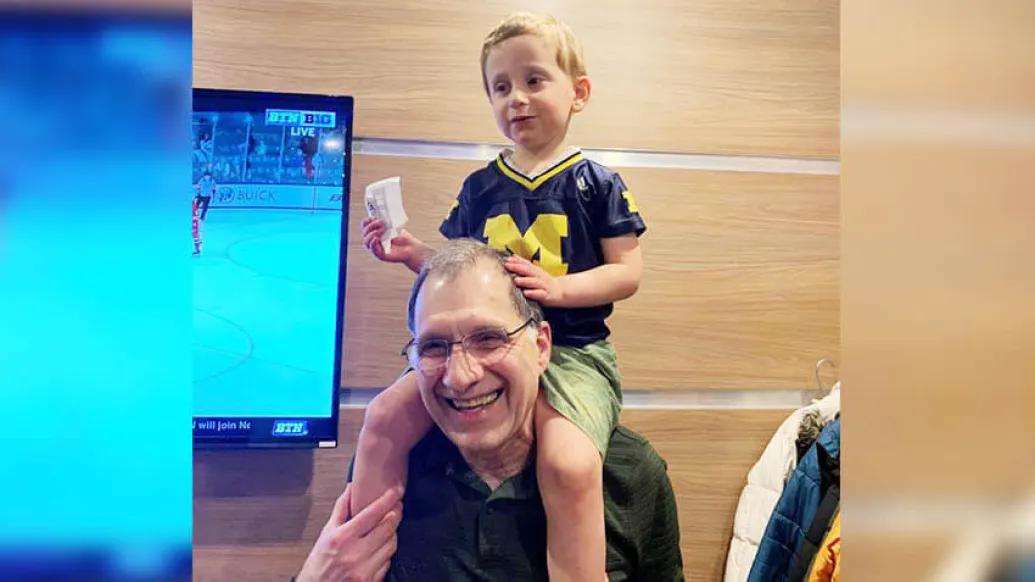
Some people are born to be medical researchers – like Ronald Koenig, M.D., Ph.D., an endocrinologist specializing in thyroid cancer at the University of Michigan's Rogel Cancer Center. According to him, the excitement of diving into the unknown and potentially "cracking the nut" on a big, biological mystery is one of the medical field's greatest joys.
LISTEN UP: Add the new Michigan Medicine News Break to your Alexa-enabled device, or subscribe to our daily updates on iTunes, Google Play and Stitcher.
"To think about an unanswered medical question and then create a test to try and solve that, using my knowledge and experience, has been incredibly rewarding," he says.
Now, as he transitions into retirement after his 40-year career, Koenig reflects on his proudest medical discoveries, advice for new medical students and the future of thyroid cancer care.
What has your career looked like at Michigan Medicine?
I moved to Michigan in 1988, splitting my professional time between medical research and being a physician. Being in a lab, but also being able to develop relationships with patients has provided unique aspects of professional fulfillment that the other doesn't for me. It gave me balance in my career that I've appreciated.
Like Podcasts? Add the Michigan Medicine News Break on iTunes or anywhere you listen to podcasts.
I've been drawn to the intellectual challenges of research since college. Often times, research can be frustrating, but the draw of solving a medical question yet to be solved is irresistible. The fact I can test a hypothesis because I find it interesting and important and take it wherever the data may lead… that intellectual freedom is wonderful. That's how science progresses.
On the other hand, I don't think I'd be happy without patient care which is why I'll still do that part time at the Rogel Cancer Center. It's rewarding work. I get to see patients longitudinally, over years and years, and develop personal relationships with them.
For the last 25 years, you've also been the director of the Medical Scientist Training Program. Can you explain what that role entailed?
The Medical Scientist Training Program is a combined M.D. and Ph.D. program consisting of 100 medical students. As director, I was in charge of defining the nature of program. I really enjoyed the relationship I'd build with the students over the eight or nine years it takes to get both degrees and help prepare them for the field of academic medicine.
My own M.D. and Ph.D. training was critical in defining who I'd become as a professional. The University of Michigan is an educational institution, and this program exists because the medical school recognizes its importance. I'm grateful.
What have you learned in your career that you feel would be valuable to medical students?
No career is perfect. Every career path has its pros and cons. Especially in medical research, there are times where you feel rejected or like you should've seen something and didn't. You have to learn how to adapt and move forward.
Often times, research can be frustrating, but the draw of solving a medical question yet to be solved is irresistible.
In order for me to stay fulfilled, I also had to stay flexible and open minded. What I wanted out of my career changed over time, and I realized that what I want at one year versus five versus 10 may change, and that's OK. Let those interests evolve and see where they take you.
What have been your most exciting research moments?
As part of my Ph.D. thesis in the 70's, I discovered, along with my thesis mentor Anthony Cerami, Ph.D., that a single measurement of hemoglobin A1c reflects the average blood glucose level over the prior couple months in patients with diabetes. This test is still the standard way of measuring blood glucose control in those with diabetes. You don't often have discoveries with this kind of impact and longevity. Prior to this work, the significance of hemoglobin A1c was not known, so to discover its importance in diabetes management was exceptionally rewarding.
In the last 10 years, I've been interested in an unusual gene mutation that causes a subset of thyroid cancers. My research team was able to create the mutation in a mouse model, and that led us to identify a therapy to combat the nature of mutation. We had no idea if this therapy would make the cancer better or worse, so this discovery, being promising and translating into a clinic trial, was really exciting.
What advice would you give a new medical student?
You have to discover what aspects of being a physician are the most satisfying to you, and you have to learn this organically. You can't sit at a desk and figure it out. What aspects of patient care make you the happiest? Is it someone coming in with a bullet wound that you get to take in for emergency surgery? Is it growing a relationship and working with someone long-term, like someone with a chronic disease? Patient care is so broad, which is great for the medical field, and there's probably several areas of medicine that will give you fulfillment.
For me, those long term relationships with patients was important. Most of my patients with thyroid cancer don't have terminal illness. Very few die from it because even though it is cancer, it's usually controllable and often curable.
MORE FROM THE LAB: Subscribe to our weekly newsletter
What do you look forward to in this field of study and your own personal life?
The tools we use to diagnose and treat thyroid cancer are having a renaissance right now. These rapid advances are due to advances in basic science, which lead to changes in clinical care. I expect this ascendancy will continue for years to come. It might mean patients will require less treatment to manage their condition, or the opposite: new treatments will be discovered that improve, or even cure, a patient's cancer.
In my own personal life, I'm looking forward to not using an alarm clock and spending as much time as possible with my grandchildren. Both of those will be fantastic.

Health Lab
Explore thousands of health news & research stories by visiting the Health Lab homepage for more.
Media Contact

Public Relations
Department of Communication at Michigan Medicine
Stay Informed
Want top health & research news weekly? Sign up for Health Lab’s newsletters today!
Featured News & Stories
Exceptional response to immunotherapy gives patient with liver cancer more milestones to celebrate
Liver cancer can be preventable. Do you know the treatable risk factors?

Digital alerts support timely treatment decisions of critically ill cardiac patients

Is the United States Lagging Behind Europe in Memory Improvement?
FDA-approved drug offers hope for patients with polycythemia vera, a rare bone marrow disorder